
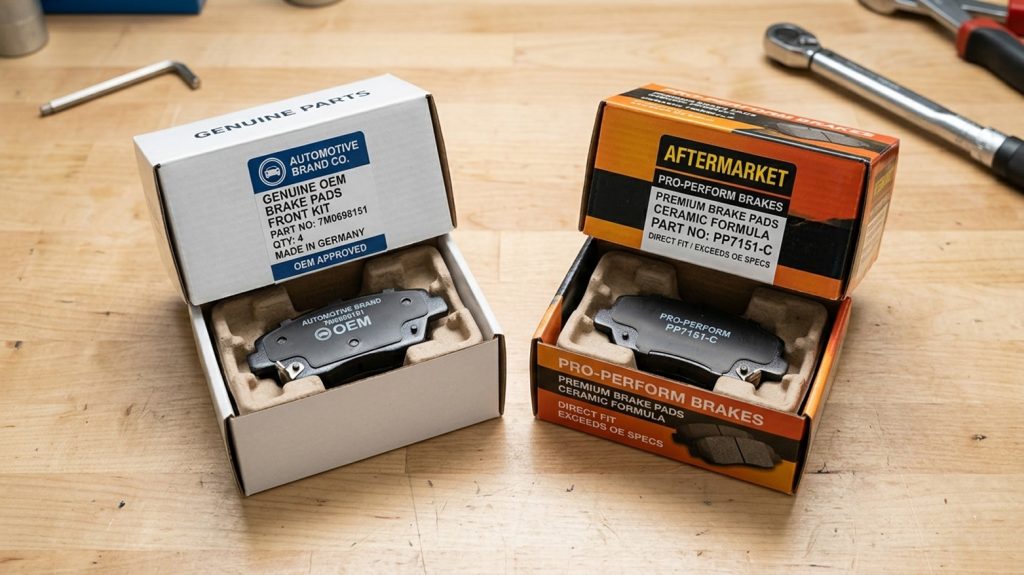
OEM vs Aftermarket Auto Parts: Which One Actually Saves You Money in 2026?
For most repairs in 2026, quality aftermarket and remanufactured parts will save you real money without sacrificing reliability — often 30–60% less than OEM equivalents. OEM parts only make clear financial sense for safety-critical components, lease vehicles, or when exact fitment is non-negotiable. The nuance matters though: a cheap no-name alternator that fails in eight months costs more than an OEM unit that lasts five years. This guide gives you the framework to make the right call every time, with real numbers and specific component examples. What OEM and Aftermarket Actually Mean (And Why the Labels Are Misleading) Here’s something most buyers don’t realize: the company stamped on your OEM part often didn’t manufacture it. Automakers like Toyota, Ford, and Hyundai contract third-party manufacturers — Denso, Bosch, Valeo, Delphi — to build their “original” parts. That Denso alternator in your Honda? Denso also sells a nearly identical unit under its own brand as an aftermarket part, sometimes at 40% less because you’re not paying for the Honda logo. OEM (Original Equipment Manufacturer) Parts branded and distributed by the vehicle manufacturer. They carry the automaker’s part number, come in branded packaging, and are typically sold through dealership networks. You’re paying a premium for guaranteed compatibility, brand trust, and the manufacturer’s warranty backing. Aftermarket Any part made by a company other than the original vehicle manufacturer. This is a massive spectrum — from premium brands like Bosch and Denso that literally made the OEM version, down to unbranded budget parts of questionable origin. Treating all aftermarket parts as equal is the single biggest mistake buyers make. Remanufactured There’s a third category that deserves its own lane. Rebuilt and remanufactured parts take an OEM core, disassemble it completely, replace all wear components, test it to OE specifications, and sell it at a fraction of new-part pricing. For components like alternators, starters, and AC compressors, remanufactured units are often the smartest value play available. The Real Cost Comparison: OEM vs Aftermarket vs Remanufactured Let’s talk actual numbers. Vague claims about “savings” don’t help you make purchasing decisions — specific price ranges do. Component-Level Price Breakdown (2026 Averages) CriteriaOEM PartsAftermarket PartsRemanufactured PartsUpfront CostHighest (baseline)30–60% less40–70% lessFitment Guarantee✓ Exact fitVaries by brand✓ Exact fit (OE specs)Warranty Coverage12–36 months typical6–24 months typical12–24 months typicalAvailabilityDealer-dependentWidely availableSpecialist suppliersLong-Term DurabilityExcellentGood to excellent (brand-dependent)Very goodEnvironmental ImpactNew manufacturingNew manufacturing✓ Lowest — reuses coreBest ForLease vehicles, safety-criticalBudget repairs, common partsAlternators, starters, compressorsResale Value ImpactPreserves valueMinimal impactMinimal impact Take alternators as a concrete example. An OEM alternator for a mid-size sedan typically runs $350–$550 from a dealer. A premium aftermarket equivalent from Bosch or Denso lands around $180–$300. A quality remanufactured alternator can come in at $120–$220, tested to OE output specs. If all three last the same number of years — and with reputable brands, they often do — the math is obvious. Where OEM Actually Wins on Cost OEM parts sometimes save money in the long run for complex electronic modules, hybrid/EV-specific components, and parts under active recall or TSB coverage. If a dealer replaces a part under warranty or goodwill, that’s $0 out of pocket — hard to beat with any aftermarket option. Quality Isn’t Binary: The Aftermarket Tier System You Need to Understand The biggest myth in auto parts is that “aftermarket” means “cheaper quality.” In reality, the aftermarket world has distinct tiers, and understanding them is the difference between saving money smartly and creating expensive headaches. Tier 1: OE-Equivalent (Premium Aftermarket) These are parts from the same manufacturers that supply automakers — Denso, Bosch, Aisin, Continental, Valeo. The part is functionally identical to OEM; it just doesn’t carry the vehicle manufacturer’s part number. This tier typically costs 20–40% less than OEM and delivers equivalent longevity. Tier 2: Reputable Independent Brands Companies like Dorman, Standard Motor Products, or Gates that don’t supply OE but invest heavily in engineering and testing. Quality is generally good to very good. Savings of 30–50% over OEM. Due diligence matters here — some product lines from these brands are excellent, others are mediocre. Tier 3: Budget/White-Label Parts This is where the horror stories come from. Unbranded or unfamiliar-brand parts sourced from the lowest bidder, with minimal quality control. A $45 alternator that fails in four months and takes your battery with it doesn’t save you anything. Avoid this tier for anything electrical or safety-related. The takeaway? When someone says “I had a bad experience with aftermarket parts,” they almost certainly bought Tier 3. When a shop says “aftermarket is just as good,” they’re talking about Tier 1. Both are telling the truth about their experience — but they’re describing completely different products. When OEM Is the Only Smart Choice Despite everything above, there are situations where OEM is genuinely the better financial decision. Don’t let cost savings blind you to these scenarios. Vehicles Under Factory Warranty While the Magnuson-Moss Warranty Act (in the U.S.) technically prevents manufacturers from voiding your warranty solely for using aftermarket parts, proving that an aftermarket partdidn’tcause a failure is a headache you don’t need. If your vehicle is under warranty, use OEM for related systems. Lease Returns Lease inspectors flag non-OEM parts. A $200 savings on an aftermarket part can turn into a $500 lease-end charge. Not worth the gamble. Safety-Critical Systems Braking systems, airbag components, steering parts, and structural elements — these are not the place to save 35%. The liability exposure alone (especially for fleet managers and service shops) makes OEM the rational choice. Complex Electronics and ADAS Advanced driver-assistance systems, adaptive headlights, and integrated sensor modules often require OEM parts for proper calibration. Aftermarket alternatives either don’t exist or can’t communicate correctly with the vehicle’s CAN bus network. When Aftermarket and Remanufactured Parts Are the Clear Winners For the majority of replacement parts on vehicles past their warranty period, aftermarket and remanufactured options deliver better value — full stop. Here are the categories where the savings are most compelling. Electrical Components: Alternators, Starters, and Compressors These are the sweet spot for remanufactured parts. The core (housing,