When your car won’t start, stalls unexpectedly, or shows electrical problems, the root cause is often either a bad battery or a failing alternator. Because these two components work closely together, their symptoms can overlap, making it difficult to identify the true source of the problem.
Misdiagnosing the issue can lead to unnecessary replacements, wasted money, and continued vehicle failure. This guide explains how to tell the difference using real symptoms, voltage testing, and step-by-step diagnostic logic.
Quick Answer: Battery vs. Alternator
The simplest way to understand the difference is this:
- The Battery: Starts the car.
- The Alternator: Keeps the car running and recharges the battery.
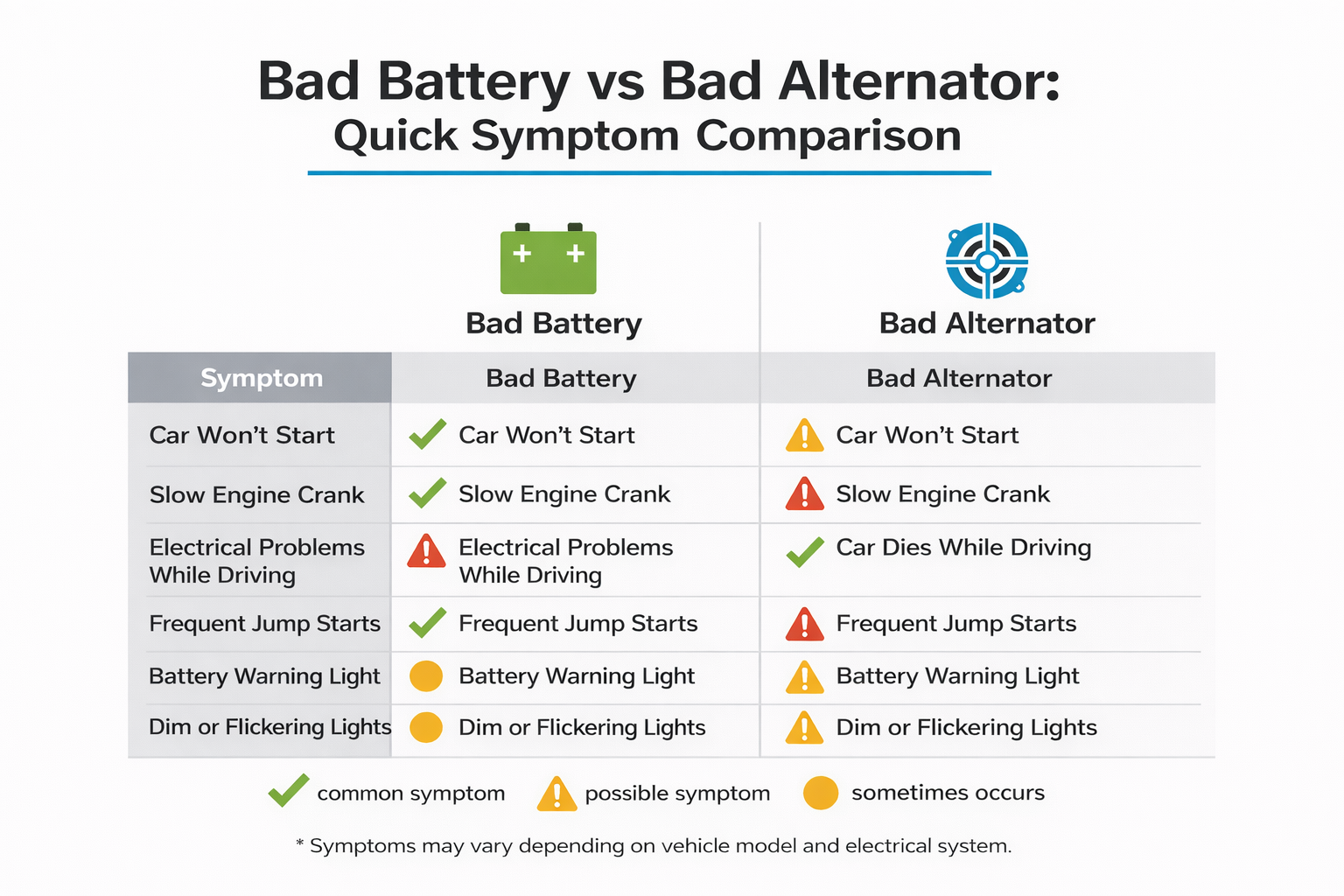
| Symptom | Bad Battery | Bad Alternator |
| Car won’t start | Very common | Possible |
| Slow engine crank | Common | Rare |
| Car starts but dies while driving | Rare | Very common |
| Electrical problems while driving | Rare | Common |
| Needs frequent jump starts | Common | Possible |
| Battery warning light | Possible | Very common |
| Dim or flickering lights while driving | Rare | Common |
Key principle:
- If the car struggles to start → battery likely bad.
- If the car dies while running → alternator likely bad.
How the Battery and Alternator Work Together
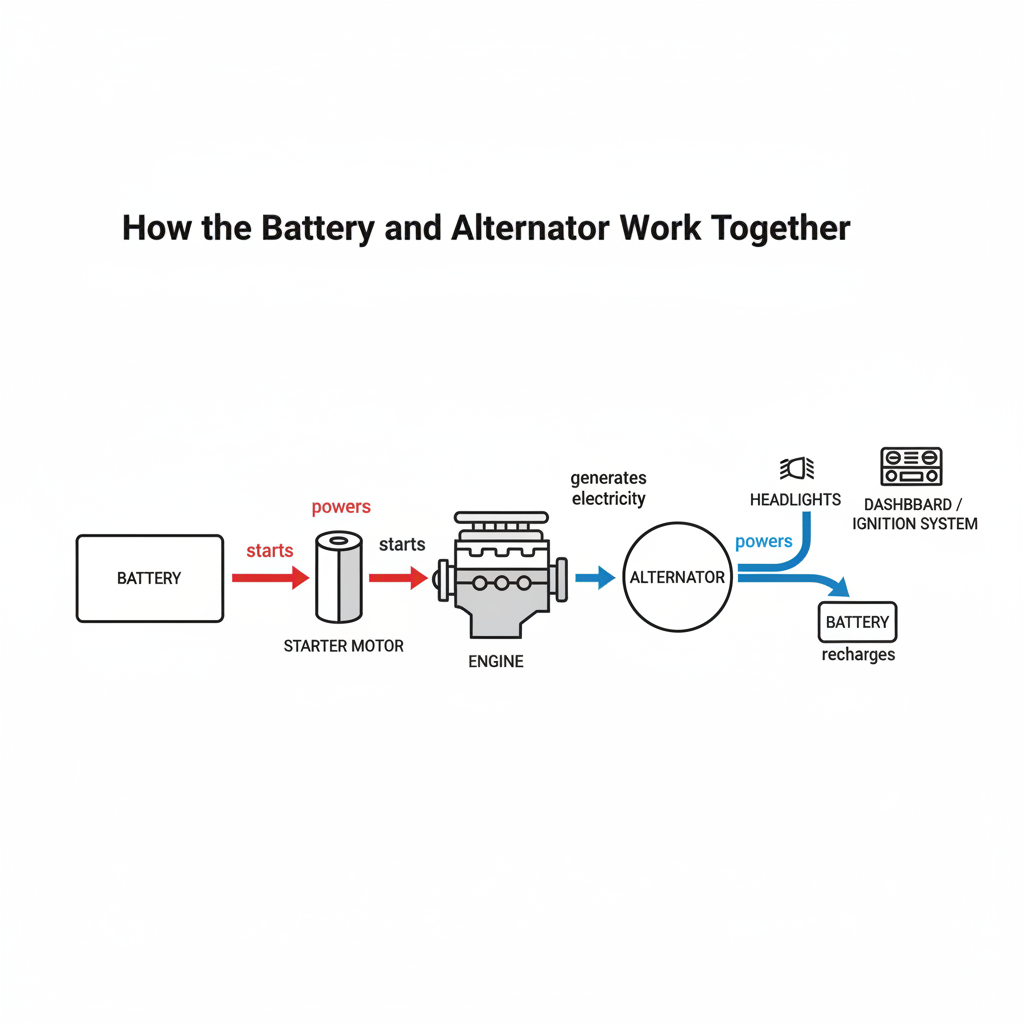
Understanding how these components function together makes diagnosis much easier.
1. What the battery does
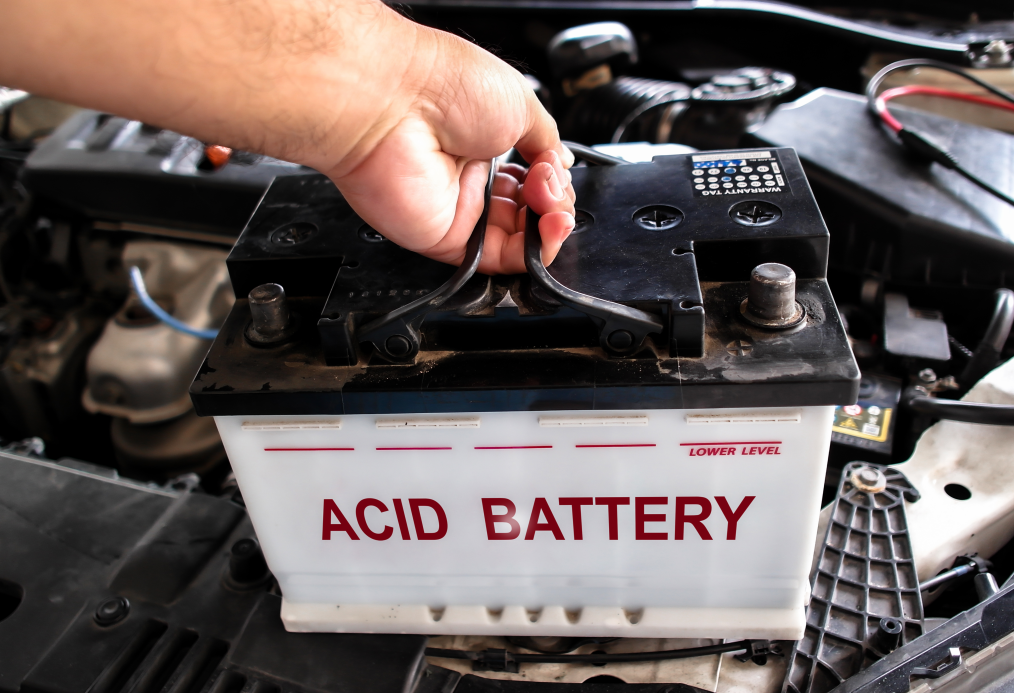
The battery provides electrical power to start the engine. It supplies energy to the starter motor, ignition system, and engine control electronics during startup. Once the engine starts, the battery’s role becomes secondary.
2. What the alternator does
The alternator generates electricity while the engine runs. It powers all vehicle electronics and recharges the battery continuously. Without a working alternator, the vehicle will run only until the battery is drained (usually within minutes to an hour).
Identifying the Symptoms
Symptoms of a Bad Battery
- Engine clicks but won’t start: A clicking sound usually means the battery lacks enough power to turn the starter.
- Slow engine crank: The engine turns over slowly because the battery cannot deliver sufficient current.
- Car starts after jump start but fails later: Indicates the battery cannot hold a charge.
- Electrical components work but engine won’t start: Lights and radio may work, but starting requires much higher current.
- Battery older than 3–5 years: Most car batteries naturally degrade after this period.
Symptoms of a Bad Alternator
- Car starts but dies while driving: This is one of the strongest signs of alternator failure.
- Dim, flickering, or overly bright headlights: Voltage instability from a failing alternator affects lighting.
- Electrical accessories malfunction: Power windows slow down, the radio shuts off, or dashboard lights behave abnormally.
- Battery warning light: This dashboard light often indicates a charging system failure.
- Burning smell or whining noise: Internal wear can cause overheating or bearing noise.
Complete Diagnostic Flowchart
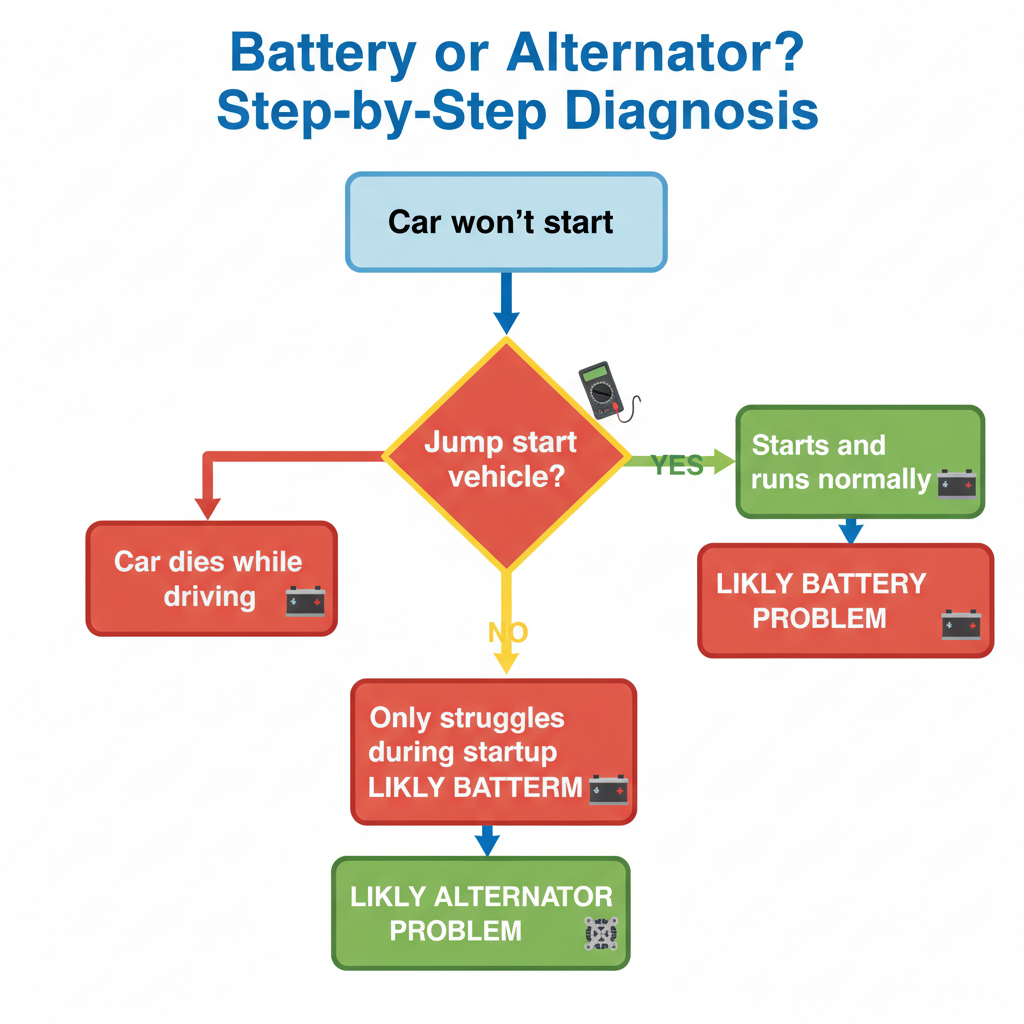
Follow this logical sequence to identify the problem fast:
- Car won’t start
- Jump start the vehicle
– If car starts and runs normally → Battery likely bad
– If car starts but dies soon → Alternator likely bad - Check driving behavior
– If car dies while driving → Alternator likely bad
– If car only struggles during startup → Battery likely badThis is the most reliable diagnostic method.
Multimeter Voltage Testing Guide (Definitive Diagnosis)
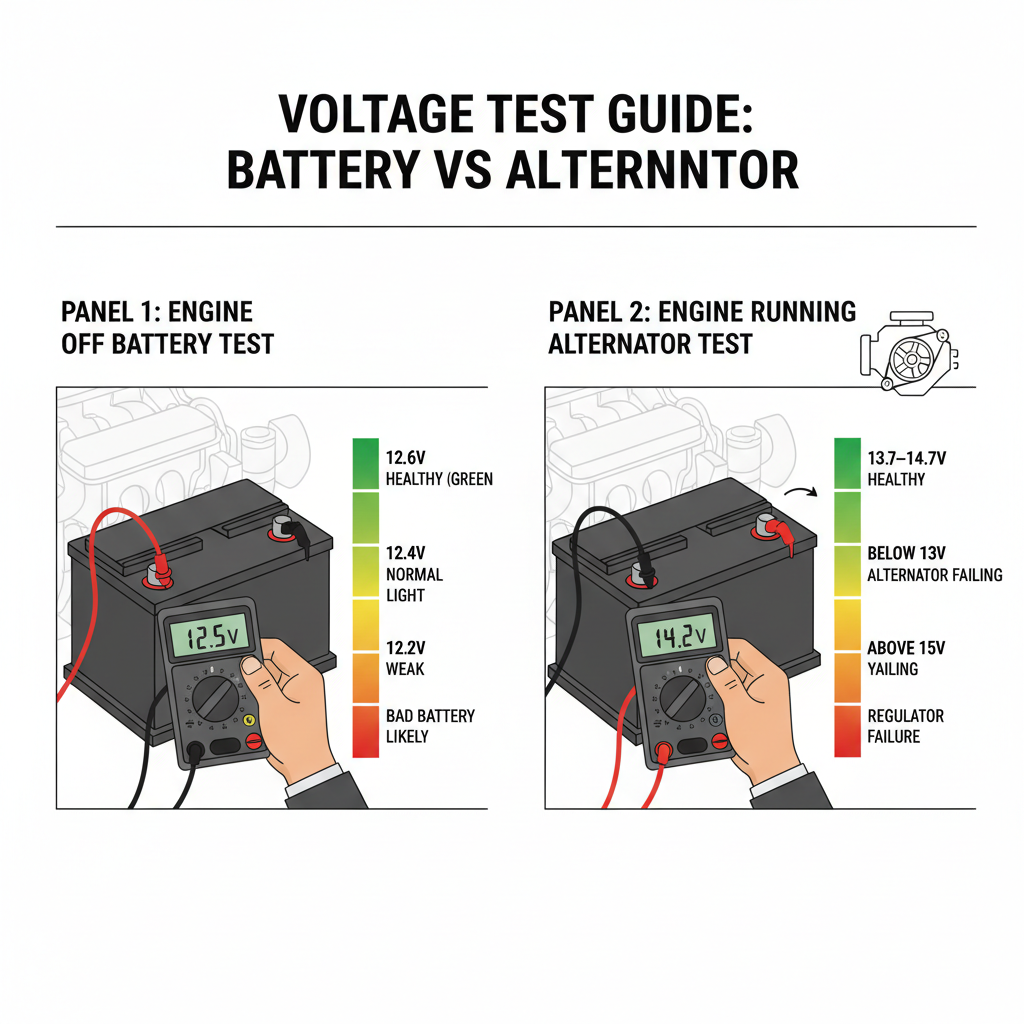
Test 1: Engine OFF (Battery Health)
Measure battery voltage with the engine off.
| Voltage | Battery Condition |
| 12.6 V | Fully healthy |
| 12.4 V | Normal |
| 12.2 V | Weak |
| 12.0 V or below | Bad battery likely |
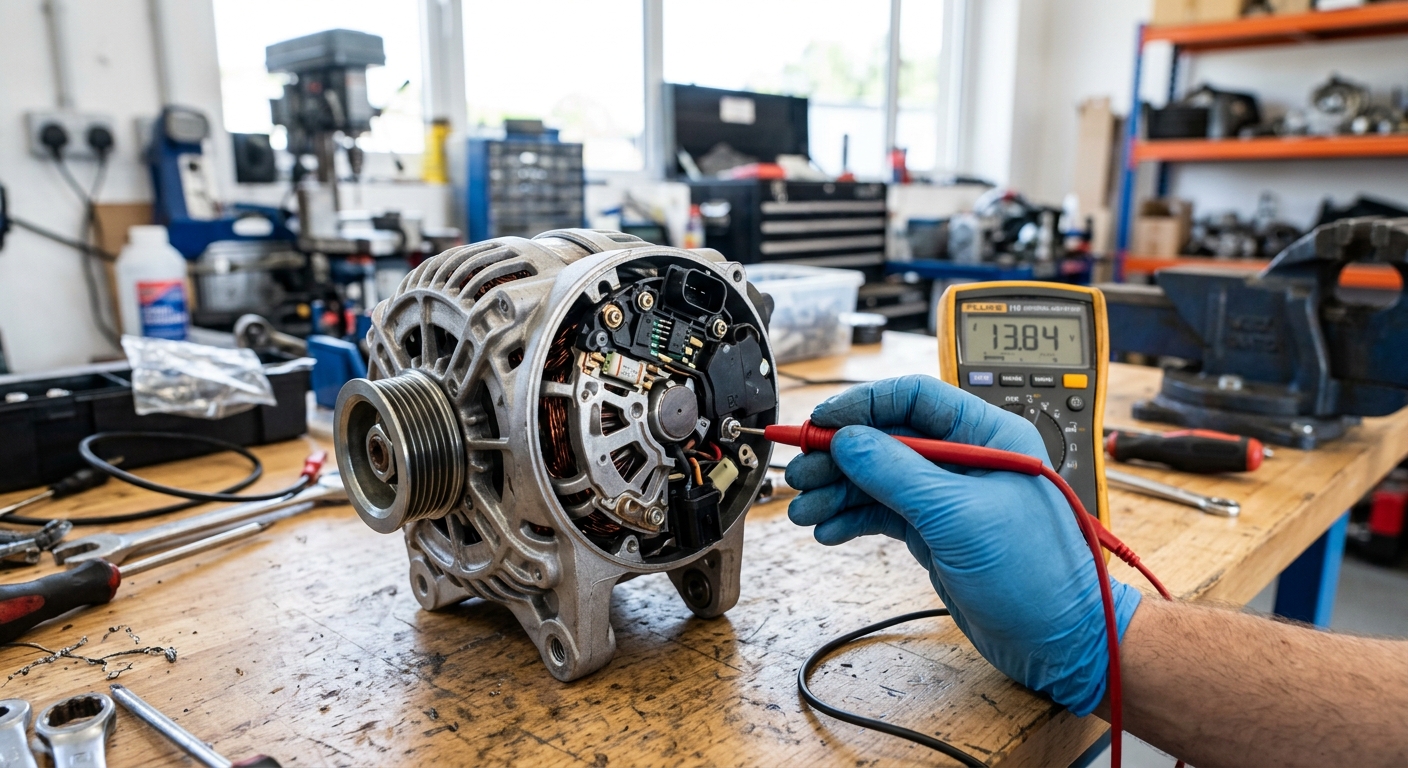
Test 2: Engine RUNNING (Alternator Health)
Start the engine and measure voltage again.
| Voltage | Alternator Condition |
| 13.7–14.7 V | Alternator healthy |
| Below 13 V | Alternator failing |
| Above 15 V | Voltage regulator failure |
Real-World Diagnostic Scenarios
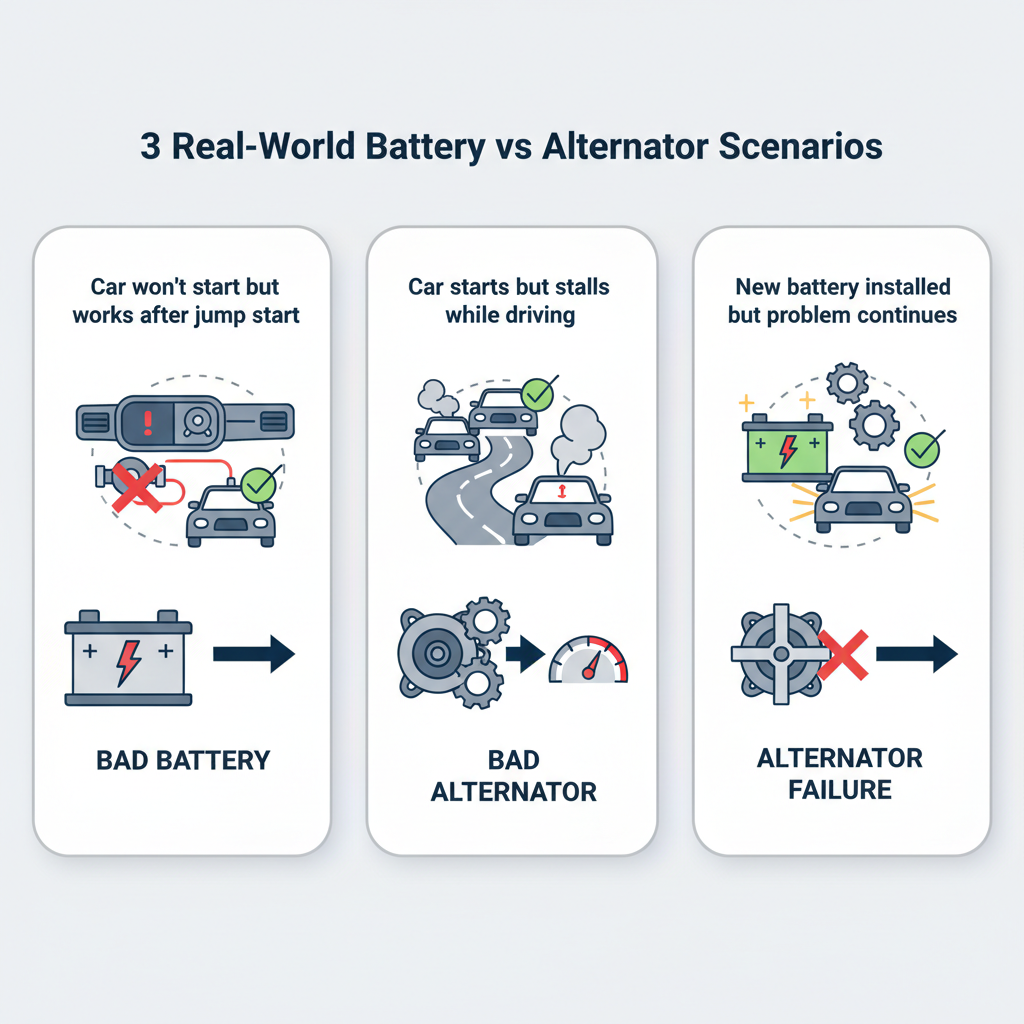
Scenario 1: Car won’t start but works after jump start
- Diagnosis: Bad battery.
- Explanation: Alternator works normally, but battery cannot hold charge.
Scenario 2: Car starts but stalls while driving
- Diagnosis: Bad alternator.
- Explanation: Alternator fails to supply electrical power.
Scenario 3: Battery replaced but problem continues
- Diagnosis: Alternator failure.
- Explanation: New battery becomes drained because alternator does not recharge it.
Causes of Failure & Lifespan
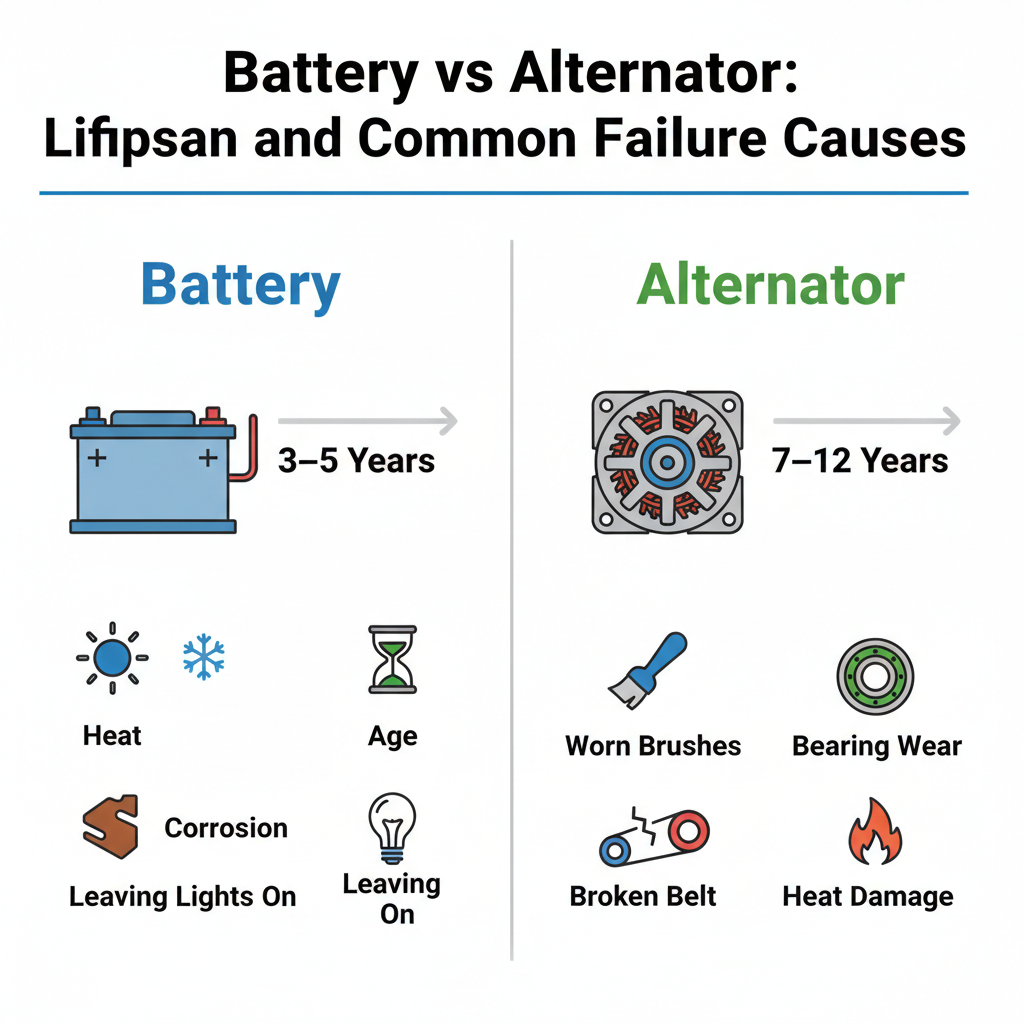
| Feature | Battery | Alternator |
| Lifespan | 3–5 years | 7–12 years |
| Common Causes | Heat/Cold, Age, Corroded terminals, Leaving lights on | Worn brushes, Bearing wear, Broken belt, Heat damage |
| Frequency | Fails more often | Fails less often |
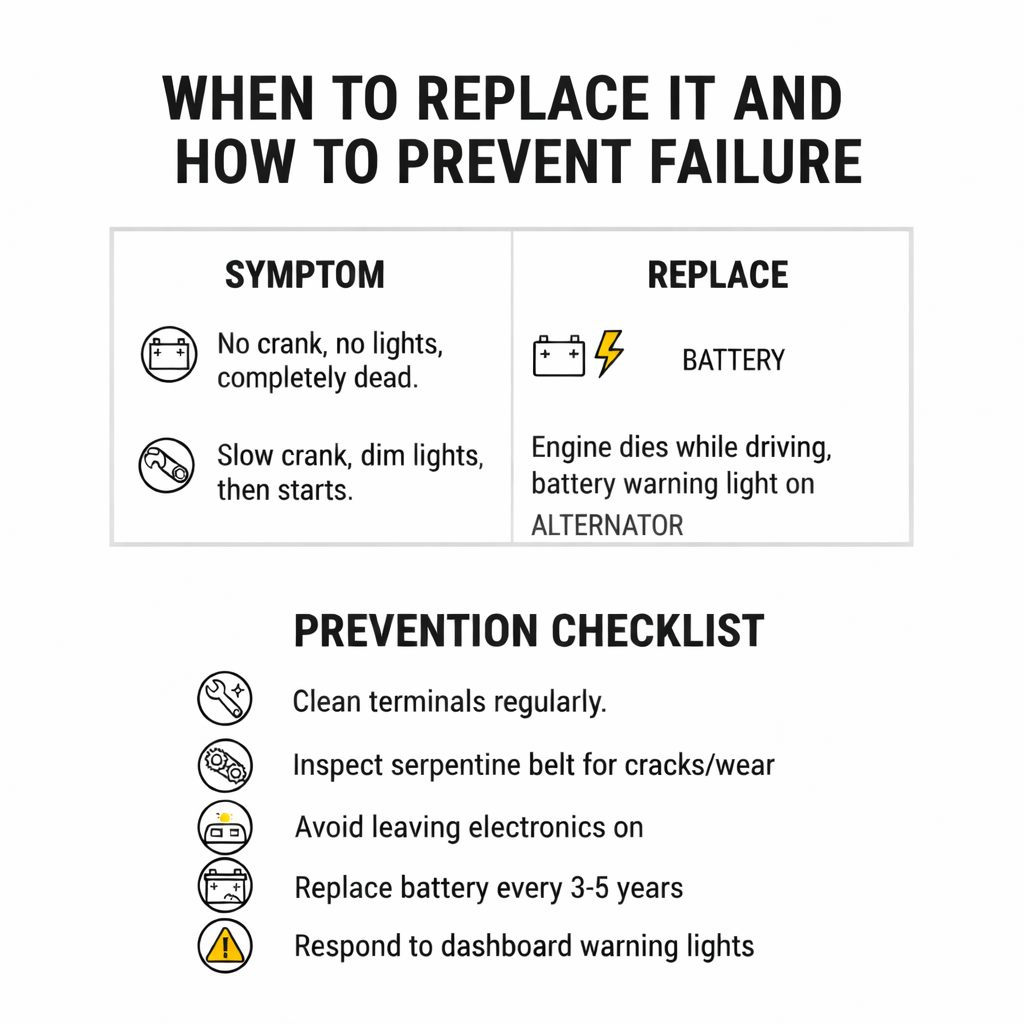
When to Replace Battery vs Alternator
Use this decision table:
| Situation | Replace Battery | Replace Alternator |
| Car won’t start | Yes | No |
| Car dies while driving | No | Yes |
| Battery voltage low engine off | Yes | No |
| Voltage low while engine running | No | Yes |
| Battery older than 5 years | Yes | Possible |
Prevention Tips to Extend Battery and Alternator Life
- Replace battery every 3–5 years.
- Keep battery terminals clean and free of corrosion.
- Avoid leaving electronics on when the engine is off.
- Inspect the drive belt regularly.
- Address dashboard warning lights immediately.
FAQ: Bad Battery vs. Bad Alternator
How do I know if my battery or alternator is bad?
Starting problems usually indicate battery failure. Problems while driving usually indicate alternator failure. Voltage testing confirms the diagnosis.
Will a car run with a bad alternator?
Yes, but only temporarily. Once the battery is drained, the engine will stop.
Can jump starting fix alternator problems?
No. Jump starting only provides temporary power. The alternator must be replaced to fix the issue permanently.
Final Diagnosis Summary
- Battery failure causes starting problems.
- Alternator failure causes problems while driving.
- Voltage testing provides definitive confirmation.