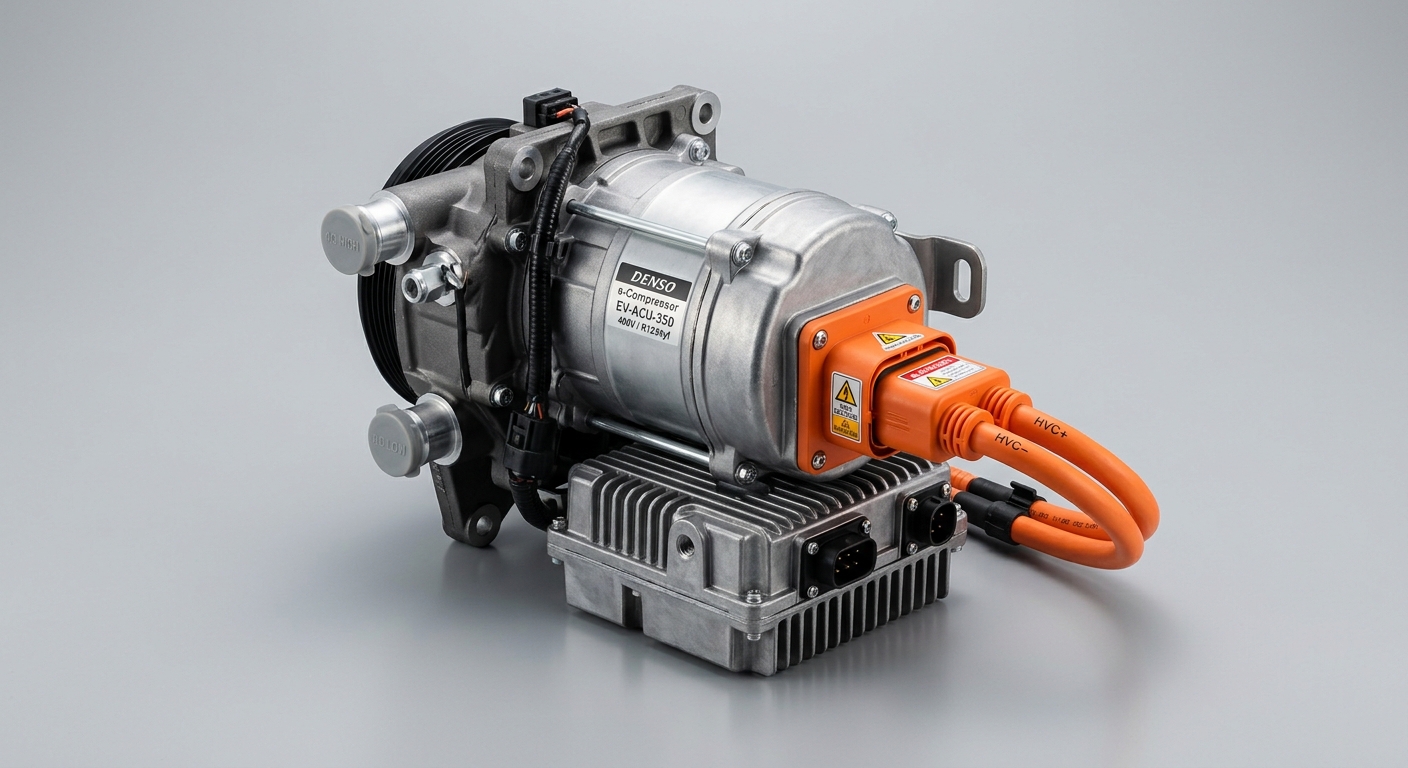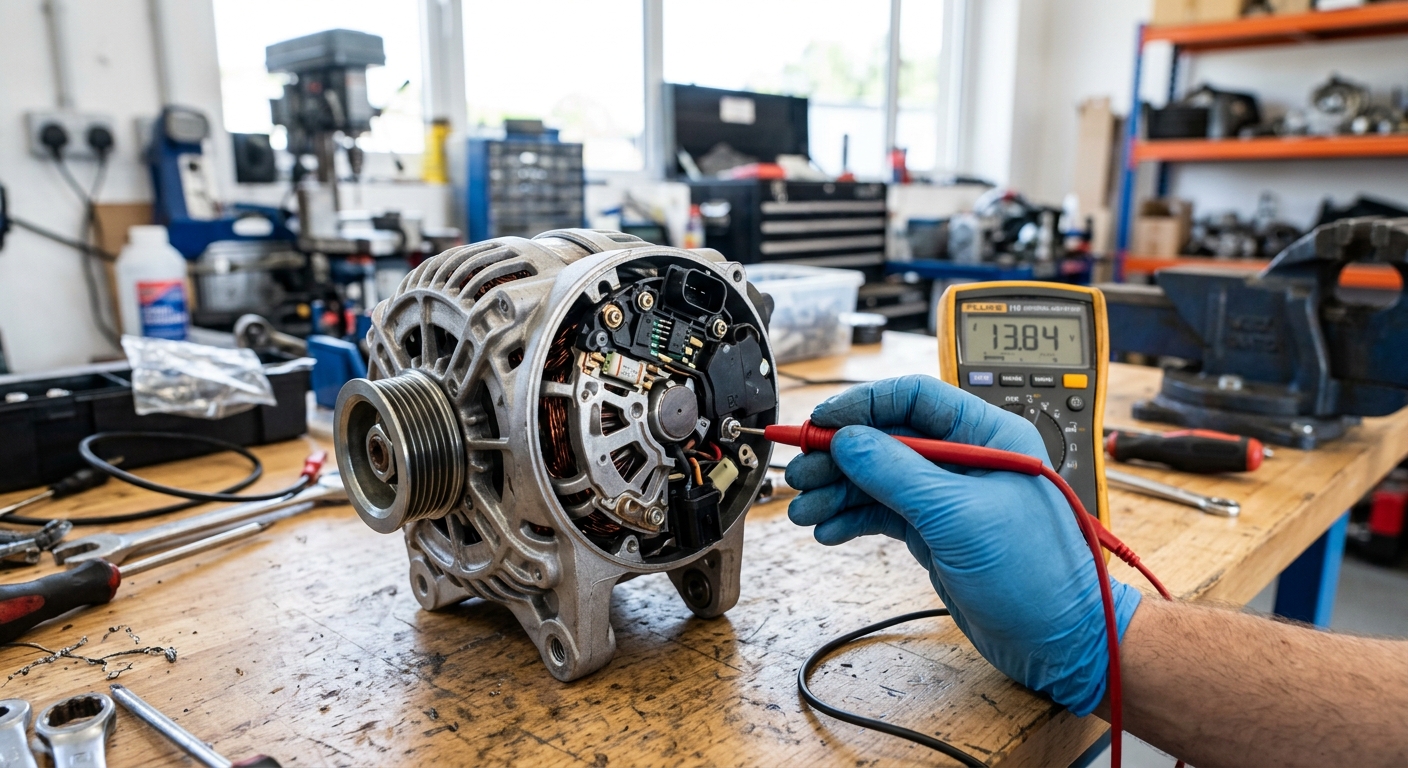
The alternator is one of the most critical components in your vehicle’s electrical system. Its primary function is to generate electricity while the engine is running, powering essential systems and keeping the battery charged. When the alternator begins to fail, electrical performance becomes unstable, and the vehicle may eventually stop running entirely.
Understanding the signs of a bad alternator allows drivers to identify problems early, avoid unexpected breakdowns, and prevent damage to other electrical components. Many alternator failures begin with subtle warning signs before progressing into complete charging system failure.
This guide explains the most common symptoms, why they occur, how to diagnose alternator problems, and what actions to take.
What Does an Alternator Do?
The alternator converts mechanical energy from the engine into electrical energy. This electricity powers and supports essential vehicle systems:
- Headlights and exterior lighting
- Dashboard instruments and electronics
- Engine control modules
- Infotainment and navigation systems
- Climate control systems
- Battery charging
Without a properly functioning alternator, the battery will gradually discharge, and the vehicle will eventually stop operating.
Most Common Signs of a Bad Alternator
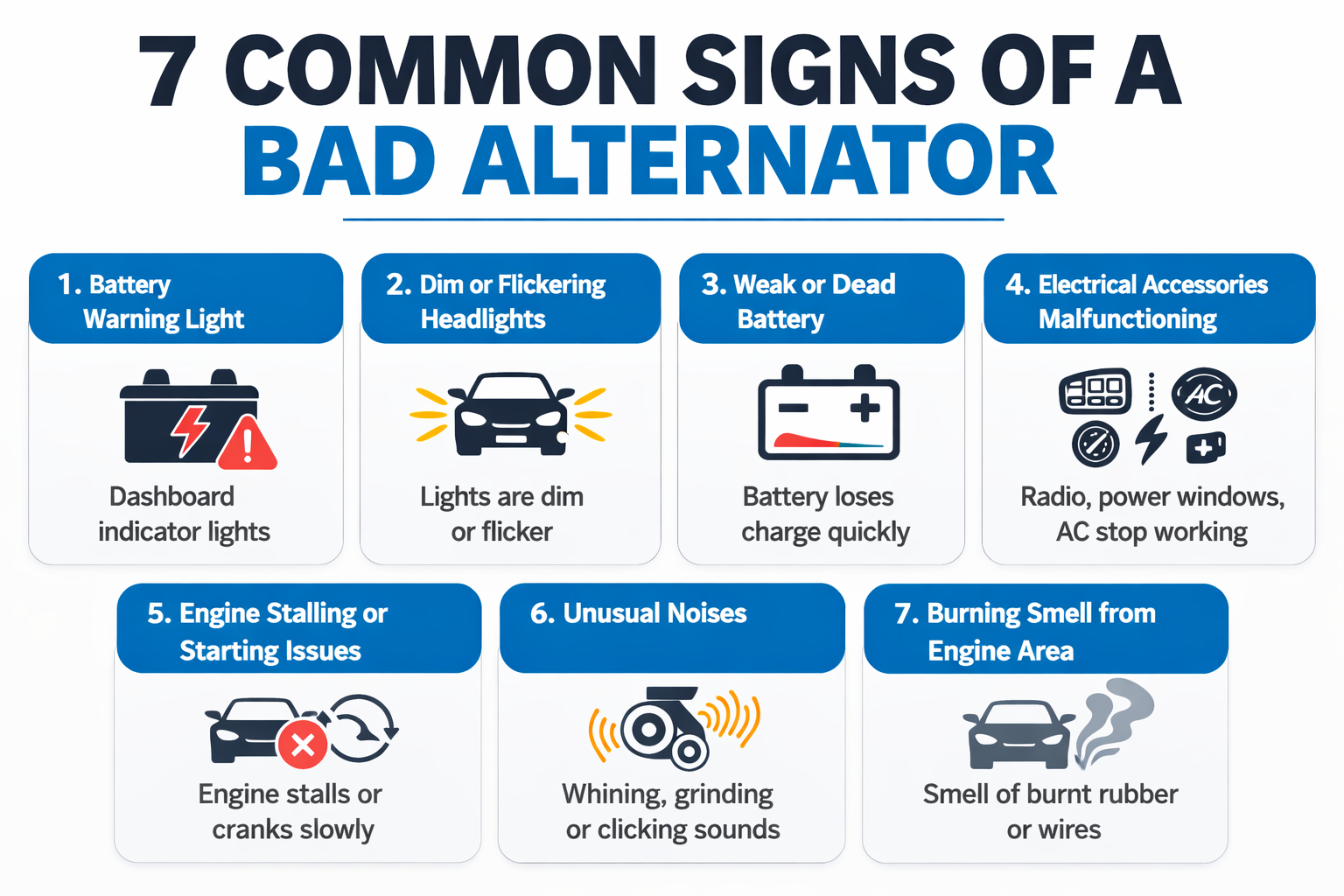
1. Battery Warning Light on the Dashboard
One of the most common early signs of a bad alternator is the battery warning light appearing on the dashboard. Although it is labeled as a battery light, it often indicates a problem with the vehicle’s charging system rather than the battery itself. When the alternator fails to maintain proper charging voltage, the system detects the abnormal condition and activates the warning light.
2. Dim or Flickering Headlights
Headlights depend on stable electrical voltage. A failing alternator produces inconsistent power output.
Common symptoms include:
- Headlights dimming at idle
- Lights flickering while driving
- Lights becoming brighter when accelerating
This occurs because voltage output fluctuates.
3. Weak or Dead Battery
A failing alternator cannot recharge the battery effectively.
You may notice:
- Battery dying frequently
- Vehicle needing jump starts
- Battery losing charge quickly
The battery is being drained faster than it is being recharged.
4. Electrical Accessories Malfunctioning
Modern vehicles rely heavily on electrical systems. When alternator output drops, accessories may stop working properly.
Examples include:
- Slow power windows
- Malfunctioning infotainment system
- Dashboard flickering
- Weak interior lighting
- Power seat issues
These symptoms indicate insufficient electrical supply.
5. Engine Stalling or Difficulty Starting
The alternator provides power to engine management systems.
If alternator output becomes insufficient:
- Engine may stall unexpectedly
- Vehicle may struggle to start
- Engine may stop while driving
This is a serious warning sign.
6. Grinding or Whining Noises
Failing alternators may produce mechanical noise.
Common sounds include:
- Grinding
- Whining
- Squealing
These noises often result from worn bearings or internal damage.
7. Burning Smell from Engine Area
A failing alternator can overheat or cause belt friction.
You may smell:
- Burning rubber
- Burning electrical insulation
This indicates overheating or excessive resistance.
Alternator Voltage Chart: Normal vs Bad
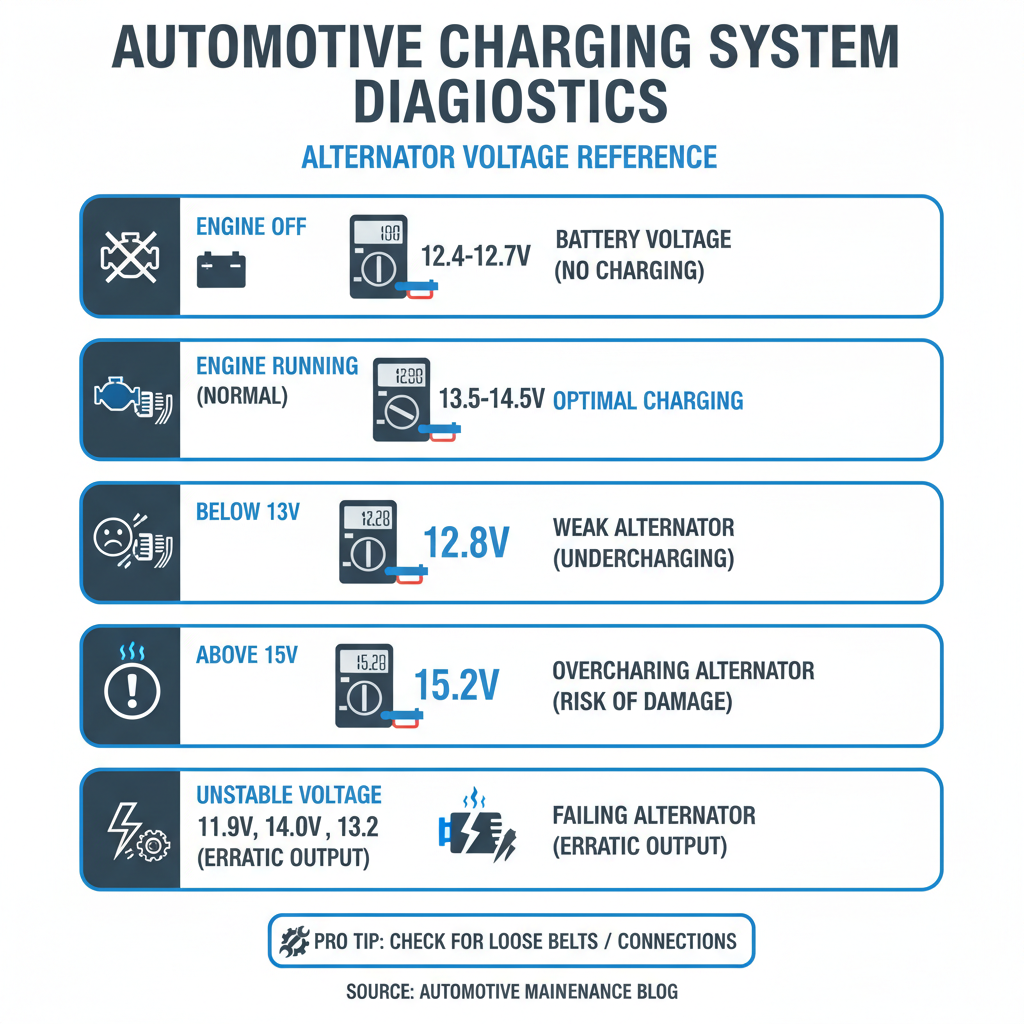
Voltage testing is one of the most reliable ways to diagnose alternator condition.
| Condition | Voltage Reading | Alternator Condition |
| Engine off | 12.4–12.7V | Normal battery voltage |
| Engine running | 13.5–14.5V | Normal alternator output |
| Engine running | Below 13V | Weak alternator |
| Engine running | Above 15V | Overcharging alternator |
| Voltage fluctuates | Unstable readings | Failing alternator |
Stable voltage is essential for proper vehicle operation.
How to Tell if It’s the Alternator or Battery
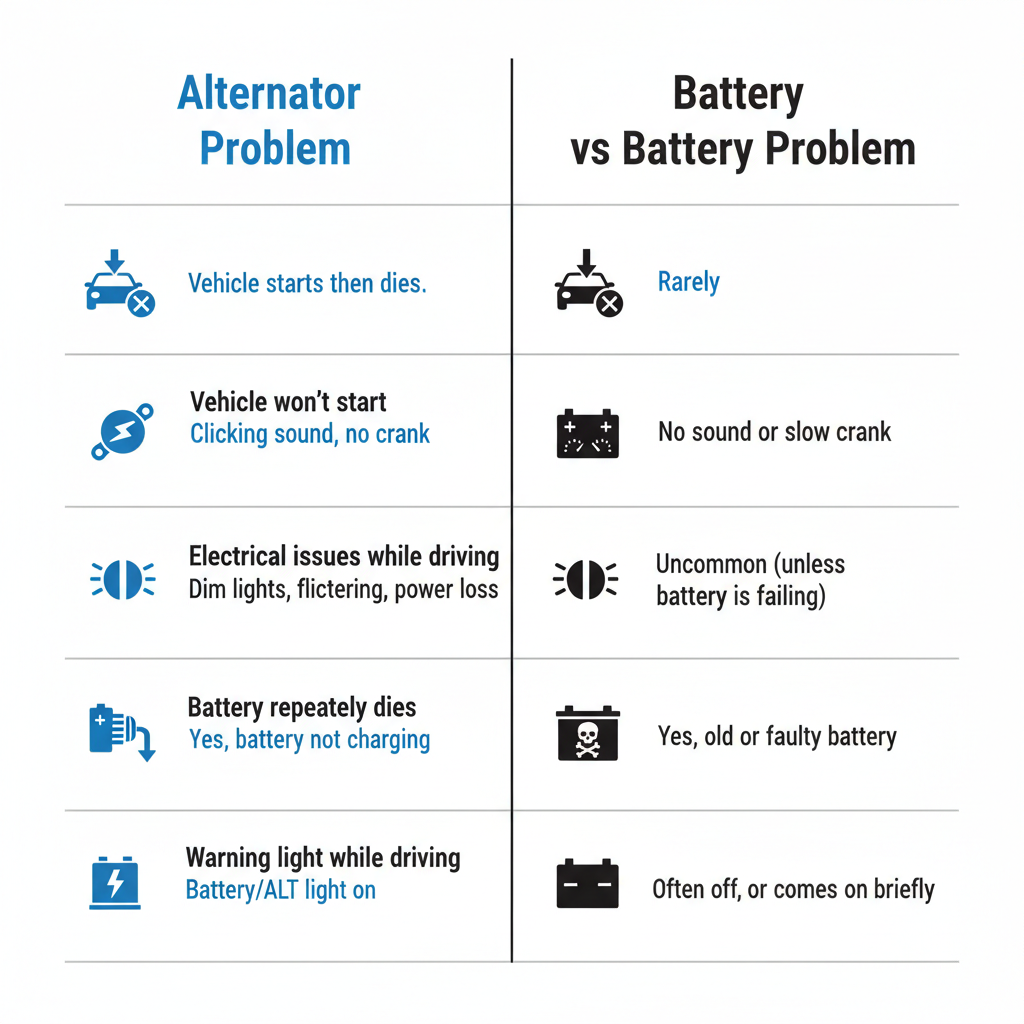
Alternator and battery problems share similar symptoms, but key differences help identify the cause.
| Symptom | Alternator Problem | Battery Problem |
| Vehicle starts then dies | Yes | No |
| Vehicle won’t start | Sometimes | Yes |
| Electrical issues while driving | Yes | Rare |
| Battery repeatedly dies | Yes | Sometimes |
| Warning light while driving | Yes | No |
If the vehicle runs briefly after a jump start but dies shortly after, the alternator is likely the problem.
How to Test an Alternator
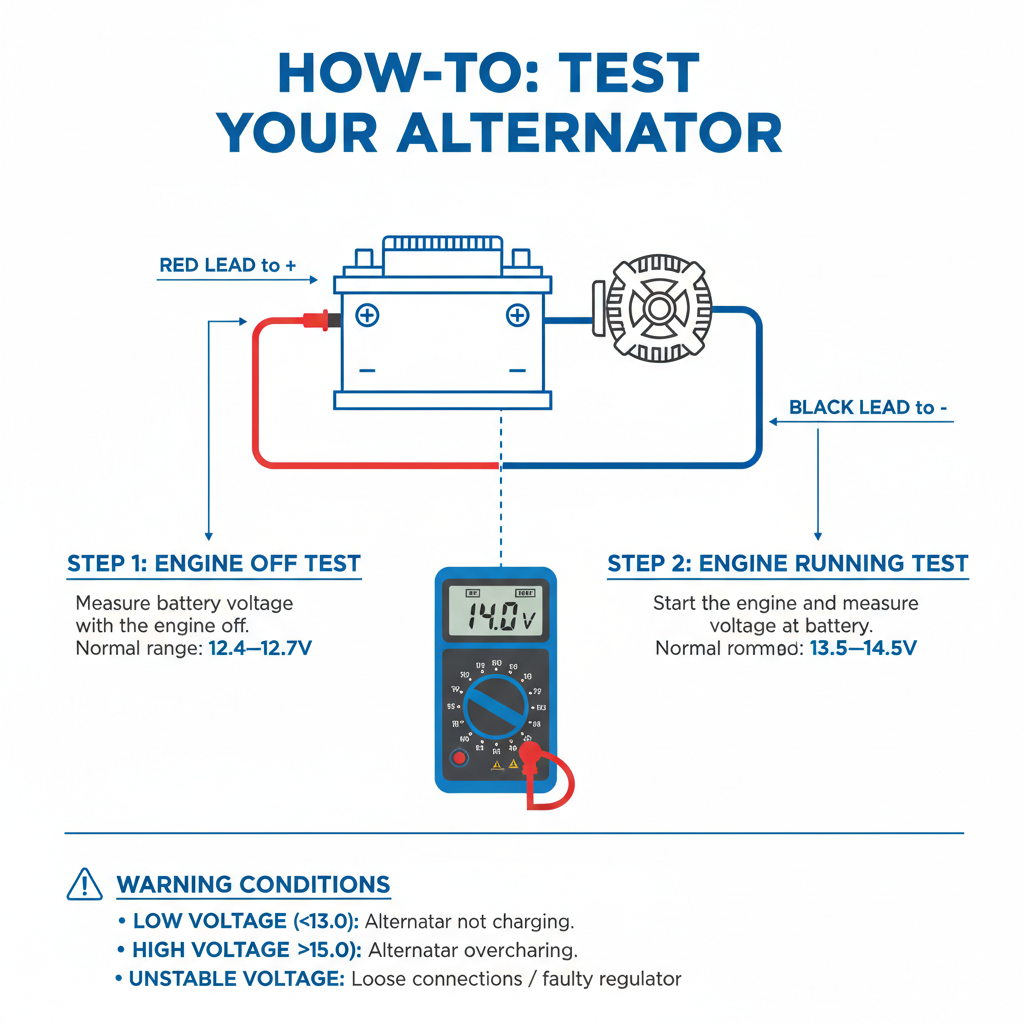
If you want a more complete step-by-step process before replacing any parts, this guide on how to check if the alternator is bad can help you confirm the problem more accurately. In most cases, alternator testing starts with a simple voltage check and a few functional observations while the engine is running.
Voltage Test with Multimeter
Step 1: Measure battery voltage with engine off
Normal range: 12.4–12.7 volts
Step 2: Start engine and measure voltage again
Normal range: 13.5–14.5 volts
If voltage remains low while the engine is running, the alternator may be failing.
Functional Observation Test
Watch for these signs while the engine runs:
• Flickering lights
• Electrical instability
• Warning lights
These indicate charging system issues.
Primary Causes of Alternator Failure
Alternators fail due to mechanical wear, electrical stress, or environmental factors.
Common causes include:
- Worn internal bearings
- Failed voltage regulator
- Heat damage from engine temperature
- Drive belt wear or slipping
- Electrical overload
- Age-related wear
Most alternators last between 80,000 and 150,000 miles depending on driving conditions.
What Happens If Your Alternator Fails While Driving
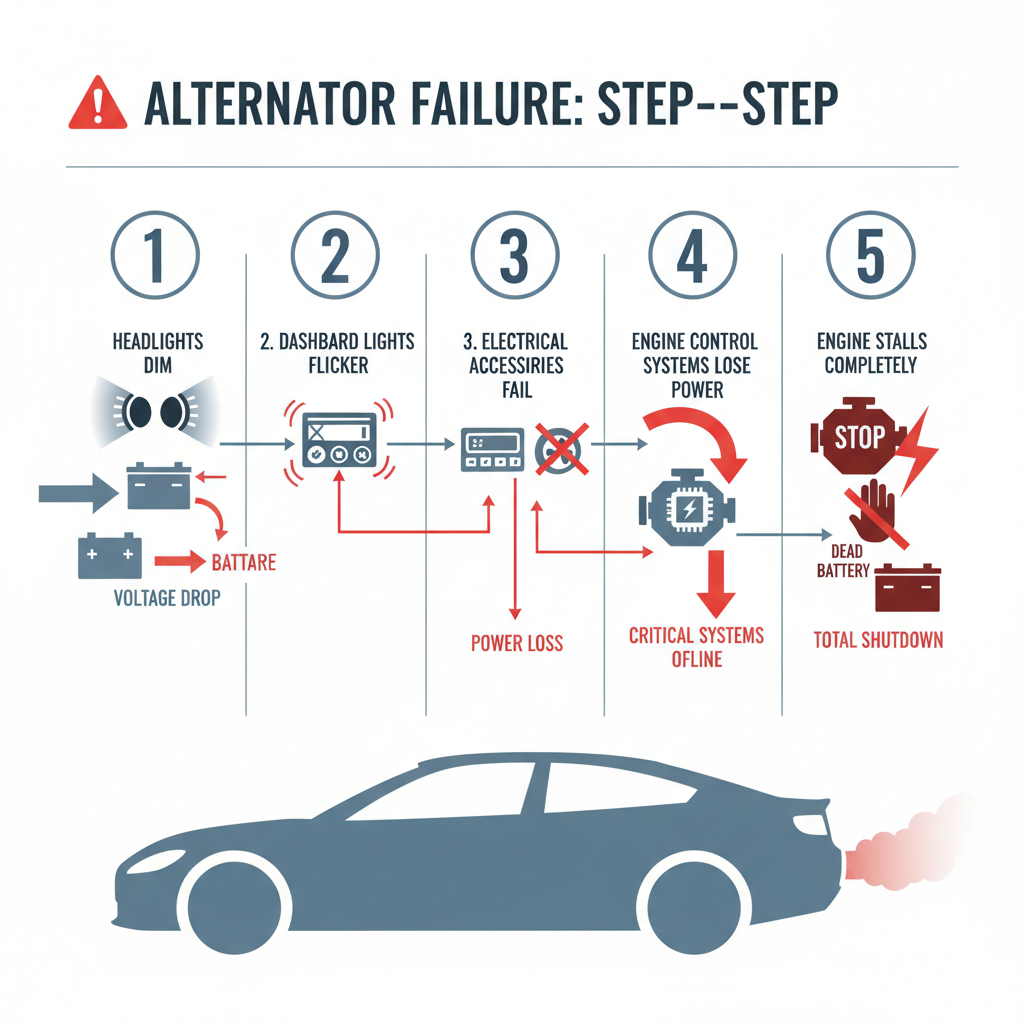
When an alternator fails completely, the vehicle begins running only on battery power.
Failure typically progresses in stages:
- Headlights begin dimming
- Dashboard lights flicker
- Electrical accessories stop working
- Engine control systems lose power
- Engine stalls completely
Once the battery is fully discharged, the vehicle will stop and cannot restart.
This is why alternator failure can lead to sudden breakdowns.
Alternator Failure Progression Timeline
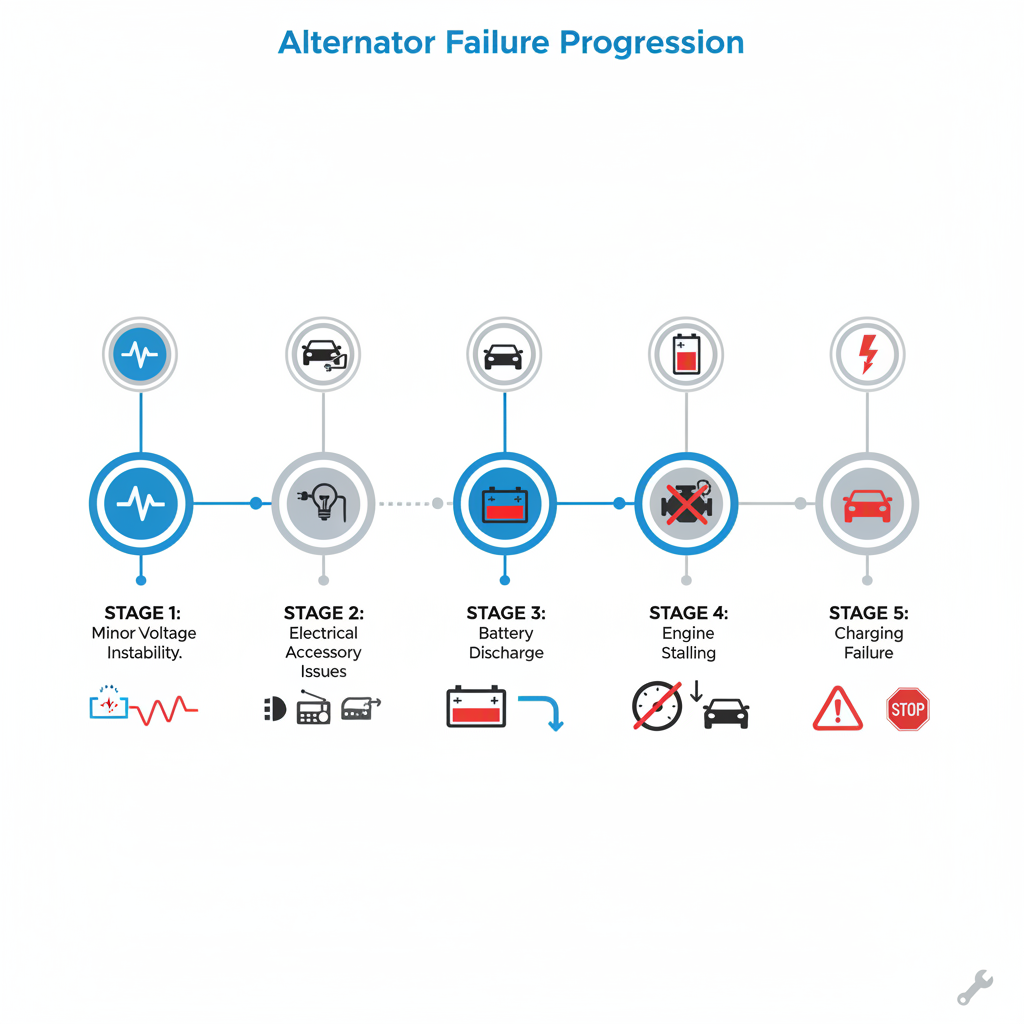
Alternator failure usually occurs gradually.
Typical progression includes:
- Stage 1: Minor voltage instability
- Stage 2: Electrical accessory issues
- Stage 3: Battery discharge
- Stage 4: Engine stalling
- Stage 5: Complete charging failure
Early detection prevents breakdown.
Can You Drive with a Bad Alternator?
Driving with a bad alternator is risky.
The vehicle will operate only until the battery is depleted. Once the battery loses charge, the engine will shut down.
Driving distance varies depending on battery condition and electrical load.
Failure can occur suddenly without warning.
When to Replace the Alternator
Replacement is recommended if:
- Voltage falls below normal range
- Electrical symptoms appear
- Mechanical noise is present
- Battery repeatedly loses charge
Prompt replacement prevents complete failure.
Signs of a Bad Alternator vs Normal Electrical Variation
Normal electrical behavior:
- Slight brightness variation at idle
- Minor changes during heavy load
Abnormal behavior:
- Persistent flickering
- Repeated battery failure
- Warning lights staying on
Consistent instability indicates alternator failure.
Frequently Asked Questions
How long can you drive with a bad alternator?
Driving range varies depending on battery condition. The vehicle may run from a few minutes to several hours before stopping.
Will a bad alternator drain the battery?
Yes. A failing alternator cannot recharge the battery, causing gradual discharge.
Can a bad alternator cause engine stalling?
Yes. Engine systems require electrical power. Without sufficient voltage, the engine will stop.
What voltage indicates a bad alternator?
Voltage below 13 volts or unstable voltage while the engine runs indicates alternator problems.
Conclusion
Recognizing the signs of a bad alternator early helps prevent unexpected breakdowns and costly repairs. Common symptoms include dim headlights, battery warning lights, electrical malfunctions, repeated battery discharge, unusual noises, and engine stalling.
Alternator failure typically begins with voltage instability and progresses into complete charging system failure. Proper diagnosis using voltage testing and symptom observation allows early detection and prevents sudden vehicle shutdown.
If warning signs appear, prompt inspection and replacement ensure vehicle reliability and prevent unexpected breakdowns.