A high-quality auto parts supplier consistently delivers components that meet OEM specifications, backs them with transparent warranties, holds recognized manufacturing certifications, and communicates proactively — before, during, and after the sale. That’s the short answer. The longer answer involves knowing exactly which red flags to watch for and which verification steps to take before you commit a purchase order, because one bad sourcing decision can cascade into warranty claims, vehicle downtime, and a reputation hit that takes years to repair. Below, we break down every criterion you need — with real numbers, real scenarios, and practical checklists — so you can vet any supplier with confidence.
Why Supplier Quality Matters More Than Unit Price
Here’s a number that should keep every parts buyer awake at night: a single defective alternator returned under warranty can cost 3–5× the original unit price once you factor in labor, shipping, customer compensation, and lost goodwill. Cheap parts aren’t cheap when they fail.
The auto parts aftermarket is massive — worth over $400 billion globally — and that scale attracts suppliers at every quality tier. Some manufacture to OE tolerances. Others cut corners on materials, skip quality gates, and rely on buyers who don’t ask the right questions. Your job is to tell them apartbeforethe parts hit your shelves.
The Real Cost of a Bad Supplier
- Direct costs:Replacement parts, return freight, restocking labor.
- Indirect costs:Technician downtime, rescheduled appointments, expedited shipping for rush replacements.
- Reputation costs:Negative reviews, lost repeat business, damaged relationships with fleet accounts.
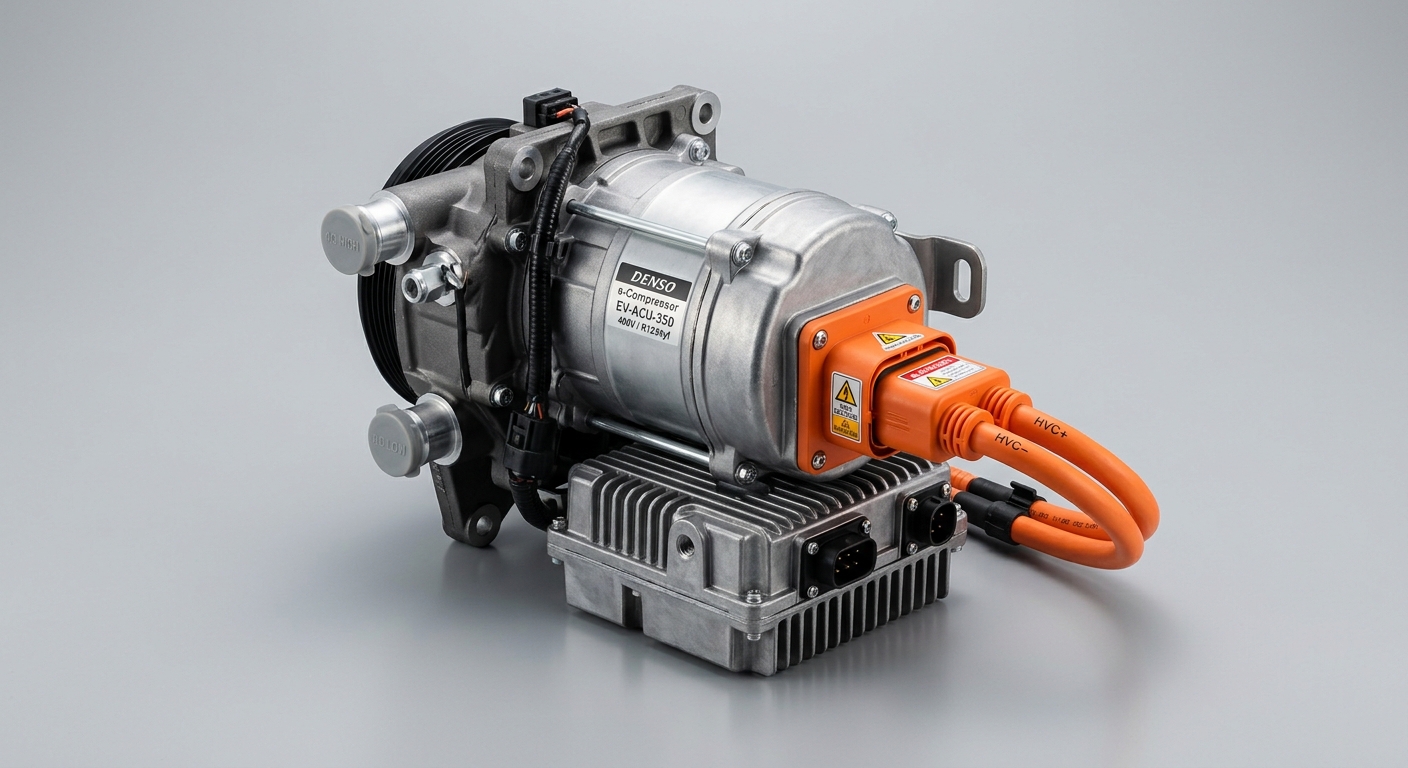
A workshop owner in the Midwest learned this the hard way. He switched to a no-name AC compressor supplier to save $18 per unit. Within four months, his compressor return rate jumped from 1.2% to nearly 9%. After factoring in warranty labor and lost customers, that “savings” cost him over $14,000 in a single quarter. He went back to his original supplier — and never chased rock-bottom pricing again.
Certifications: The First Filter You Should Apply
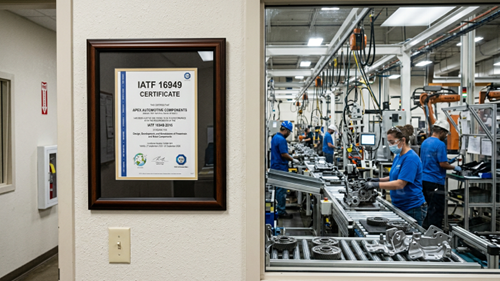
Certifications aren’t just wall decorations — they’re proof that a supplier’s manufacturing processes have been audited by an independent body. If a supplier can’t show you current, verifiable certifications, that’s your cue to walk away.
Certifications That Actually Matter
- IATF 16949:The gold standard for automotive quality management. It builds on ISO 9001 but adds automotive-specific requirements like PPAP (Production Part Approval Process) and FMEA (Failure Mode and Effects Analysis).
- ISO 9001:A solid baseline for quality management systems. Not automotive-specific, but it shows the supplier has documented processes and continuous improvement loops.
- ISO 14001:Environmental management. Increasingly important for buyers with ESG requirements or European market targets.
- TS/CNAS Lab Accreditation:Means the supplier’s in-house testing lab meets international standards — their test results are actually trustworthy.
How to Verify
Don’t just accept a PDF. Cross-check the certificate number on the issuing body’s website. Confirm the scope covers the specific product lines you’re buying — a supplier certified for brake pads isn’t necessarily certified for starters and alternators. And check the expiration date. Lapsed certifications are a red flag.
Product Quality Benchmarks: What to Test and How
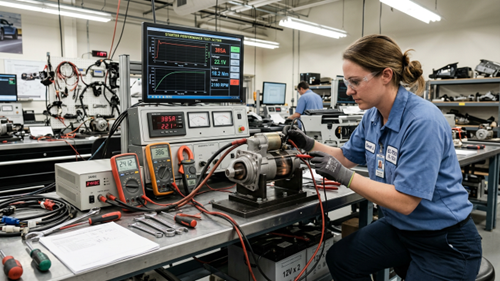
Certifications tell you about thesystem. Product testing tells you about theoutput. Both matter, and neither replaces the other.
Request Samples Before Committing
Any reputable supplier will send you samples — often at no charge or at cost. If a supplier resists sample requests, treat that as a disqualifying signal. When you receive samples:
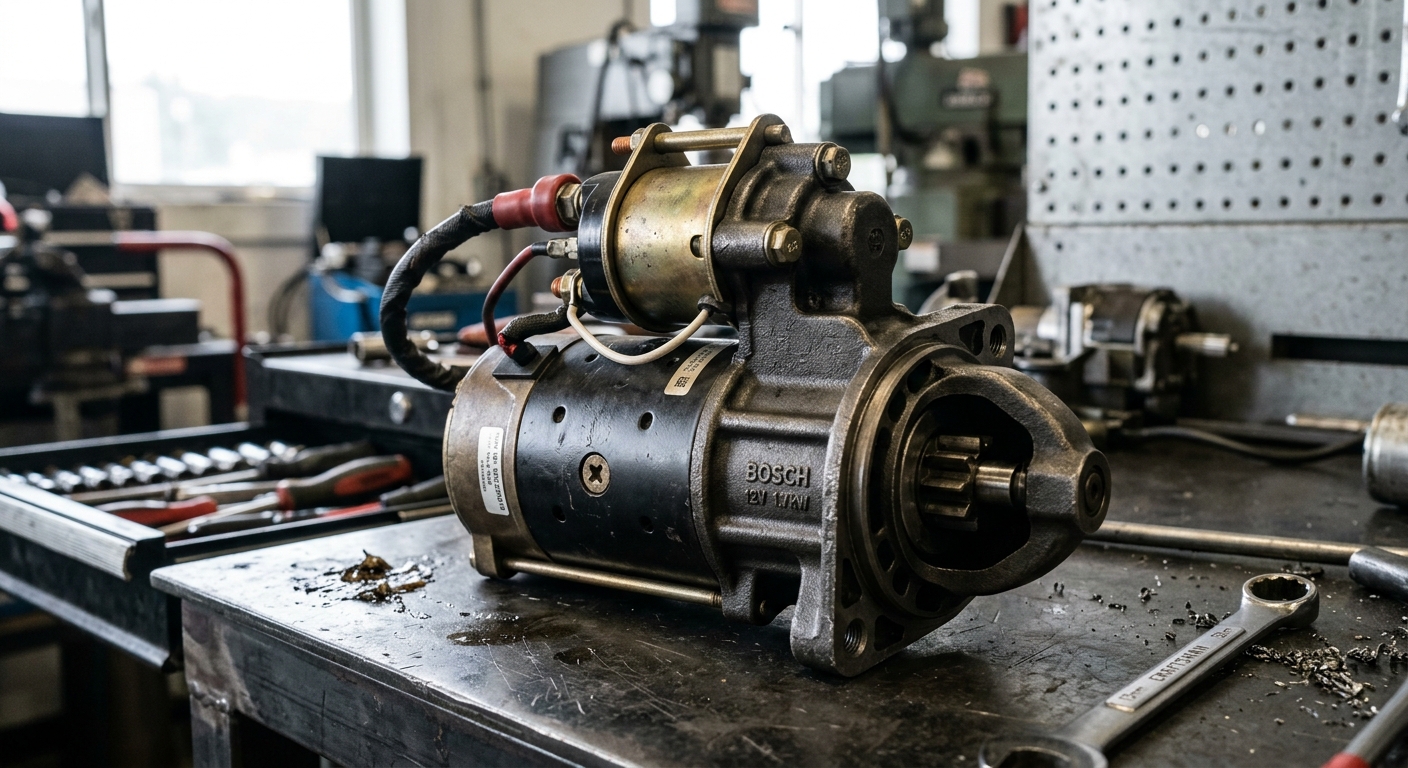
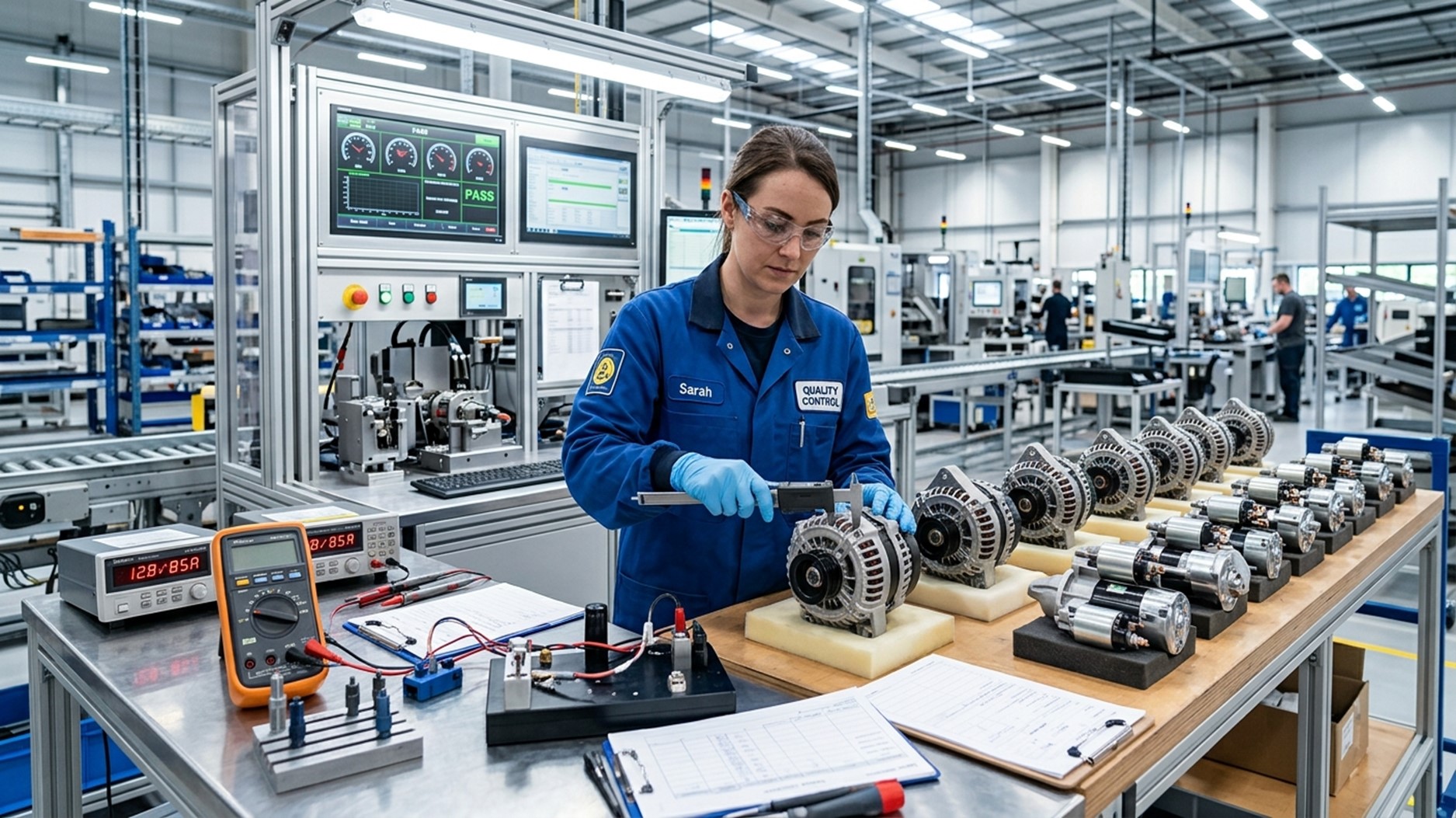
- Dimensional inspection:Measure critical dimensions against OEM specs. A starter motor housing that’s 0.3mm off on a mounting bore will vibrate loose within months.
- Material verification:Ask for material Certificates of Analysis (COAs). For critical components like AC compressors, the wrong alloy grade in a swash plate leads to premature wear.
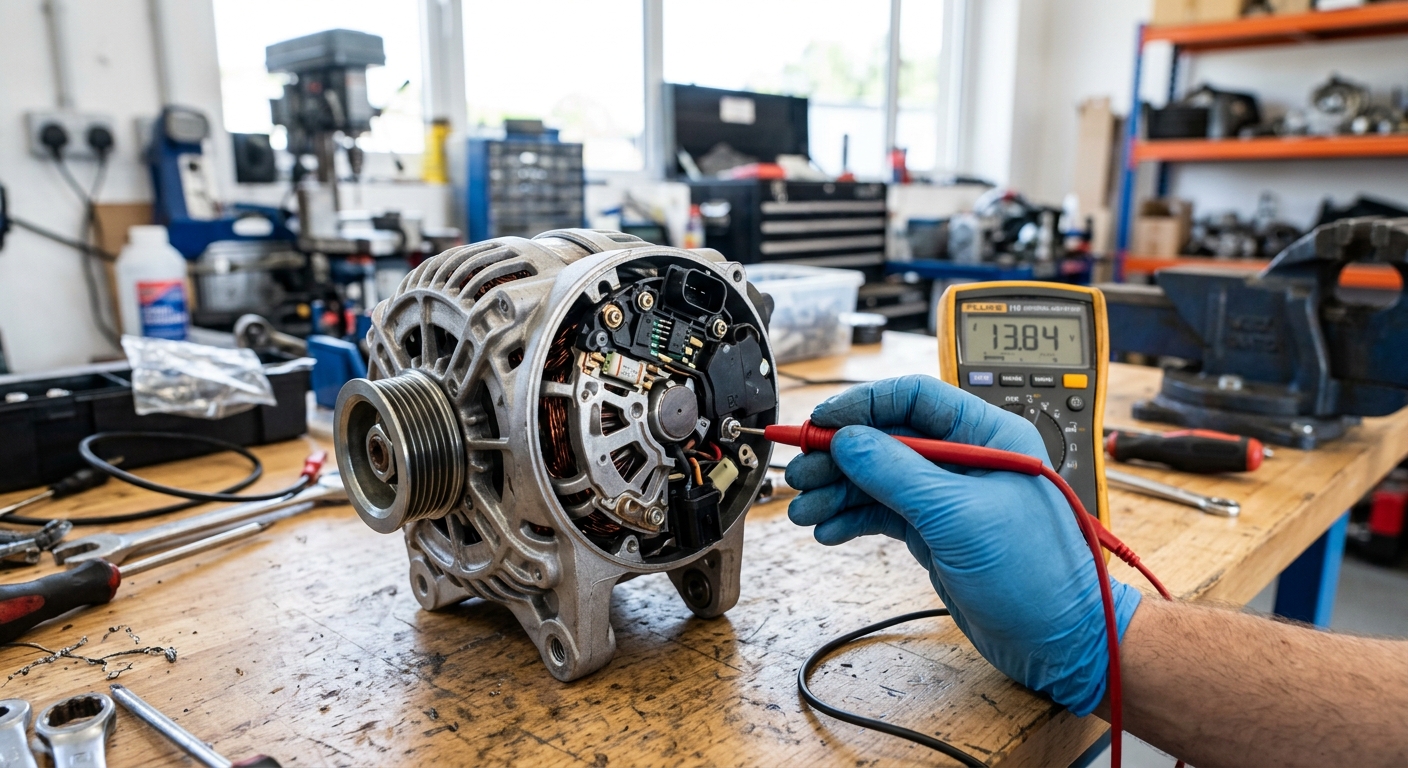
- Performance testing:Bench-test electrical components under load. An alternator should hold rated output (e.g., 120A) at operating temperature, not just at room temp.
- Endurance/lifecycle testing:For high-volume orders, request lifecycle test data. A quality starter should handle 50,000+ engagement cycles minimum.
Defect Rate Expectations
Ask for the supplier’s published defect rate — and then verify it with a trial order. Top-tier suppliers maintain defect rates below 0.5%. Anything above 2% on a consistent basis signals process control problems that won’t fix themselves.
Warranty and Return Policies: Read the Fine Print
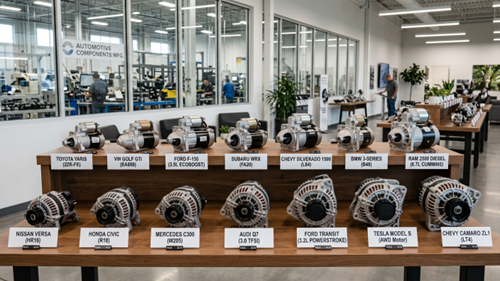
A warranty is only as good as the terms behind it. A supplier advertising “24-month warranty” sounds great — until you read the exclusions and realize it covers almost nothing in practice.
What to Look For
- Coverage period:12 months is the industry baseline for aftermarket parts. 18–24 months signals genuine confidence in product quality.
- Coverage scope:Does it cover only manufacturing defects, or does it include premature wear? Are electrical failures included?
- Claim process:How fast do they process claims? Do they require you to ship the defective part back at your expense before issuing a replacement? Some suppliers issue advance replacements — a huge advantage for keeping your customers happy.
- Labor reimbursement:The best suppliers reimburse a portion of installation labor for warranty claims. This is rare but extremely valuable.
Red Flags
Watch out for suppliers who void warranties for “improper installation” without defining what that means. Also be wary of suppliers who take 30+ days to process claims — by then, you’ve already eaten the cost.
Supply Chain Transparency and Traceability
Can your supplier tell you exactly which production batch a specific part came from? If the answer is no, you’re flying blind when quality issues arise.
Why Traceability Matters
Imagine you receive a batch of 500 alternators and three fail within the first month. With full traceability, the supplier can identify whether those three came from the same production run, the same raw material lot, or the same assembly line — and isolate the problem. Without it, you’re left guessing whether the other 497 units are ticking time bombs.
What to Ask For
- Batch/lot numbers:Printed on each unit or packaging.
- Raw material COAs:Traceable to the steel mill, copper supplier, or bearing manufacturer.
- Production records:Date of manufacture, shift, line number.
- Testing records:End-of-line test results linked to each batch.
At aohuiautoparts, we maintain full batch traceability on every product we ship — from raw material intake through final testing. It’s not optional; it’s how we ensure that if a problem ever surfaces, we can respond in hours, not weeks.
Communication and Responsiveness: The Underrated Indicator
You can learn more about a supplier from their pre-sale communication than from any brochure. Slow responses, vague answers, and dodged questions during the courtship phase only get worse after you’ve placed an order.
Green Flags
- Responds to inquiries within 24 hours (ideally same business day).
- Assigns a dedicated account manager rather than rotating you through a call center.
- Proactively shares production timelines, shipping updates, and potential delays.
- Provides technical support — not just sales support. Can they answer questions about alternator diagnostics or compressor compatibility?
A Real-World Test
Before placing a large order, try this: send a moderately technical question at an odd hour — say, a Friday afternoon. Ask about a specific fitment detail or material spec. A quality supplier will get back to you with a precise, knowledgeable answer. A mediocre one will give you a generic response or go silent until Monday. That response pattern will repeat for every issue you encounter during the relationship.
Evaluate Their Product Range and Specialization
A supplier that tries to sell everything — from brake rotors to cabin filters to engine mounts — often excels at nothing. Specialization matters, especially for complex electromechanical components.
Depth Over Breadth
Look for suppliers who go deep in their product categories. A supplier specializing in rotating electrical parts (starters, alternators, generators) will have better tooling, more refined testing protocols, and deeper engineering knowledge than a generalist warehouse that dropships from five different factories.
For example, when you’re sourcing a new or remanufactured starter, a specialist can tell you the exact differences in solenoid engagement force between the OE unit and their aftermarket version. A generalist just reads you the catalog listing.
Coverage Across Vehicle Applications
That said, within their specialty, a good supplier should cover a wide range of vehicle applications — domestic, Asian, European. If they only stock parts for 30 popular models, you’ll end up splitting orders across multiple suppliers, which increases logistics complexity and cost.
Pricing Structure: How to Spot Value vs. a Trap
The cheapest quote is almost never the best deal. But the most expensive one isn’t automatically the best either. Here’s how to think about pricing intelligently.
Total Cost of Ownership (TCO)
Calculate TCO, not just unit cost. TCO includes:
- Unit price
- Shipping and customs (for international suppliers)
- Expected warranty claim rate × cost per claim
- Inventory holding cost (do they offer JIT or consignment options?)
- Administrative cost of managing the relationship
Price Benchmarking
Get quotes from at least three suppliers for the same SKU. If one quote is 30%+ below the others, that’s not a bargain — it’s a warning. Either they’re using inferior materials, skipping quality steps, or operating on unsustainably thin margins that will lead to corner-cutting later.
Volume Pricing and Payment Terms
Quality suppliers offer tiered pricing that rewards commitment without requiring unreasonable minimums. They’re also willing to discuss payment terms — Net 30, letters of credit, or even trade credit for established accounts. A supplier who demands 100% upfront with no flexibility is either cash-strapped or doesn’t trust their own product longevity.
The Trial Order: Your Best Due Diligence Tool
No amount of research replaces putting parts in actual vehicles. A trial order — typically 50–200 units — is the single most effective way to validate a supplier before scaling up.
What to Evaluate During a Trial
- Packaging quality:Are parts individually protected? Proper packaging prevents transit damage and signals attention to detail.
- Labeling accuracy:Do part numbers, fitment details, and barcodes match what was quoted?
- Dimensional consistency:Measure a random sample (at least 10%) against specs.
- Fit and function:Install a subset in actual vehicles. Monitor for noise, vibration, and performance over 30–60 days.
- On-time delivery:Did they hit the promised ship date? Chronic late delivery is a supply chain killer.
For instance, a fleet maintenance company in Texas ran a 100-unit trial of remanufactured AC compressors from a new supplier. They installed 20 units across their delivery van fleet and tracked performance for 60 days. Zero failures, noise levels matched OE, and the supplier shipped two days early. That data gave them the confidence to place a 2,000-unit annual contract. Without the trial, they’d have been gambling.
Partner With a Supplier Who Earns Your Trust
Identifying a high-quality auto parts supplier isn’t about finding perfection — it’s about finding a partner who is transparent about their capabilities, backs their products with real warranties, communicates proactively, and improves continuously. The checklist is straightforward: verify certifications, test samples, scrutinize warranty terms, evaluate communication, and always run a trial order before committing at scale.
At aohuiautoparts, we specialize in starters, alternators, and AC compressors — built and remanufactured to OEM specifications with full batch traceability and warranties that reflect genuine confidence in our products. We welcome sample requests, trial orders, and tough technical questions. If you’re evaluating suppliers right now, reach out to our team— we’re happy to walk you through our quality process and let the parts speak for themselves. Browse our full product catalog to see what we offer.