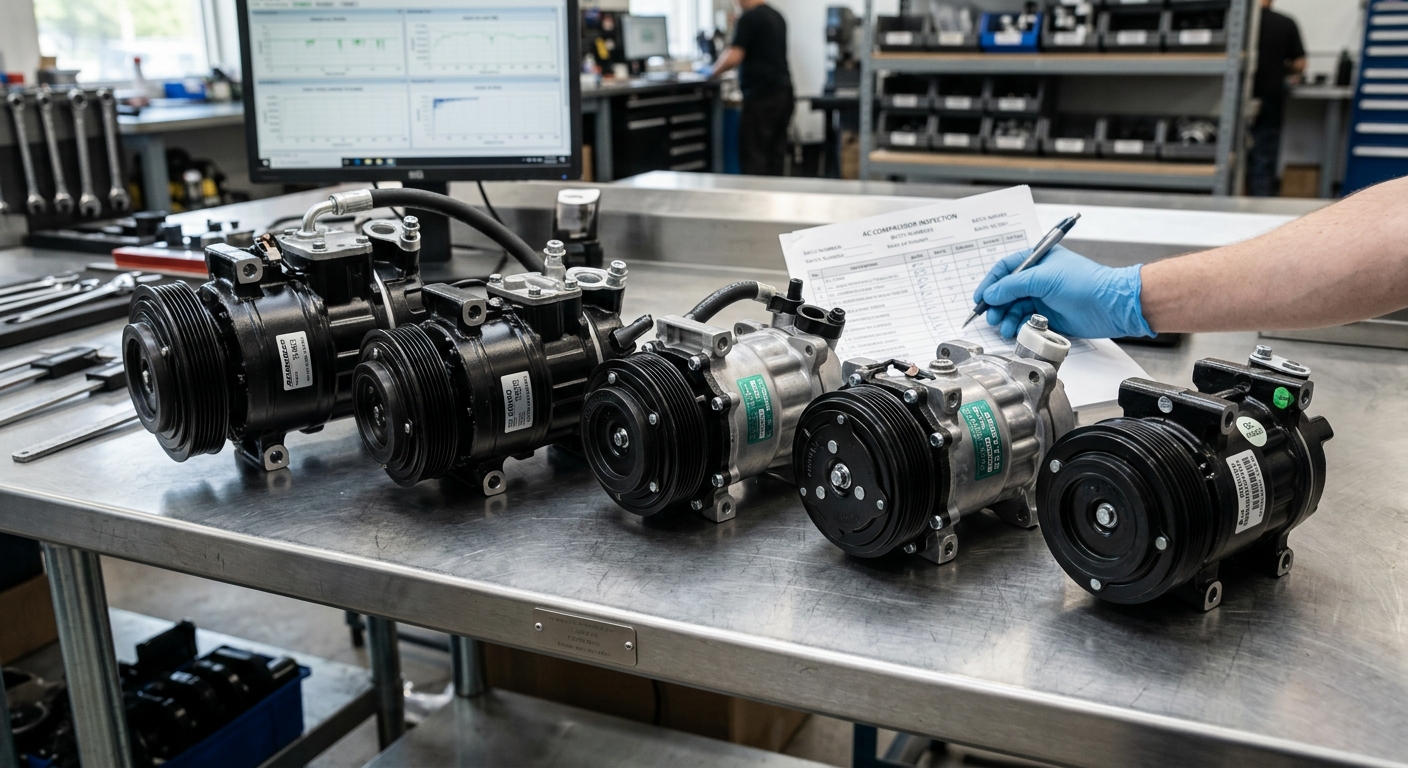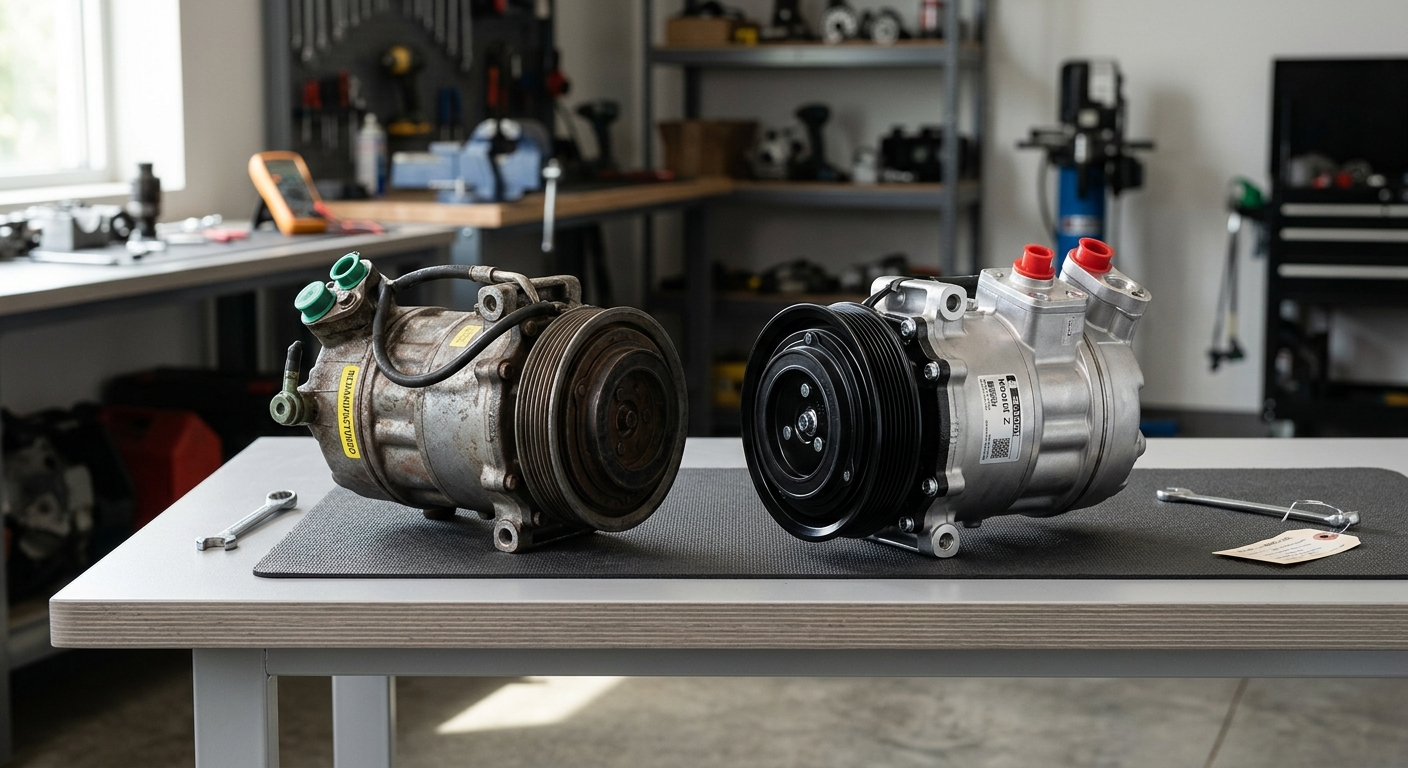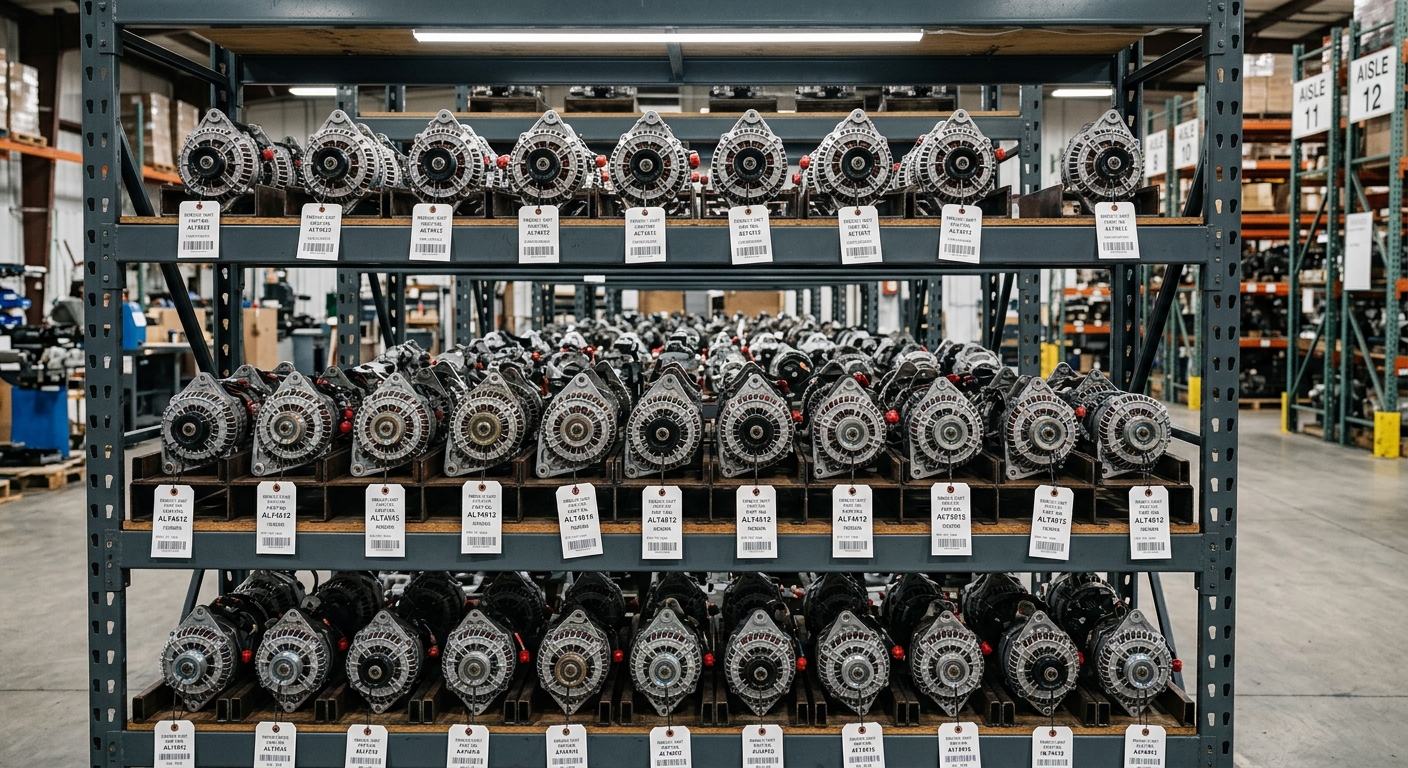
Fleet downtime tied to alternator failures drops sharply once maintenance teams stop buying alternators one at a time and start sourcing rebuilt units in bulk, held as ready stock. A single alternator failure can park a delivery van or box truck for days waiting on a part — bulk rebuilt sourcing turns that into a same-day swap from your own shelf. The savings aren’t just in unit price; they’re in the hours a truck isn’t earning money while it sits in the bay.
Why Alternator Failures Are a Bigger Downtime Problem Than Fleets Realize
Ask any fleet manager what kills the most billable hours, and most will say brakes or tires. They’re wrong more often than you’d think. Alternator failures are sneaky — the vehicle usually doesn’t die on the spot, it limps along on battery power until it stalls somewhere inconvenient, often on a delivery route or highway shoulder.
That’s the real cost: not the part, but the tow, the missed delivery window, the driver sitting idle, and the rescheduling headache. A $150-300 rebuilt alternator becomes a $1,200+ problem once you factor in roadside assistance and lost route time. Fleets running 20+ vehicles will see at least a few alternator failures a year purely from duty-cycle wear — short trips, constant stop-start, heavy accessory load. If you want to understand the failure mechanics before you get to sourcing strategy, our alternator diagnostic guide breaks down the early warning signs your drivers should be trained to report.

The Case for Rebuilt Over New in a Fleet Context
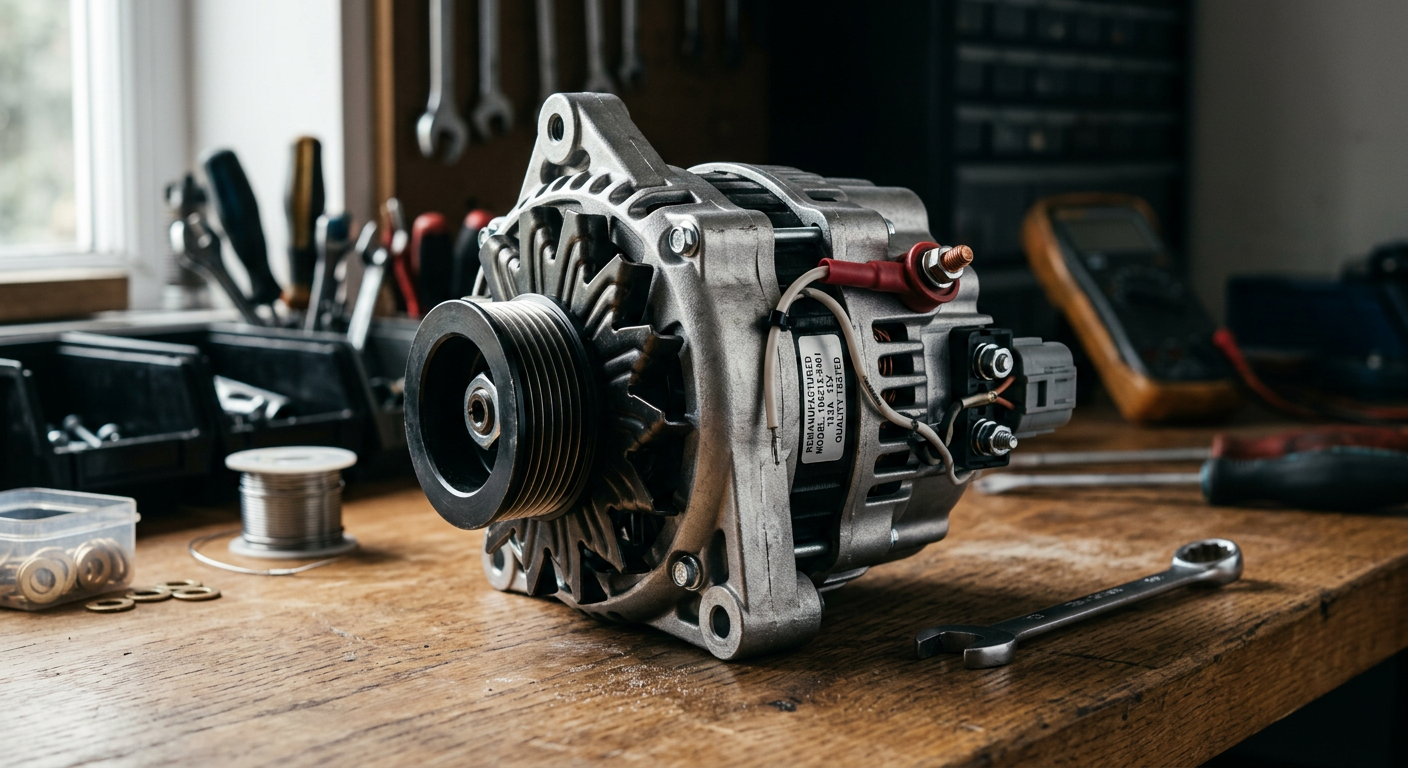
For fleet maintenance, rebuilt alternators aren’t a compromise — they’re often the smarter buy. New units cost more and typically carry longer lead times when ordered in bulk from OEM channels. Quality-tested rebuilt alternators, sourced from a supplier with real bench-testing protocols, perform at OEM spec for a fraction of the price and can be stocked in higher volume for the same budget.
Where rebuilt makes the most sense
- Mixed-brand fleets where OEM part costs vary wildly across vehicle makes
- High-mileage vehicles where a new alternator’s extra lifespan won’t outlast the vehicle’s remaining service life anyway
- Fleets replacing 10+ units a year, where unit cost savings compound fast
We covered the buying logic in more depth in our practical guide to buying rebuilt alternators for businesses — worth a read if your procurement team is still weighing new vs. rebuilt across the whole fleet.
Building a Buffer Stock Strategy That Actually Prevents Downtime
Bulk sourcing only cuts downtime if you’re stocking the right units in the right quantities. Buying 50 alternators that don’t match your fleet’s vehicle mix just ties up cash in the wrong parts.
A practical stocking formula
Start by pulling failure history from your maintenance logs over the past 24 months. If Ford Transit alternators failed 8 times and Sprinter vans failed 3 times, your buffer stock ratio should roughly mirror that — not an even split. Most mid-size fleets (30-80 vehicles) find that stocking 8-15% of their annual alternator failure count as standing inventory eliminates the majority of emergency, rush-order situations.
Real-world example
A regional delivery fleet running 65 vans was losing an average of 1.5 days per alternator failure waiting on parts from a local retail counter. After switching to a bulk rebuilt alternator program with a dedicated supplier and stocking 10 units on-site matched to their top three vehicle models, average replacement time dropped to under 4 hours — the part was already on the shelf, tested and ready.

What to Actually Check Before Signing a Bulk Rebuilt Alternator Contract
Not every rebuilder tests to the same standard, and this is where fleets get burned. A cheap bulk lot with a high failure rate defeats the entire purpose of buffer stocking — you’re just moving the downtime problem, not solving it.
Non-negotiables for a fleet supply contract
- Bench testing under load, not just a spin test — ask for the test protocol in writing
- OEM-reference cross-matching so parts fit across your mixed vehicle brands without guesswork
- Warranty terms that scale with bulk order volume, not just single-unit retail terms
- Consistent core return process if your rebuilder also handles your used cores
If you’re vetting a new supplier for the first time, our earlier piece on how to identify a high-quality auto parts supplier lays out the red flags worth checking before you commit to a bulk order. And for teams still deciding between rebuilding in-house versus buying rebuilt, our breakdown of the remanufacturing process and quality checks is a good reference for what proper rebuild QC actually looks like.
Alternators Rarely Fail Alone — Bundle Your Sourcing Strategy
Here’s something fleet buyers overlook: alternator failure and starter failure often cluster in the same vehicles, because both are driven by the same duty-cycle stress — heavy electrical load, frequent short trips, aging wiring harnesses. If you’re setting up bulk sourcing for alternators, it’s worth doing the same for starters at the same time, ideally through one supplier relationship.
This isn’t just convenience. Ordering rebuilt alternators and rebuilt starters together from a single vetted source cuts your supplier management overhead and often improves pricing on combined volume. See our comparison in new vs remanufactured starter: how to choose the right one, and if your team needs a refresher on telling the two components apart during diagnosis, this diagnosis guide is a solid training reference for junior techs.
The Math: What Bulk Rebuilt Sourcing Actually Saves a Fleet
Numbers convince procurement teams faster than anything else. Take a 40-vehicle fleet averaging 6 alternator replacements a year. Buying reactively at retail, each replacement might run $220 for the part plus $180 in downtime-related cost (driver idle time, towing, rescheduling) — roughly $2,400 a year.
Switch to bulk rebuilt sourcing at $140-160 per unit (a realistic wholesale rate at 10+ unit orders) with buffer stock on-site, and downtime cost per incident drops to near zero since the part is already available. Annual spend falls to roughly $900-960 for parts, with downtime cost cut by 80% or more. That’s not a marginal improvement — it’s the difference between alternator failures being a minor scheduling note versus a recurring operational headache.
Setting Up the Ordering Rhythm So You Never Run Dry
Bulk sourcing fails when it’s treated as a one-time purchase instead of an ongoing rhythm. The best-run fleet parts departments reorder on a trigger point, not a calendar date — when buffer stock for a given model drops to 3 units, that’s the reorder signal, regardless of month.
Simple rules that keep this manageable
- Track stock by vehicle model, not just total alternator count
- Reconcile failure logs quarterly to adjust which models get more buffer stock
- Keep one supplier as primary and one as backup — never single-source critical parts for a large fleet
This kind of discipline is what separates fleets that treat parts sourcing as strategic infrastructure from those still calling around for a part after the tow truck’s already been dispatched.