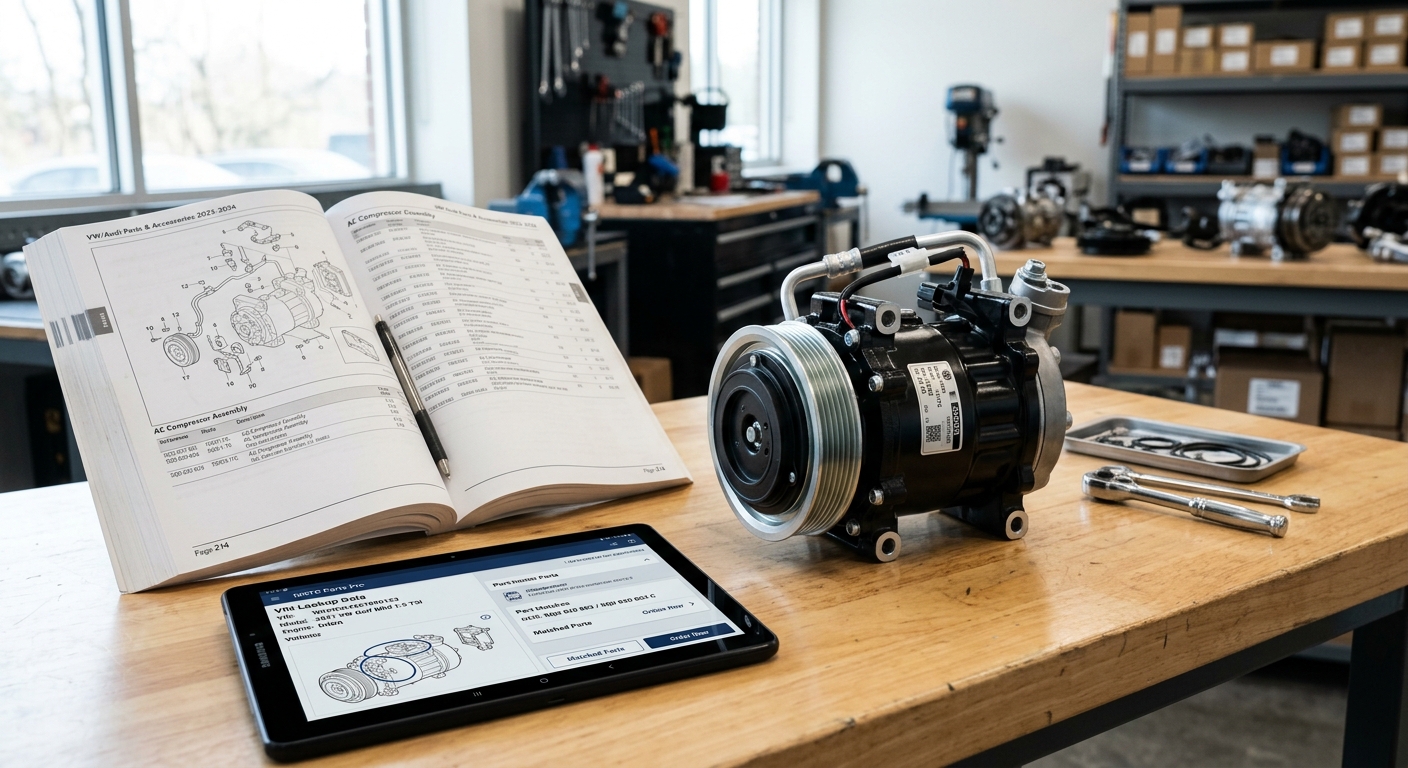
To match an AC compressor to the right vehicle, you need four data points: the VIN or full year-make-model-engine, the OEM part number stamped on the original compressor, the pulley type (clutch diameter, groove count, and belt profile), and the refrigerant the system uses (R134a or R1234yf). Get those four right and you eliminate roughly 95% of compatibility returns. Everything else in this guide is about how to verify each of those points fast — especially when you’re sourcing in bulk.
Start with the VIN, Not the Model Name
Here’s a common mistake: a buyer orders 50 compressors for “2018 Toyota Camry” and ends up with 30% returns. Why? Because the 2018 Camry shipped with at least three different compressor variants depending on engine (2.5L vs 3.5L vs hybrid) and trim region.
The VIN (Vehicle Identification Number) decodes the exact engine, transmission, and production plant. Positions 4–8 typically encode body and powertrain. For B2B buyers, building a VIN-lookup habit cuts returns dramatically — especially on Asian and European brands where mid-year production changes are common.
For instance, a fleet maintenance buyer servicing 200 Ford Transit vans should pull VINs in batches, group by engine code, then order compressor SKUs by group rather than by “Transit, 2019.” That single workflow change has cut wrong-part shipments by 40% for several of our wholesale clients.
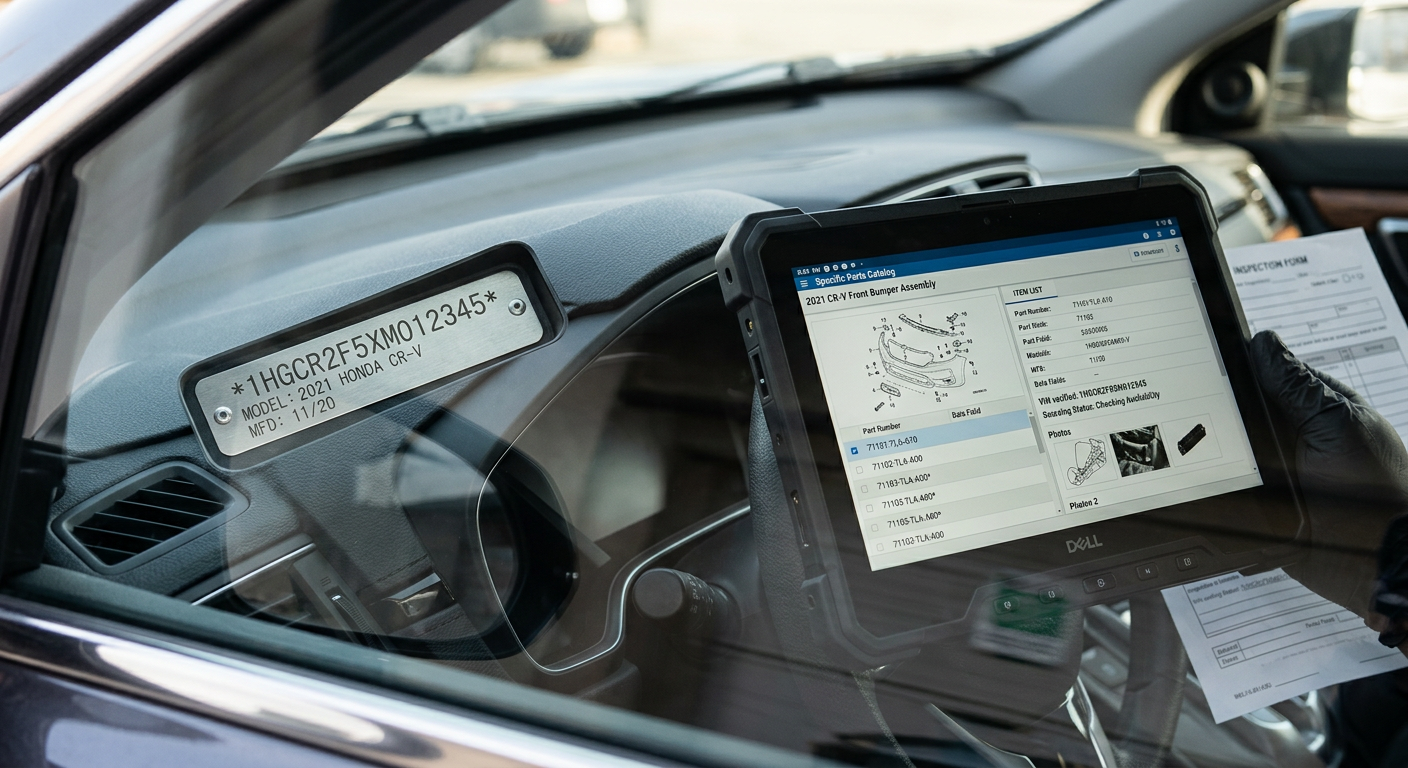
Decode the OEM Number Stamped on the Original Compressor
Every factory-installed compressor carries a label or stamping with the OEM part number. This is your most reliable cross-reference once the original unit is out of the vehicle.
Where to find it
- Denso compressors — printed sticker on the body, format like 447280-XXXX
- Sanden — model code (SD7H15, TRSE09, PXE16) plus a 4-digit suffix
- Valeo / Delphi / Hanon — alphanumeric code on the housing, often near the mounting flange
Cross-reference that number against the supplier’s catalog. A reliable supplier will list both the OEM number and equivalent aftermarket SKUs. If a supplier can only match by “make/model/year,” that’s a yellow flag for bulk orders.
Our product catalog is built around OEM-number search precisely because professional buyers don’t want to guess.
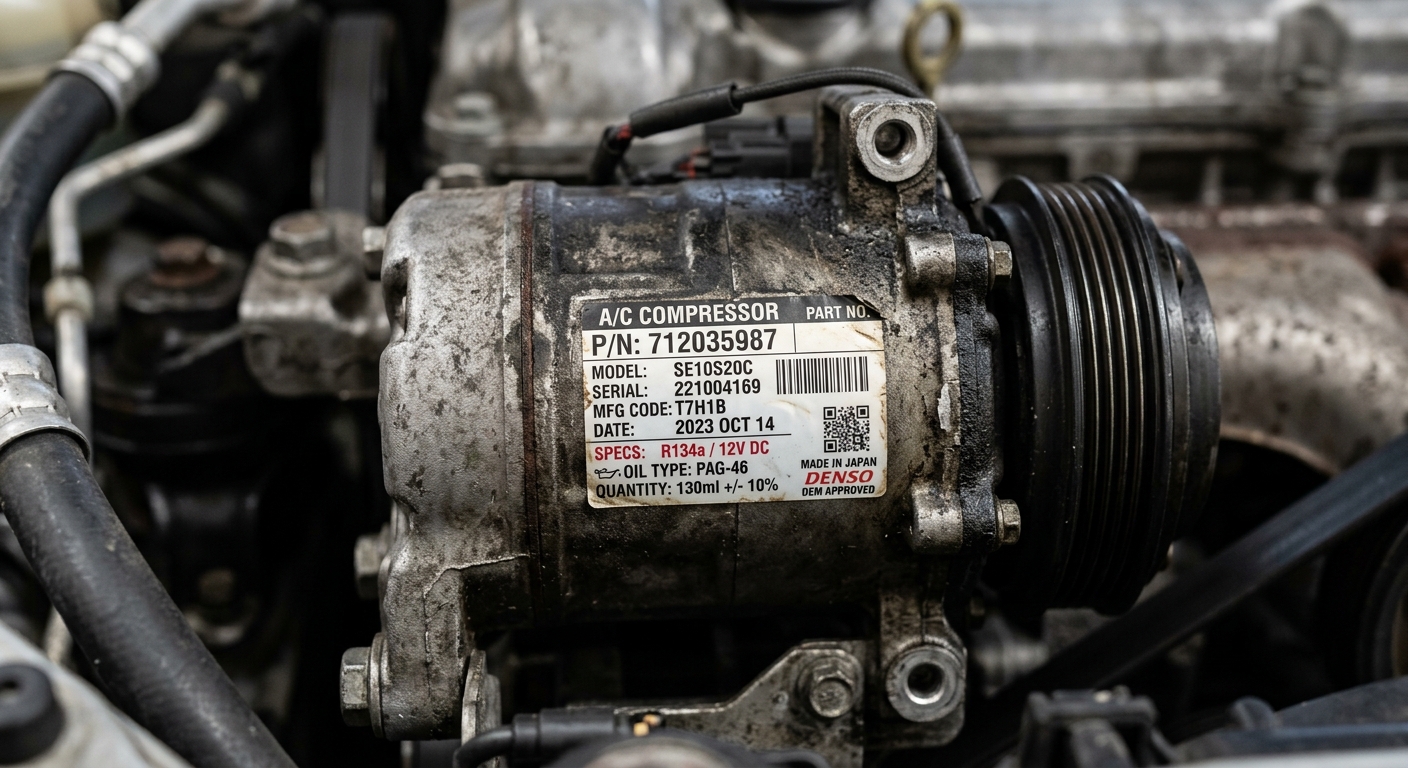
Refrigerant Type Changes Everything — R134a vs R1234yf
This trips up more buyers than you’d think. Since 2017, most new vehicles in the EU and North America have shifted to R1234yf refrigerant. A compressor designed for R134a uses different internal seals, lubricant (PAG vs POE oil), and pressure tolerances.
Install an R134a-spec compressor in an R1234yf system and you’ll see seal failure within months. The reverse — putting an R1234yf compressor in an older R134a system — usually works mechanically but voids many remanufacturers’ warranties.
Quick rule of thumb for sourcing:
- Vehicles built before 2015: almost always R134a
- 2015–2018: mixed — check the underhood label
- 2019 and newer (especially EU and US): mostly R1234yf
Always confirm with the refrigerant label on the underhood sticker, not the model year alone.
Match the Pulley: Diameter, Grooves, and Clutch Type
Two compressors can share the same internal pumping mechanism but have entirely different pulleys. If the pulley doesn’t match, the belt won’t align and you’ll have premature bearing failure within weeks.
The three pulley specs that matter
- Diameter — typically 100mm, 110mm, 119mm, or 125mm
- Groove count — 4PK, 5PK, 6PK, or 7PK (PK = poly-V profile)
- Clutch coil voltage — almost always 12V for passenger cars, 24V for commercial trucks
Some compressors also use a clutchless design (variable displacement, common on VW, Audi, BMW). These cannot be swapped with clutch-type units even if everything else matches.
A practical example: a distributor stocking Hyundai Sonata compressors for 2011–2014 needs to carry both 6PK 110mm and 6PK 119mm variants — the change happened mid-2012 production. Stocking only one creates a 50% mismatch rate.
Brand-Specific Quirks Every Buyer Should Know
Each major vehicle brand has compatibility patterns worth memorizing if you source at volume.
Japanese brands (Toyota, Honda, Nissan)
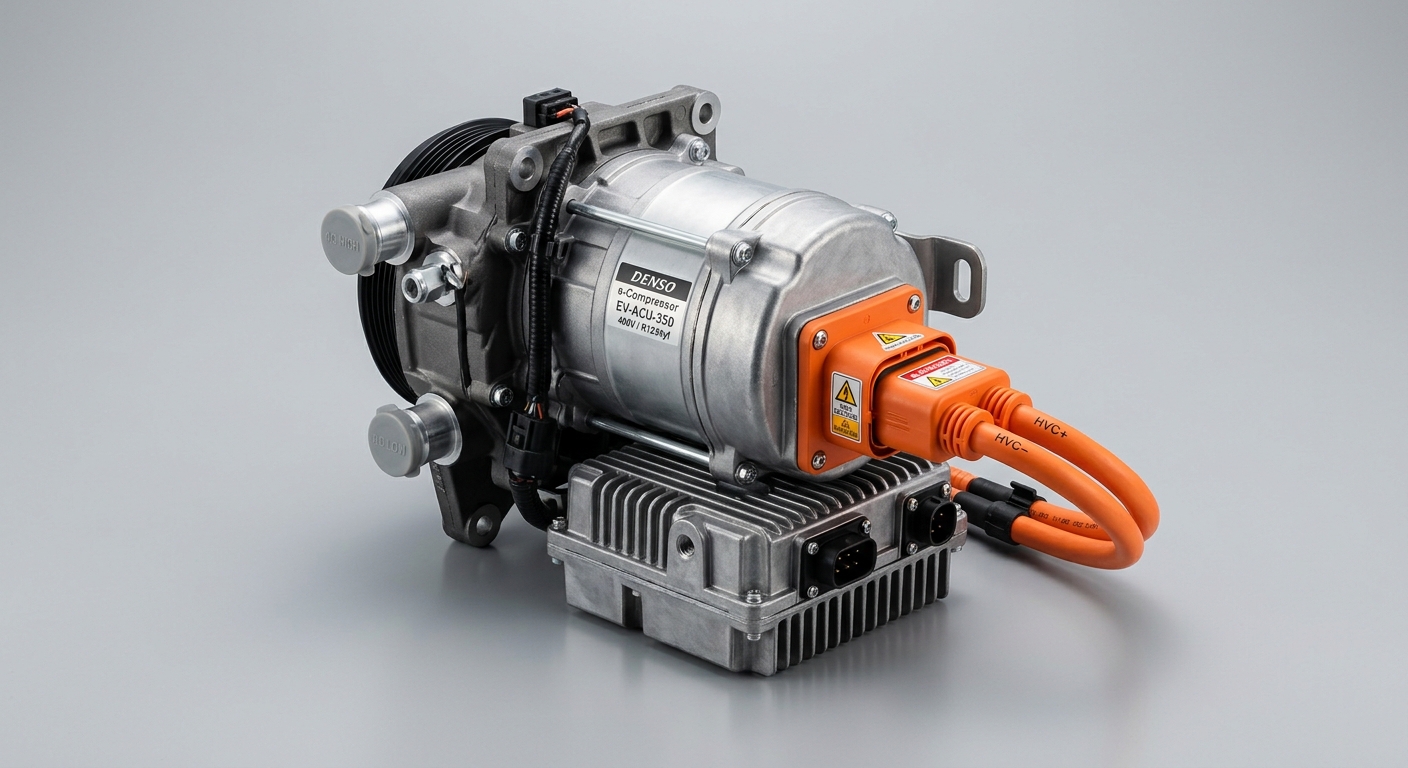
Generally use Denso or Sanden compressors. Cross-references are well documented. Watch for hybrid variants — Prius, Camry Hybrid, and Accord Hybrid use electric compressors that are NOT interchangeable with belt-driven units.
European brands (VW, Audi, BMW, Mercedes)
Heavy use of variable displacement (clutchless) compressors. Control valves are often electronically actuated and brand-coded. A BMW N20 engine compressor will not work on an N52 even though both are 2010-era BMWs.
American brands (Ford, GM, Chrysler)
More forgiving on cross-compatibility within model families, but pickup trucks (F-150, Silverado, Ram) have major variations between gasoline and diesel powertrains.
Korean brands (Hyundai, Kia)
Frequent mid-cycle compressor changes. Always verify production month, not just model year.
For deeper guidance on selecting the right unit for a specific application, see our complete guide to choosing the best AC compressor for cars.
When the Old Compressor Is Missing or Damaged Beyond Reading
What if the original unit is seized, corroded, or already removed? You still have options.
- Pull the VIN and use a manufacturer parts portal (OEM dealer lookup) to find the original part number.
- Photograph the mounting bracket and hose fittings — fitting orientation (vertical vs horizontal port) varies even within the same model.
- Check the underhood refrigerant label for system spec.
- Measure the bracket bolt pattern — typically 3 or 4 bolts in a specific spacing.
If you’re a workshop sourcing a replacement and the unit is destroyed, sending these four data points to your supplier is far better than just saying “2016 Civic.” A good supplier will respond with a verified SKU rather than a guess.
Related reading: 10 warning signs of a failing AC compressor — useful for confirming the unit actually needs replacement before you order.
New vs Remanufactured — Does Matching Change?
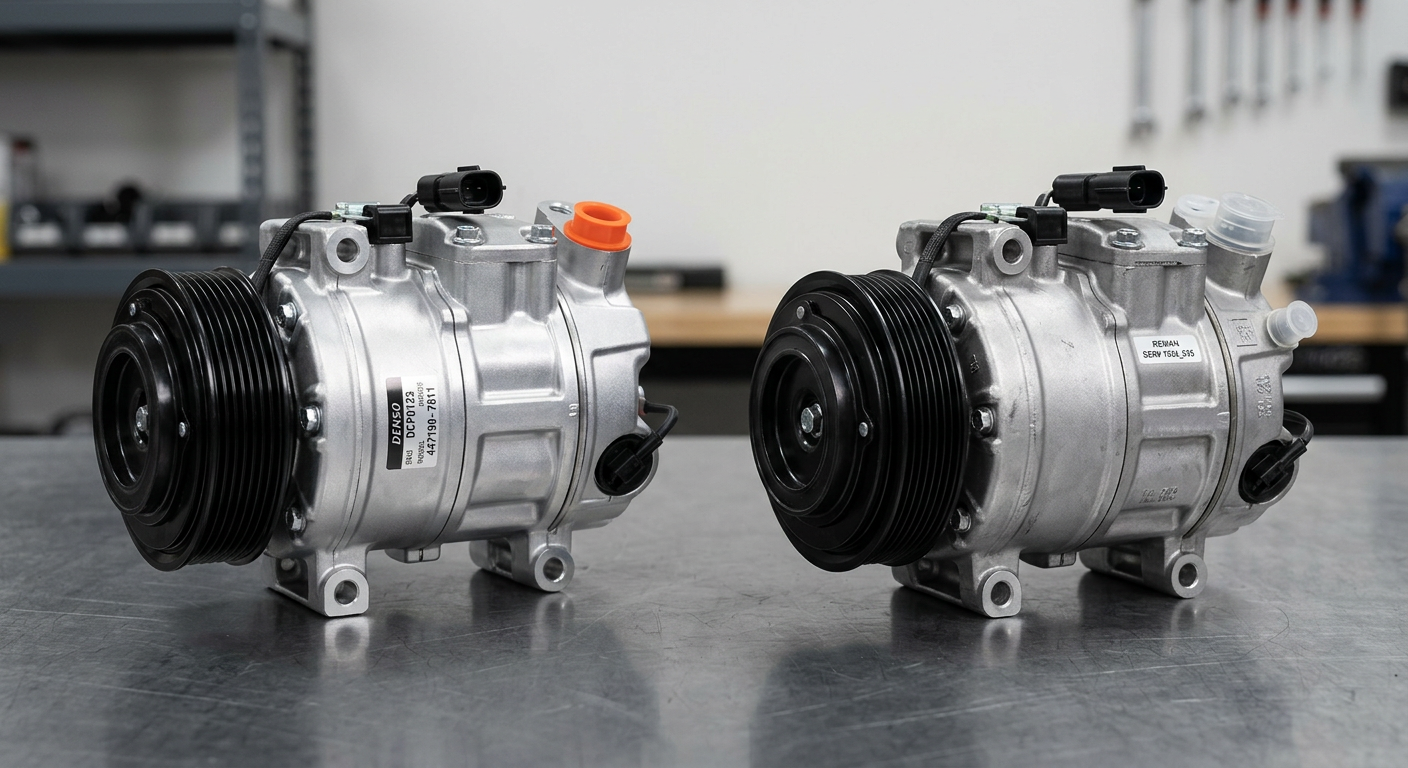
The matching process is identical, but tolerance for “close enough” is not. New aftermarket compressors sometimes ship with slightly different pulley offsets that work with minor bracket adjustments. Remanufactured units are built on the original OEM core, so the match needs to be exact — because that’s the whole point of reman.
For buyers comparing both options, the cost-quality trade-off matters. A properly remanufactured unit from a verified core typically delivers 80–90% of new-part service life at 50–60% of the cost. We cover this in detail in our remanufactured car AC compressor guide.
For example, a regional repair chain we work with stocks new compressors for high-volume models (Camry, Civic, F-150) and remanufactured units for low-volume European applications where new OEM pricing is prohibitive. That hybrid stocking strategy cut their inventory cost by roughly 35%.
Build a Matching Checklist Before You Order in Bulk
If you’re placing wholesale orders, standardize the matching workflow. Don’t trust ad-hoc lookups.
The 7-point pre-order checklist
- VIN or full year/make/model/engine code
- Original OEM part number (photo of the stamping)
- Refrigerant type (R134a or R1234yf)
- Pulley diameter and groove count
- Clutch voltage (12V or 24V)
- Mounting bracket orientation and bolt pattern
- Port fitting type (O-ring vs flange, vertical vs horizontal)
Suppliers who can verify against all seven points before shipping are the ones worth long-term relationships with. Those who can only match on “year and model” will cost you on returns.
Putting It Into Practice
Matching an AC compressor to the right vehicle isn’t complicated, but it is detail-driven. VIN first, OEM number second, refrigerant and pulley third — that’s the order of priority. Brand-specific quirks (especially European variable-displacement units and hybrid electric compressors) catch most buyers off guard, so build those exceptions into your sourcing notes.
If you’re stocking AC compressors for wholesale, repair shop supply, or e-commerce resale, work with a supplier who can verify SKUs by OEM number and provide compatibility data — not just a generic year/make/model match. Browse our AC compressor catalog or get in touch with the aohuiautoparts team to verify part numbers for your next bulk order.