Evaluating a starter motor supplier on price alone almost always costs more in the long run — warranty returns, mismatched fitments, and inconsistent lead times quietly destroy the savings you thought you locked in. The suppliers worth keeping prove themselves on five things: core quality, end-of-line testing, warranty terms, OE cross-reference accuracy, and logistics reliability. Get those right and the unit cost takes care of itself.
Why the Cheapest Starter Quote Is Rarely the Cheapest Order
Here’s the math nobody puts on the quote sheet. A starter motor priced 12% below the market average looks attractive — until you factor in a 9% warranty return rate, the freight cost of replacements, and the customer credibility you burn each time a repair shop calls about a clicking solenoid on a brand-new unit.
A mid-sized distributor in Eastern Europe we spoke with last year switched suppliers purely on price, saving roughly $4.20 per unit on a 2,000-piece container. Within eight months, they had processed 184 warranty claims. Net loss after freight, labor, and lost accounts: north of $18,000. The “cheap” container ended up being their most expensive order of the year.
Price matters. It just doesn’t matter in isolation. A 3–5% unit cost premium from a vetted supplier usually pays itself back inside the first warranty cycle.
Core Quality: The Foundation Most Buyers Overlook
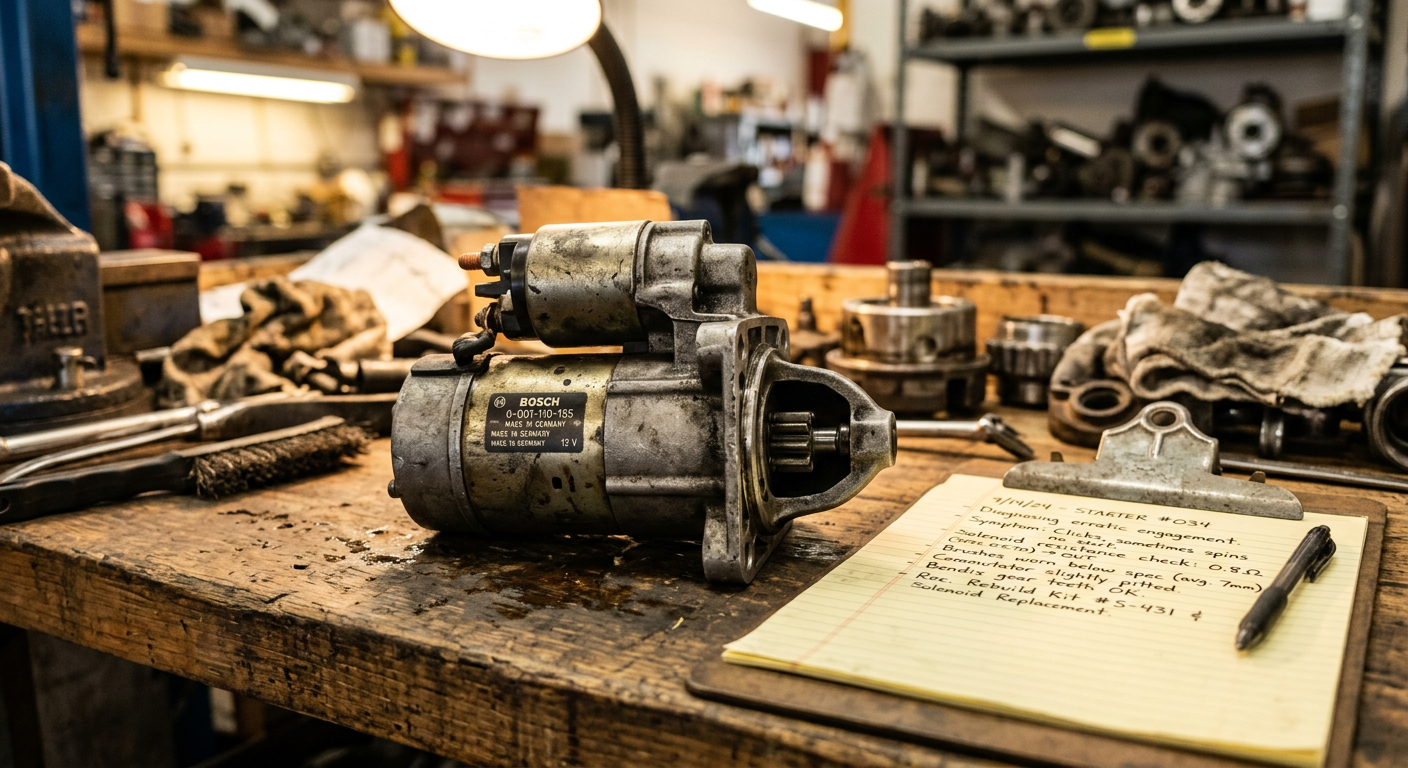
If you’re sourcing rebuilt starters, the single most important question to ask isn’t about the rebuild process — it’s about the cores. Where do they come from, and how are they graded?
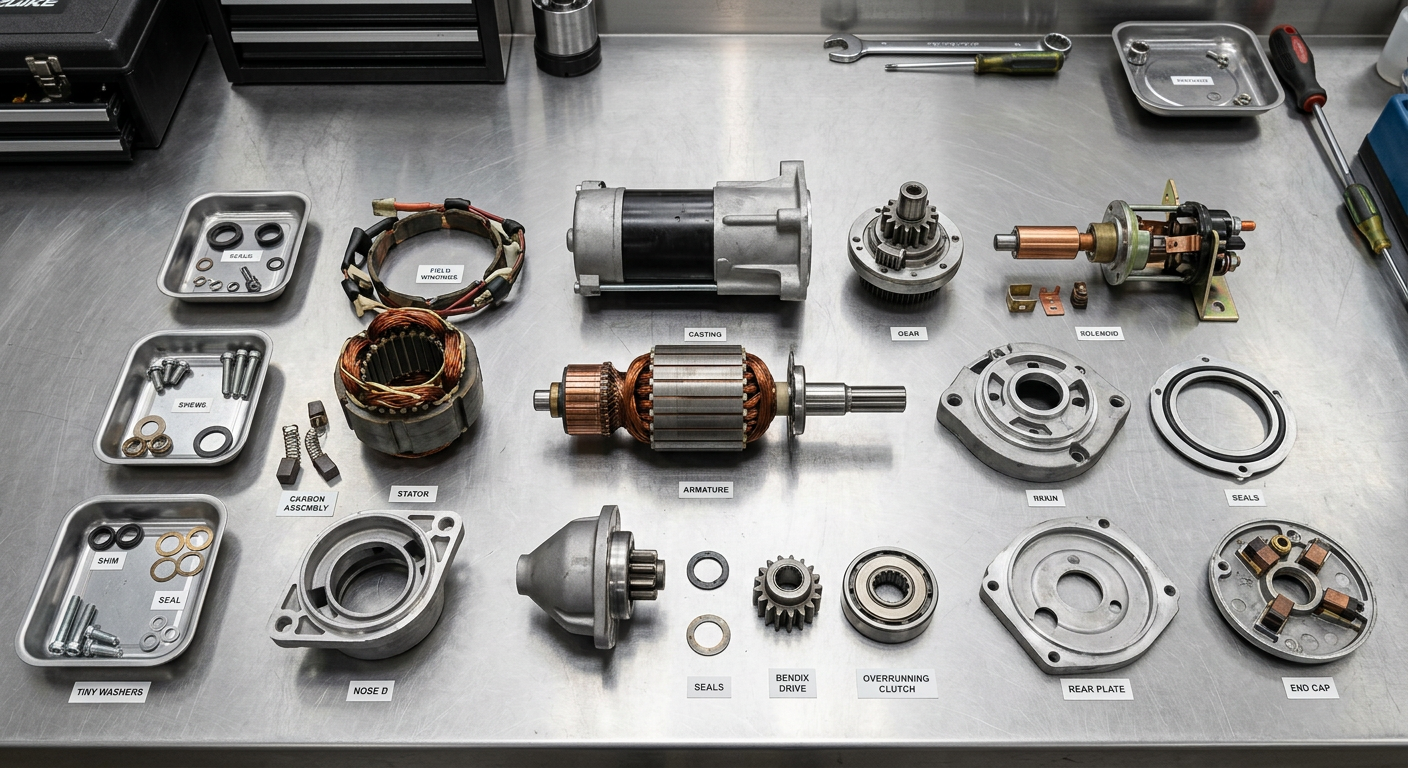
Reputable remanufacturers source OE cores only, reject anything with cracked housings or damaged ring gears, and segregate by application before disassembly. Low-cost operators mix anonymous cores, salvage what’s cheap to fix, and skip the steps that matter — like bearing surface inspection, commutator runout measurement, and field coil resistance testing.
Questions to put in your supplier audit
- What percentage of incoming cores are rejected at intake? (Below 15% is suspicious; 20–30% is healthy.)
- Are armatures rewound or replaced when out of spec?
- Are solenoids, brushes, and bearings always replaced, or only “as needed”?
- Is the planetary gear assembly inspected and re-greased with high-temp lubricant?
The deeper the answers, the more confident you can be. Vague responses are a red flag. Our breakdown of the starter assembly regeneration process walks through what a proper rebuild actually looks like.
End-of-Line Testing: Ask for the Numbers
Any supplier can claim “100% tested.” The real question is what they test for and what data they keep.
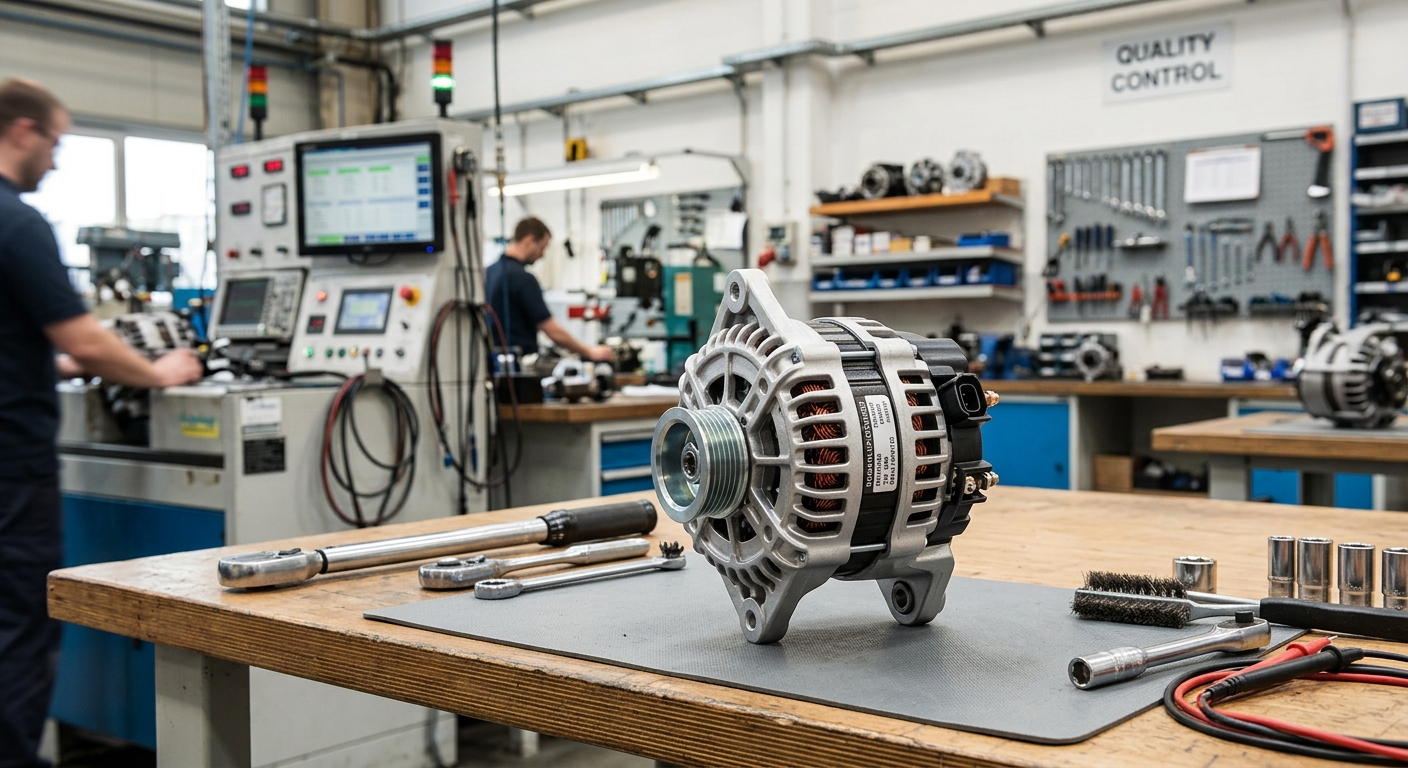
A serious starter motor manufacturer runs every finished unit through a multi-stage test bench that measures no-load current draw, no-load RPM, locked-rotor torque, solenoid pull-in and hold-in voltage, and engagement timing. The pass/fail thresholds should match OE specifications for that specific part number — not a generic range.
Ask for sample test reports. A confident supplier will share them. You should see values like:
- No-load current: typically 60–90A depending on application
- No-load RPM: 2,800–4,500 RPM for most light-vehicle starters
- Solenoid pull-in voltage: under 8V at 20°C
If the supplier hesitates or sends back a generic certificate with no actual numbers, that tells you everything. Production data either exists or it doesn’t.
Warranty Terms That Actually Mean Something
Warranty length is easy to advertise and easy to game. What matters is the claims process.
A 24-month warranty with a 90-day claim window, mandatory return of the failed unit at the buyer’s freight cost, and a 60-day evaluation period is functionally worse than a 12-month warranty with photo-based claims and immediate replacement shipment. Read the fine print before you celebrate the headline number.
What to negotiate up front
- Claim documentation requirements (photo + video of failure mode is reasonable; demanding lab analysis is not)
- Return freight responsibility — splitting it is a fair middle ground
- Replacement vs. credit policy
- Coverage of consequential damage (most won’t, but ask)
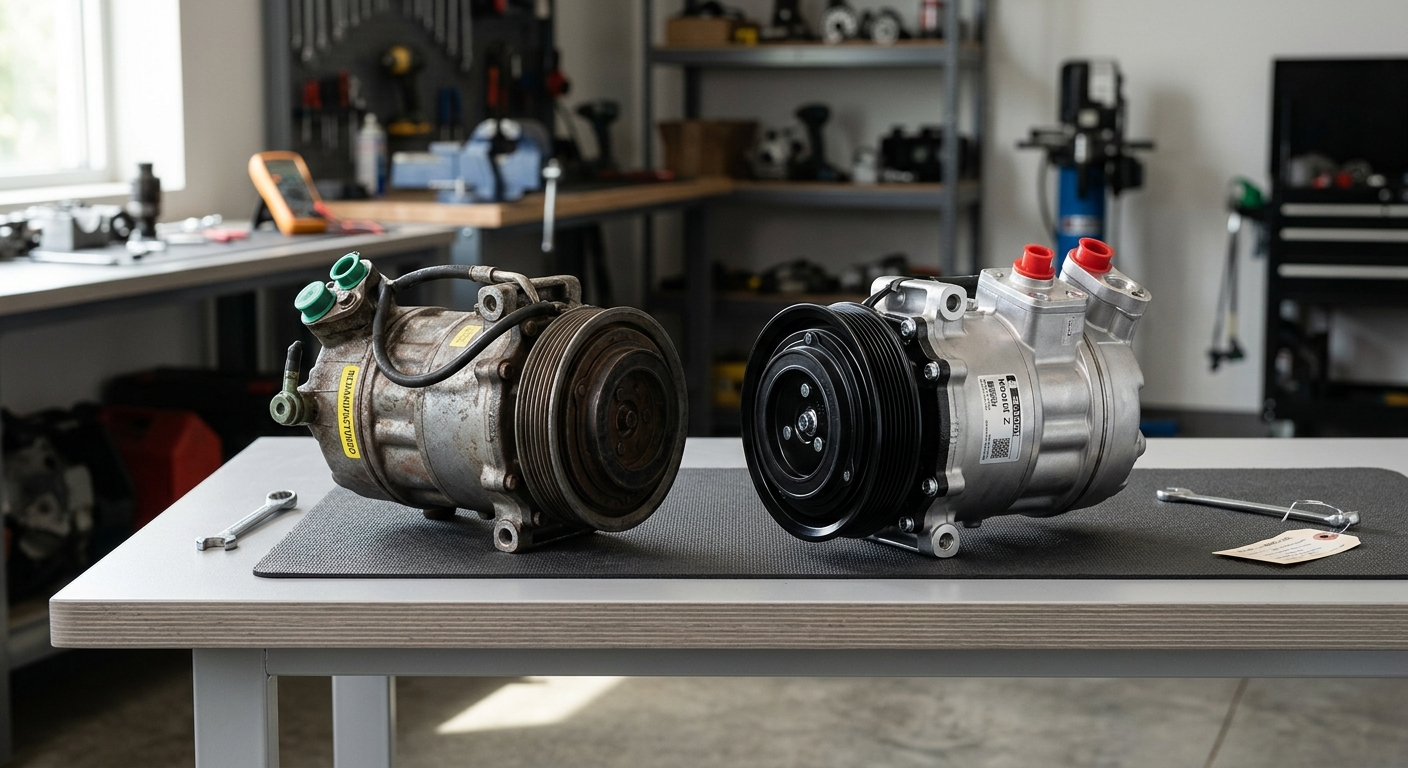
For high-volume accounts, push for a quarterly warranty reconciliation. It forces the supplier to track defect rates honestly and gives you leverage if numbers drift the wrong way. This same logic applies whether you’re buying starters, alternators, or AC compressors — we covered similar ground for buyers looking to buy rebuilt alternators.

OE Cross-Reference Accuracy and Fitment Data
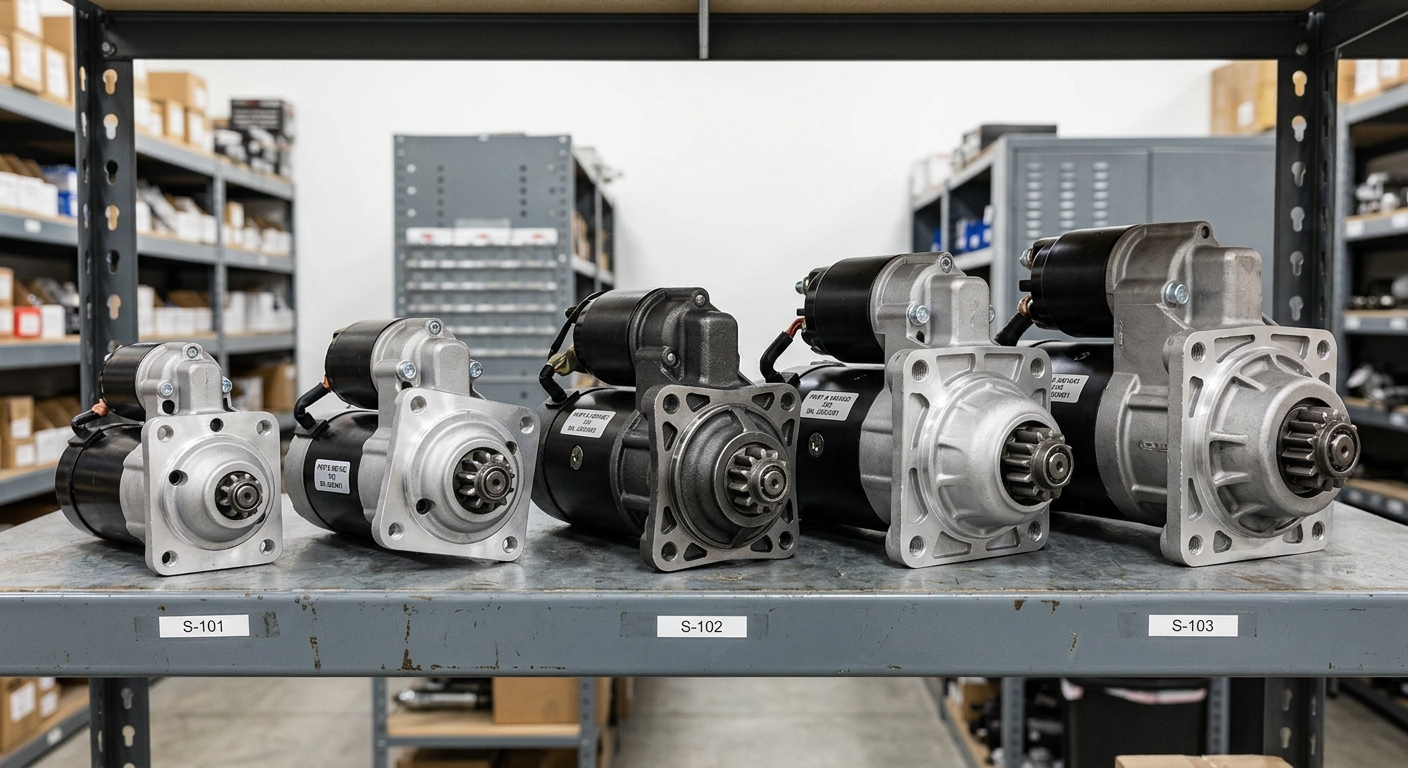
A starter motor that’s 95% the right fit is 100% a warranty return. Mounting flange offsets of 2mm, the wrong number of starter gear teeth, or a solenoid terminal on the wrong side — these are the small errors that turn a sale into a problem.
Ask any prospective supplier for their full cross-reference database. You should be able to look up a part by:
- OE part number (Bosch, Denso, Valeo, Mitsubishi, Hitachi reference)
- Vehicle make, model, year, engine code
- Physical specs: KW rating, voltage, tooth count, rotation direction, mounting pattern
For instance, a fleet maintenance buyer servicing mixed Toyota and Nissan light commercial vehicles needs to know that visually similar 12V 1.4kW starters can have 9, 10, or 11-tooth pinions — and the wrong one will grind the ring gear within days. A supplier whose catalog flags these distinctions clearly is worth more than one selling 5% cheaper with generic listings. If you’re not sure how starters and alternators differ in spec sheets, our starter vs alternator guide is a useful primer for procurement teams new to electrical parts.
Production Capacity and Lead Time Reliability
A supplier who can deliver 500 units in three weeks is useful. A supplier who can deliver 500 units in three weeks, every month, for the next two years — that’s a partner.
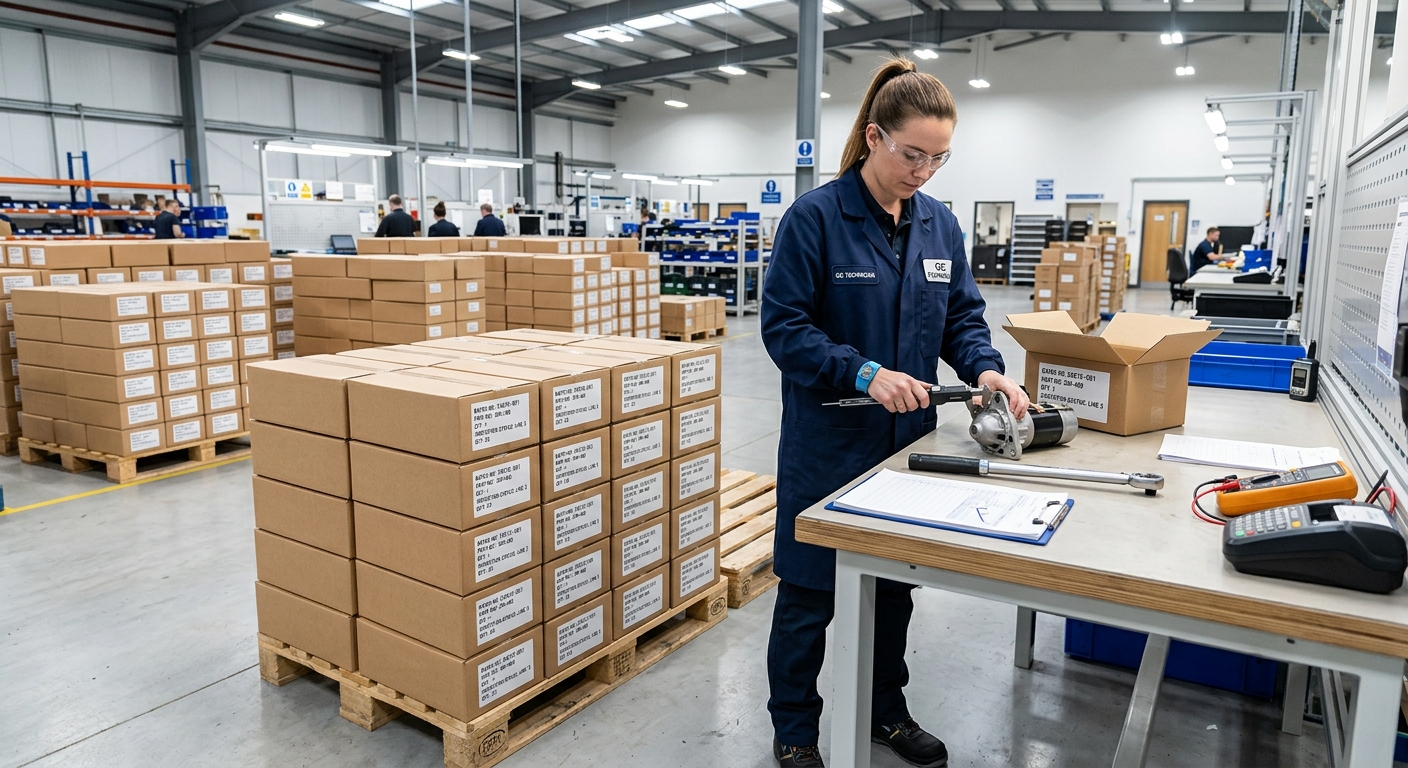
Visit if you can. If not, ask for a video walkthrough of the production floor. You’re looking for:
- Dedicated test benches, not a shared multi-product setup
- Inventory of common cores on hand (lead time killer if they have to source per order)
- Documented production scheduling — not handwritten whiteboards
- Clear quality checkpoints between disassembly, rebuild, and final assembly
Then verify lead times against reality. Place a small trial order — 50 to 100 units — and track every milestone: order confirmation, production completion, shipment booking, B/L issuance, arrival. Suppliers who hit their dates on small orders generally hit them on large orders. Suppliers who slip on small orders almost always slip more on large ones.
Documentation, Compliance, and Traceability
For buyers in regulated markets — EU, UK, parts of South America — documentation isn’t optional. A supplier without ISO 9001 certification, REACH compliance declarations, or proper HS code knowledge can stall your container at customs for weeks.
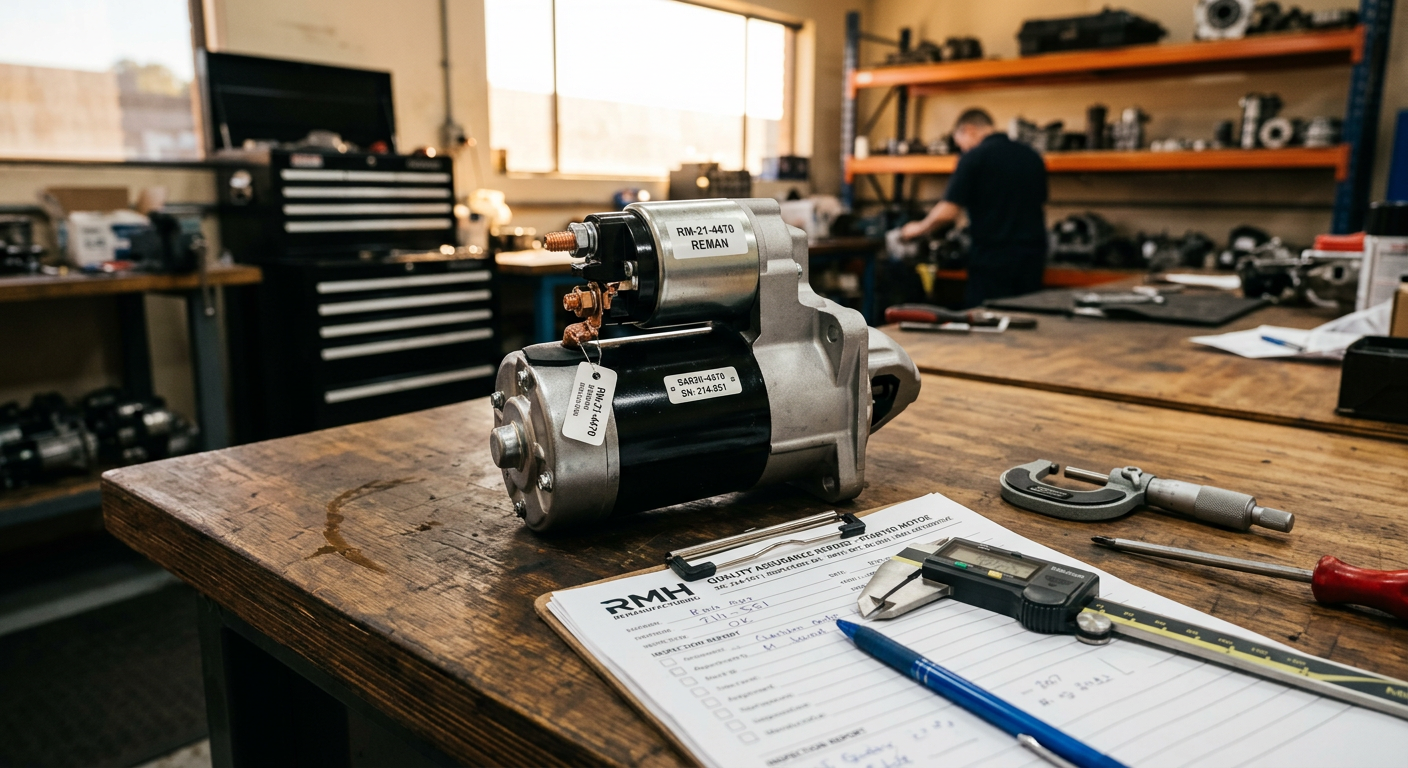
Beyond certifications, ask about batch traceability. Each starter should carry a serial or batch number that the supplier can trace back to: production date, core source, technician, and test data. When a warranty issue spikes on a specific batch, traceability lets you isolate the problem in days, not months.
Real example: an e-commerce seller running a Shopify auto parts store noticed solenoid failures clustering in a 60-day window. With batch traceability, the supplier identified a defective solenoid coil supplier change, replaced the affected stock under warranty, and credited future orders. Without traceability, that would have been a finger-pointing argument and a lost season of sales.
Communication, Technical Support, and the Human Factor
The boring factor nobody puts on the RFQ: how quickly does your contact reply, and do they actually understand starters?
You’ll know within two emails. A sales rep who answers technical questions with “let me check with engineering” and gets back the same day is gold. One who deflects, copies generic spec sheets, or takes four days to respond will cost you sales every time a customer has a fitment question.
Test this before you commit volume. Send three deliberately tricky questions — say, a comparison between two visually similar Denso starters, or fitment confirmation for a less common engine variant. The quality and speed of the answers tell you everything about what ongoing support will look like.
Building a Supplier Scorecard You Actually Use
Most procurement teams talk about scoring suppliers and then never do it. Keep it simple — five categories, scored 1–5 every quarter:
- Product quality: warranty return rate, test data consistency
- Delivery: on-time shipment percentage, lead time variance
- Documentation: accuracy of cross-references, completeness of paperwork
- Communication: response time, technical depth
- Commercial flexibility: payment terms, willingness to hold safety stock
A supplier consistently scoring 20+ out of 25 deserves more volume. One scoring under 15 should be on notice or replaced. Don’t keep underperformers around because switching feels like work — the cost of staying is almost always higher than the cost of moving.
If you’re working through a wider procurement strategy that also covers replacement scenarios, our piece on car starter replacement and the new vs remanufactured starter decision tree will help your downstream customers — and ultimately your sales team — make better recommendations.
Putting It All Together
The best starter motor suppliers are rarely the cheapest, but they’re almost always the most profitable to work with. They reject bad cores, test every unit with documented results, stand behind clear warranty terms, ship on time, and pick up the phone when there’s a problem. Find two or three of those and your procurement headaches drop dramatically.
At Aohui Autoparts, we work with global distributors, repair-shop supply chains, and fleet buyers who need starters, alternators, and AC compressors that ship correctly and perform reliably. If you’re evaluating new suppliers or rebalancing your sourcing mix this year, get in touch with our team for a fitment-specific quote — or browse our current product catalog to see what we stock.