A bad solenoid usually produces one sharp click with no crank, while a failing starter motor either clicks repeatedly, spins weakly, grinds, or stays completely silent even though the solenoid engages. The fastest way to tell them apart is to listen carefully to what happens the instant the key turns, then confirm with a simple voltage or bench test. Get this diagnosis wrong and you’ll either order a $15 solenoid that doesn’t fix the car, or pay for a full starter assembly you didn’t need.
Why This Distinction Actually Matters for Your Parts Order
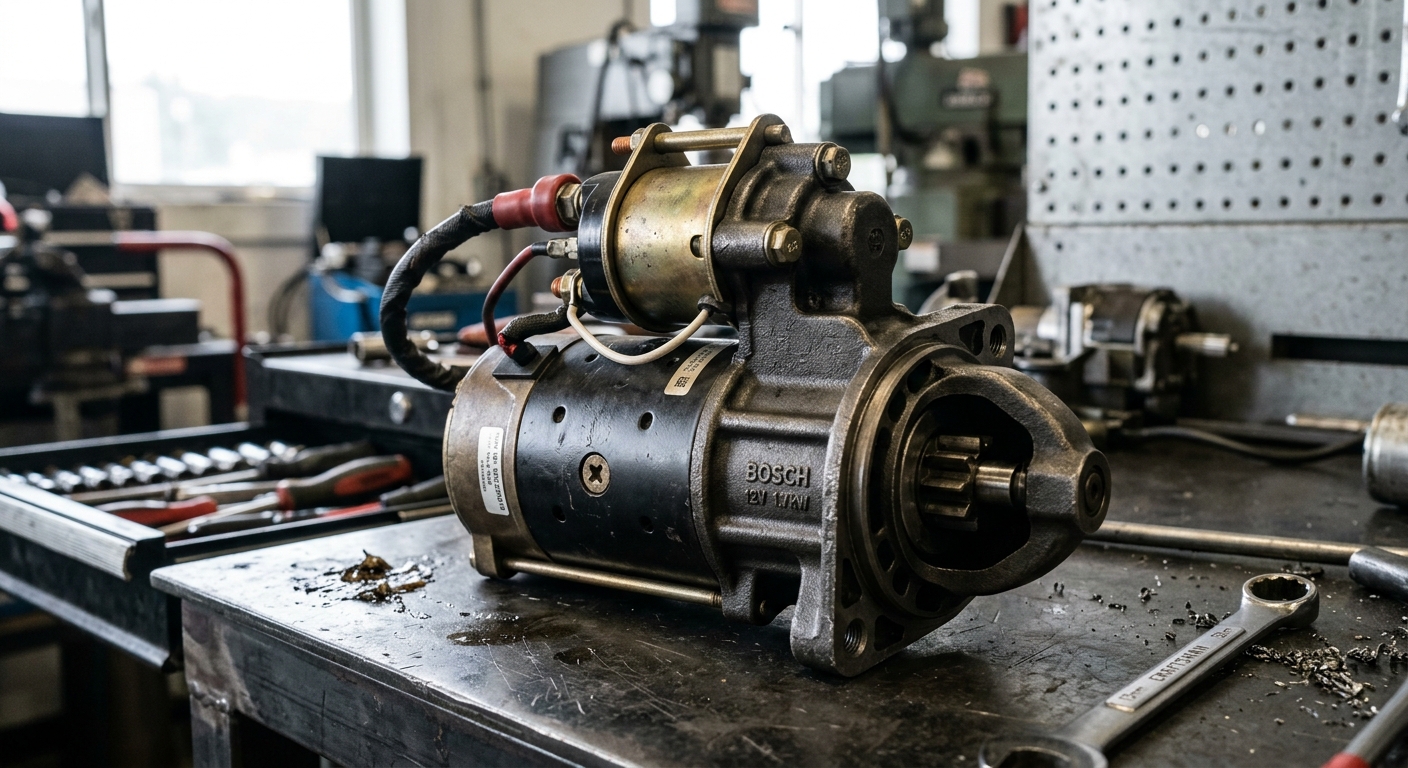
Here’s the mistake we see constantly from repair shops and even experienced fleet techs: a car won’t start, someone hears a click, and they immediately order a new starter motor. Half the time, that’s the wrong part. The solenoid is a separate electromechanical switch — sometimes bolted onto the starter, sometimes a standalone relay — and it fails independently of the motor’s internal windings and brushes.
Getting this right isn’t just about saving a customer money. For wholesale buyers and distributors, misdiagnosis at the shop level trickles back as return requests and warranty disputes. If your customers understand the difference, they order the correct SKU the first time, and that reduces your return rate. This matters even more if you’re stocking new vs remanufactured starters, since ordering the wrong category wastes both time and shipping cost.
The Sound Test: Your First and Fastest Clue
Listen before you touch anything. Sound alone eliminates half the guesswork.
One Click, Then Nothing
A single, solid click followed by total silence almost always points to the solenoid — specifically, the plunger pulled in but the main contacts inside didn’t close properly, or they closed but corrosion is blocking current flow to the motor.
Rapid Clicking
A fast, repeated clicking sound is the classic sign of a weak battery or bad ground — the solenoid pulls in, can’t deliver enough current to spin the motor, drops out, and tries again. This is often mistaken for solenoid failure but is frequently a power supply issue instead.
Grinding or Whining
A grinding noise means the starter’s drive gear (pinion) isn’t meshing cleanly with the flywheel — that’s a motor/drive assembly problem, not the solenoid.
Complete Silence
No click, no sound at all, usually means the solenoid isn’t getting triggered — check the ignition switch, neutral safety switch, or wiring before condemning the part.

Voltage Drop Testing: Confirming What Your Ears Heard
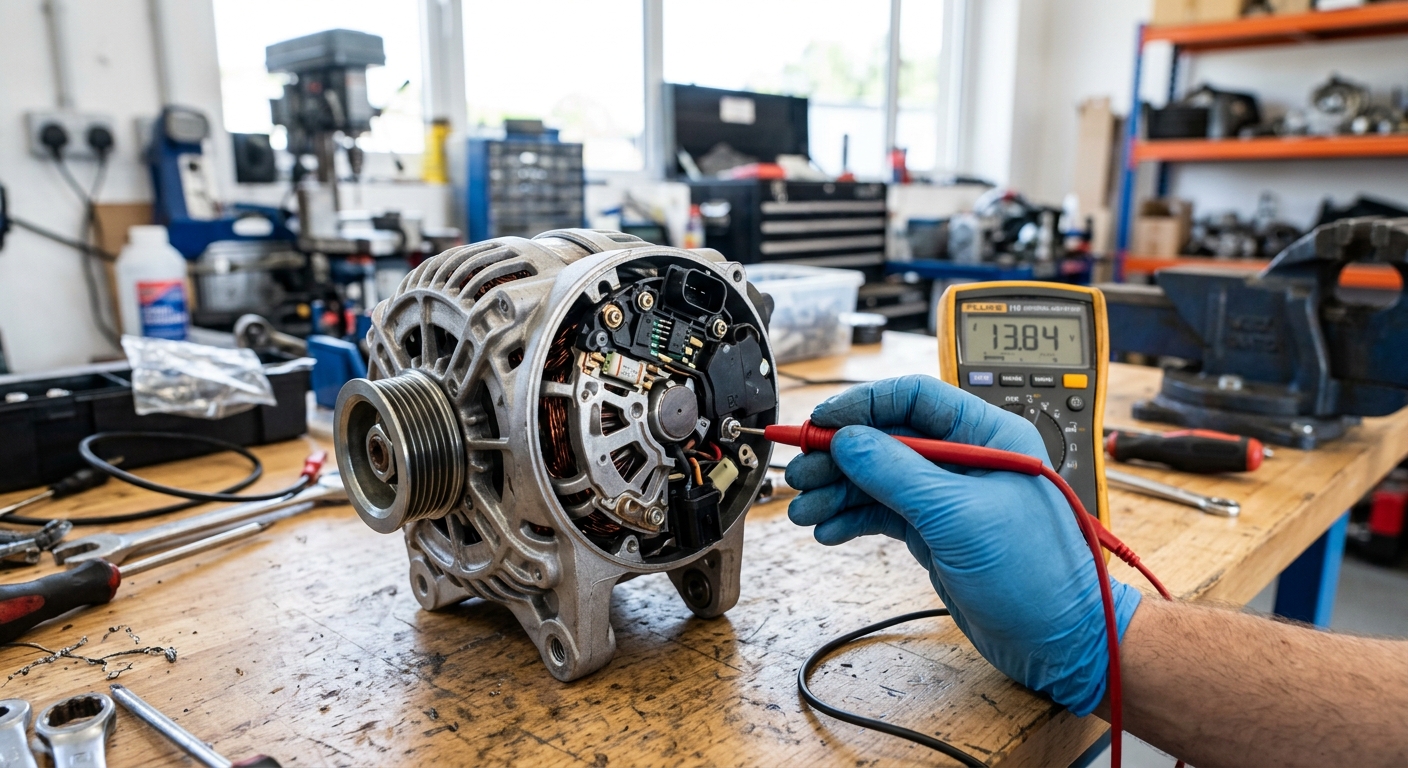
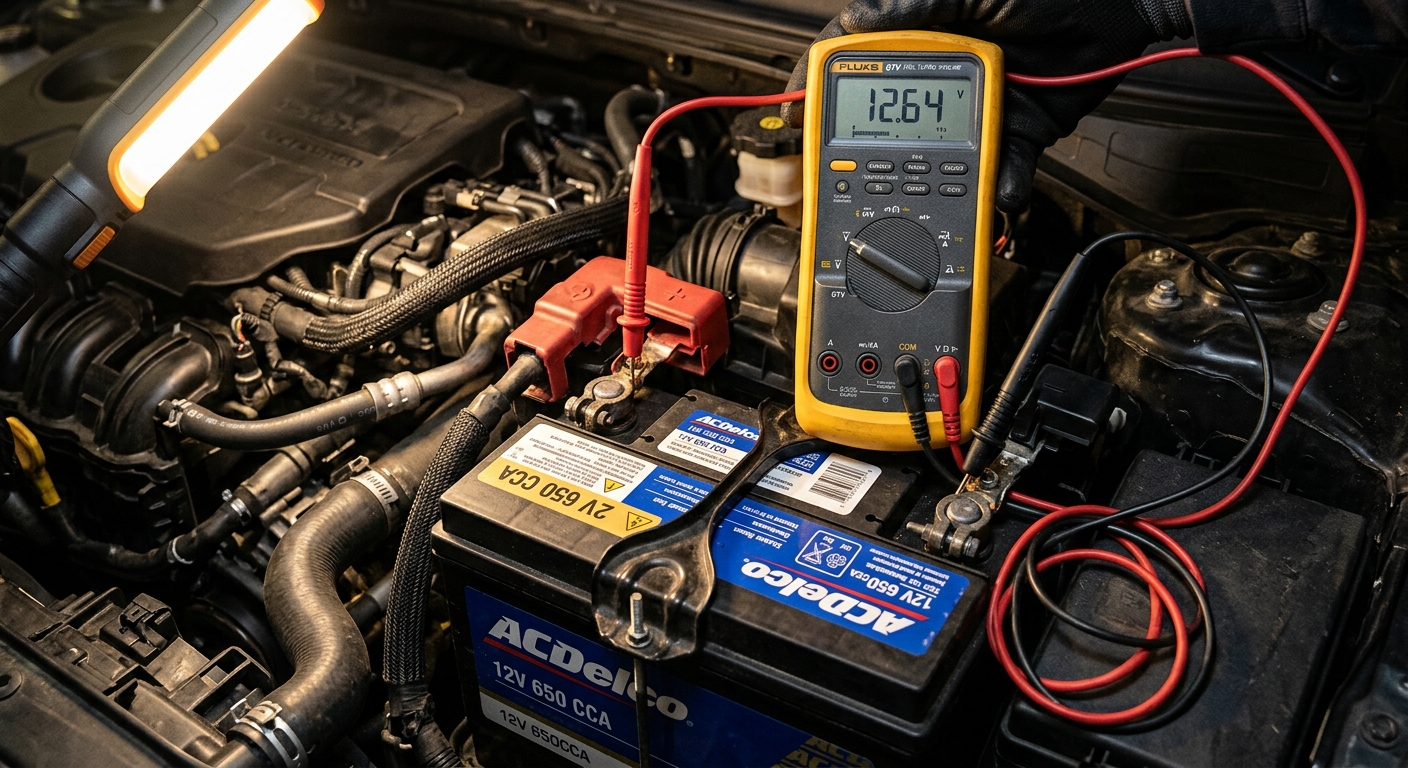
Sound gets you 80% of the way there. A voltage drop test confirms the rest. Connect a multimeter across the battery terminals and have someone crank the key.
- Voltage stays above 9.6V and you hear a click but no crank: current isn’t reaching the motor — likely solenoid contacts or internal wiring.
- Voltage drops sharply below 9V and the motor struggles or spins slowly: the motor itself is drawing excessive current, often from worn brushes or a shorted armature.
- No voltage change at all, no click: the circuit isn’t even engaging — check the starter relay, ignition switch, or wiring harness first.
For a fleet maintenance buyer running this test across a dozen vehicles a month, this five-minute check alone prevents ordering the wrong part category almost every time.
Bench Testing the Starter Off the Vehicle
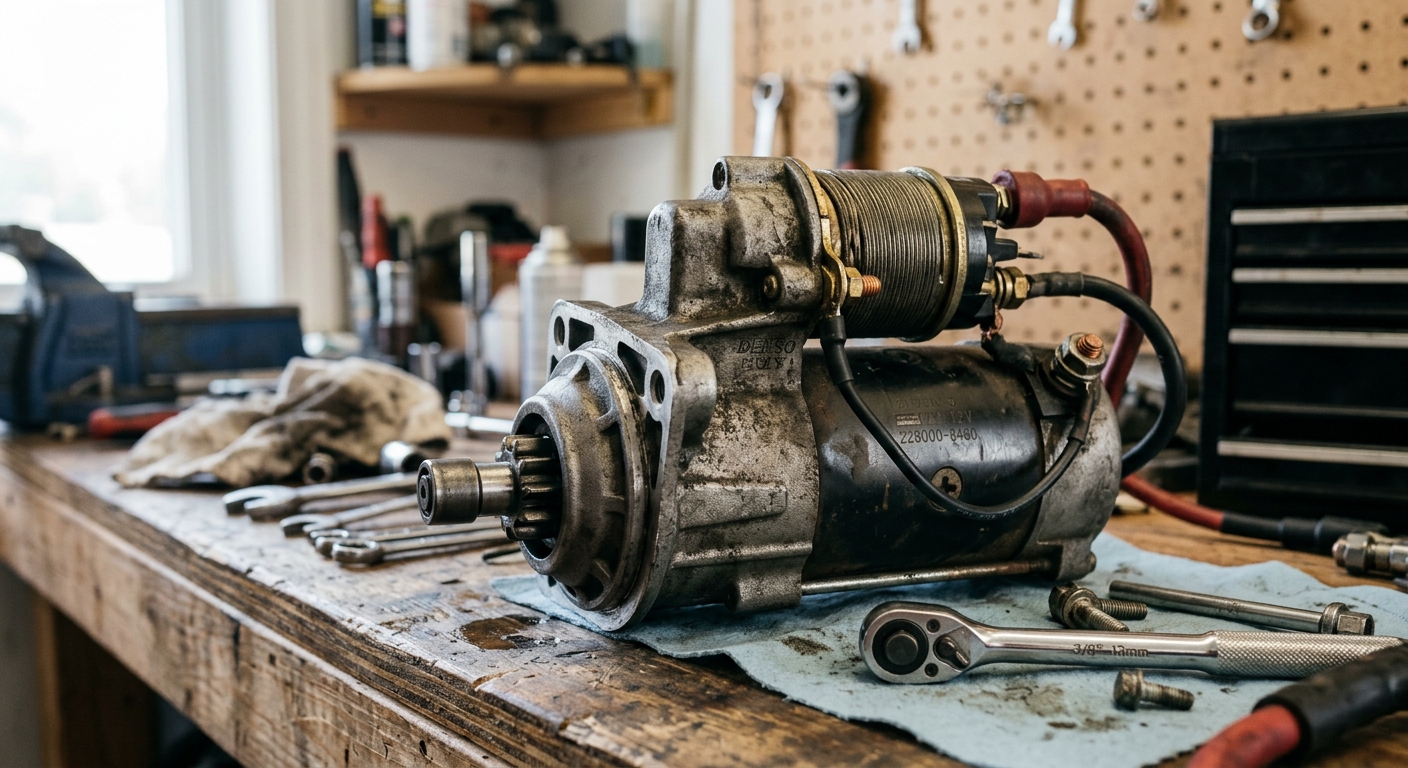
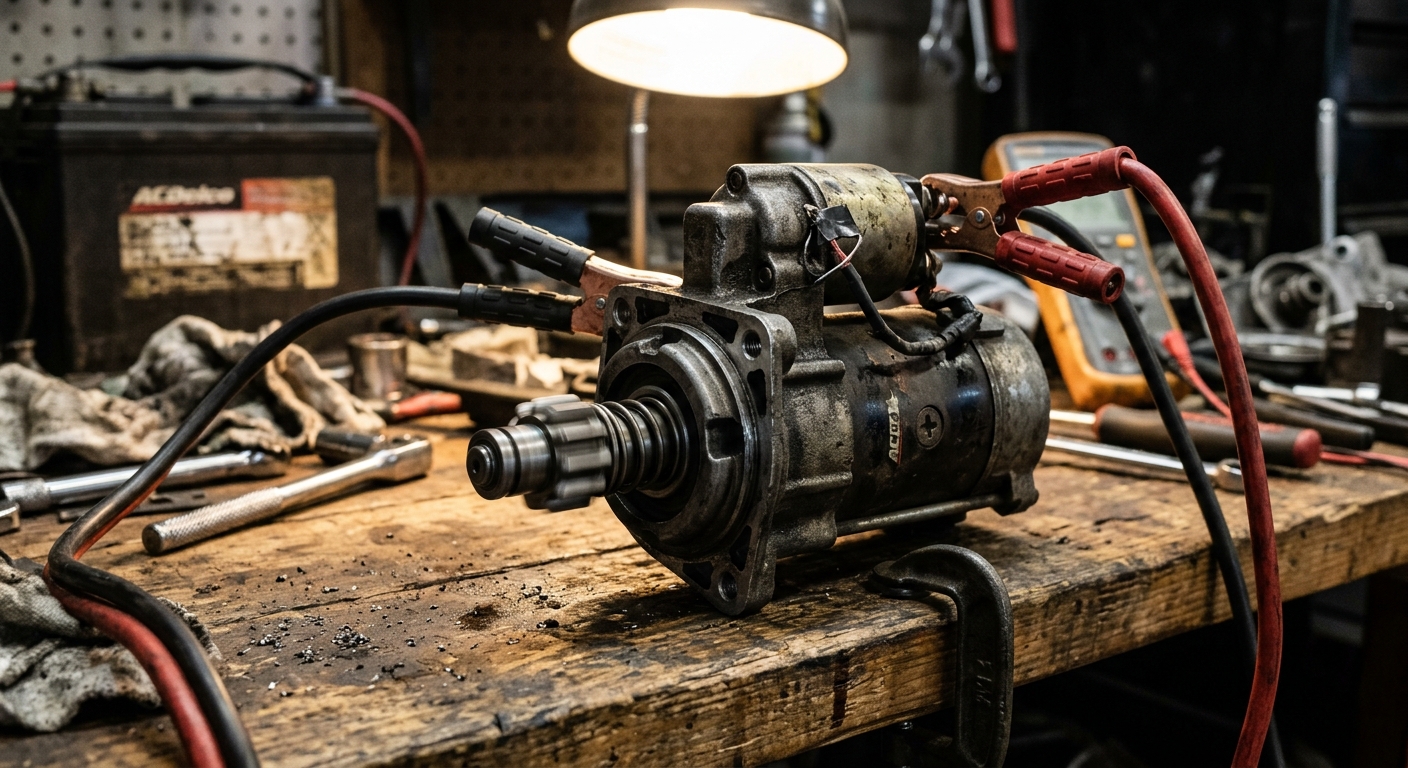
If you’ve pulled the starter for inspection anyway, a bench test removes all doubt. Connect the starter directly to a 12V battery with jumper cables — positive to the main terminal, negative to the housing, and briefly touch a wire from the battery positive to the small solenoid trigger terminal.
What a Healthy Unit Does
You should hear a solid click and see the pinion gear extend while the motor spins freely and strongly.
Solenoid Failure on the Bench
No click at all, or a click with no pinion movement, confirms the solenoid coil or plunger is bad.
Motor Failure on the Bench
The pinion extends and you hear the click, but the motor doesn’t spin — or spins weakly and stalls under slight resistance. That’s armature, brush, or bushing wear, and no amount of solenoid replacement fixes it.
This bench method is essentially how starter assembly remanufacturing facilities screen cores before rebuilding — it’s the same logic scaled up to a production line.
Real-World Scenario: A Fleet Buyer’s Diagnostic Dilemma
A regional delivery fleet manager had three vans reported as ‘won’t start’ in the same week. Two showed the classic single click with no crank — both solenoids tested bad on the bench, confirmed with corroded contact plates. The third van cranked slowly, groaned, then died — no click involved at all in that case, just a slow, labored turn.
That third van needed a full starter replacement due to worn brushes and a partially shorted armature. Because the fleet’s maintenance lead ran the sound and voltage tests before ordering, they avoided buying three identical starter assemblies when two vans only needed the $18 solenoid part. That’s the kind of margin that matters when you’re managing dozens of vehicles a month.
Common Symptoms That Get Misattributed
Not every no-start symptom means what it seems to. A few patterns trip up even seasoned techs.
‘It Started Fine Yesterday’
Intermittent starting is more often a solenoid with worn internal contacts — they work when cold, fail when the copper contacts expand slightly from heat. A motor failure is rarely this inconsistent; worn brushes tend to degrade steadily, not intermittently.
Starter Stays Engaged After the Engine Starts
A grinding whine after the engine catches means the solenoid isn’t releasing the pinion — this is a solenoid return spring or plunger issue, not a motor problem, and it can destroy the flywheel if ignored.
Starter Works, But Only After Tapping It With a Wrench
This old trick works because tapping temporarily realigns worn brushes against the commutator — that’s motor wear, not the solenoid, and it’s a sign the unit needs replacing soon regardless of the temporary fix.
Solenoid-Only Replacement vs Full Starter Swap
Once you’ve confirmed which part failed, the next decision is whether a solenoid-only repair is even possible. On many older starter designs, the solenoid is a separate bolt-on unit and can be swapped independently — a much cheaper fix. On newer, compact permanent-magnet starters, the solenoid is integrated into the housing, and replacing it separately either isn’t supported or isn’t cost-effective compared to a full unit.
| Faulty Solenoid | Faulty Starter Motor |
|---|---|
| Single click, no crank | Grinding, whining, or silence |
| Battery voltage drops only slightly | Voltage drops significantly under load |
| Contact plunger/relay/wiring issue | Armature, brushes, bushing wear |
| Often a standalone replaceable part | Usually requires full assembly replacement |
| Lower repair cost | Higher repair cost |
For distributors deciding what to stock, this is exactly why understanding starter vs alternator failure patterns alongside solenoid-specific issues helps you build a more precise catalog rather than a one-size-fits-all inventory.
When Rebuilt Is the Smarter Sourcing Call
If the motor itself has failed — not just the solenoid — a rebuilt starter assembly is usually the better buy over a brand-new unit, especially for older or less common vehicle platforms where OEM sourcing gets expensive. Quality rebuilds replace the brushes, bushings, and often the solenoid as a matched set, so you’re not troubleshooting two separate failure points down the road.
This is worth flagging for procurement teams: a rebuilt unit that includes a tested, matched solenoid is a more reliable purchase than sourcing a motor and solenoid separately from different suppliers. Read more on this trade-off in our guide on choosing between new and remanufactured starters.