Wholesale auto AC compressor sourcing in 2026 is a balancing act between unit cost, OEM-reference accuracy, and field failure rates — and the buyers who win consistently are the ones who lock in two or three vetted suppliers, mix new and remanufactured SKUs by vehicle age, and demand documented pressure and clutch-engagement testing on every batch. Get those three things right and your warranty claims stay under 4%. Get them wrong, and a single bad container can wipe out a quarter of profit.
What Wholesale Buyers Actually Pay in 2026
Real wholesale pricing for auto AC compressors in 2026 sits in a wider band than most catalogs suggest. For common applications — Toyota Camry, Honda Civic, Hyundai Elantra, VW Jetta, Ford F-150 — you should expect new OE-style units at $95–$180 FOB China, remanufactured units at $55–$110 with a core return, and budget aftermarket units below $75.
Premium platforms (BMW N20, Mercedes M276, Audi 2.0T) push new units to $220–$340 and reman to $130–$190. Heavy-duty truck and bus compressors (Bock, Bitzer-style) are a separate market — budget $280–$600 wholesale.
One thing that catches new importers off guard: shipping and tariff fluctuations now move landed cost by 8–12% quarter to quarter. Lock pricing in 90-day windows, not annual contracts.
New vs Remanufactured: How to Build the Right SKU Mix
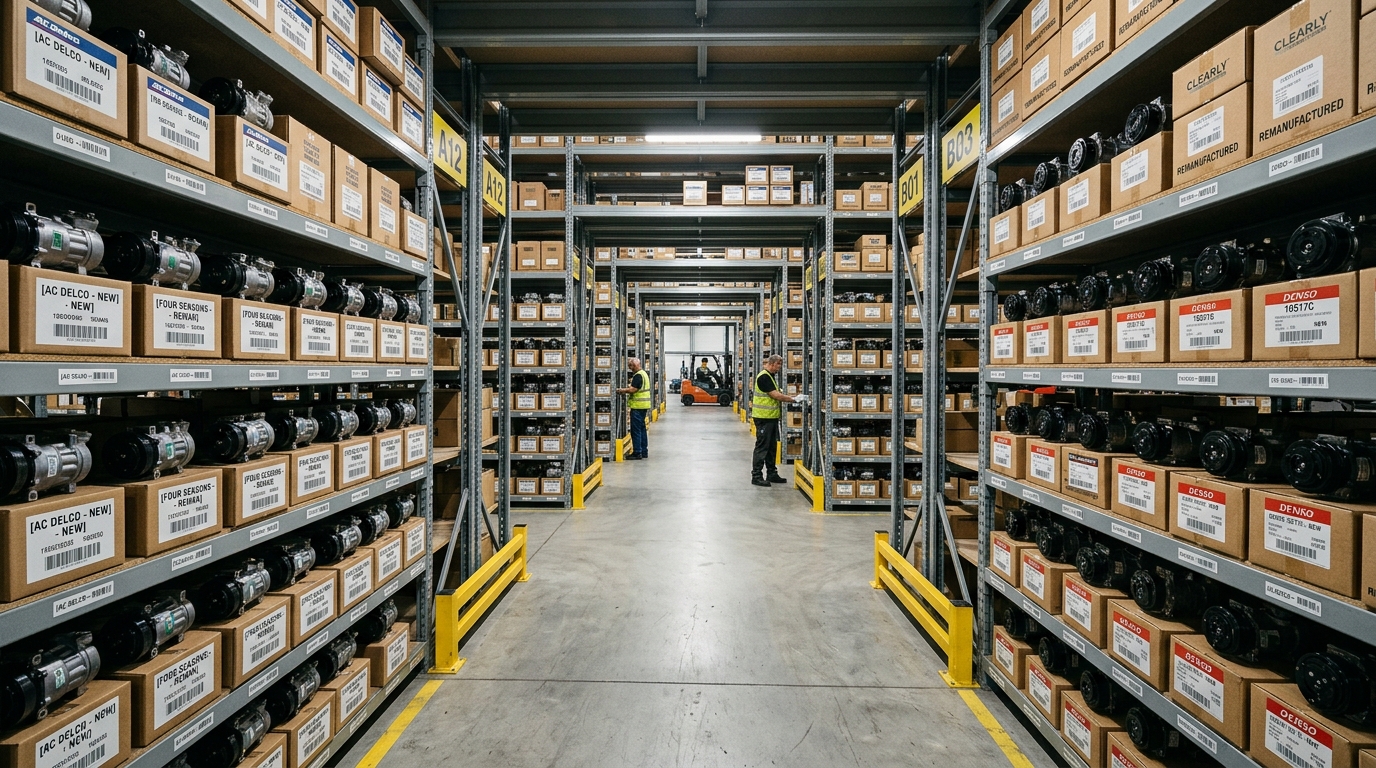
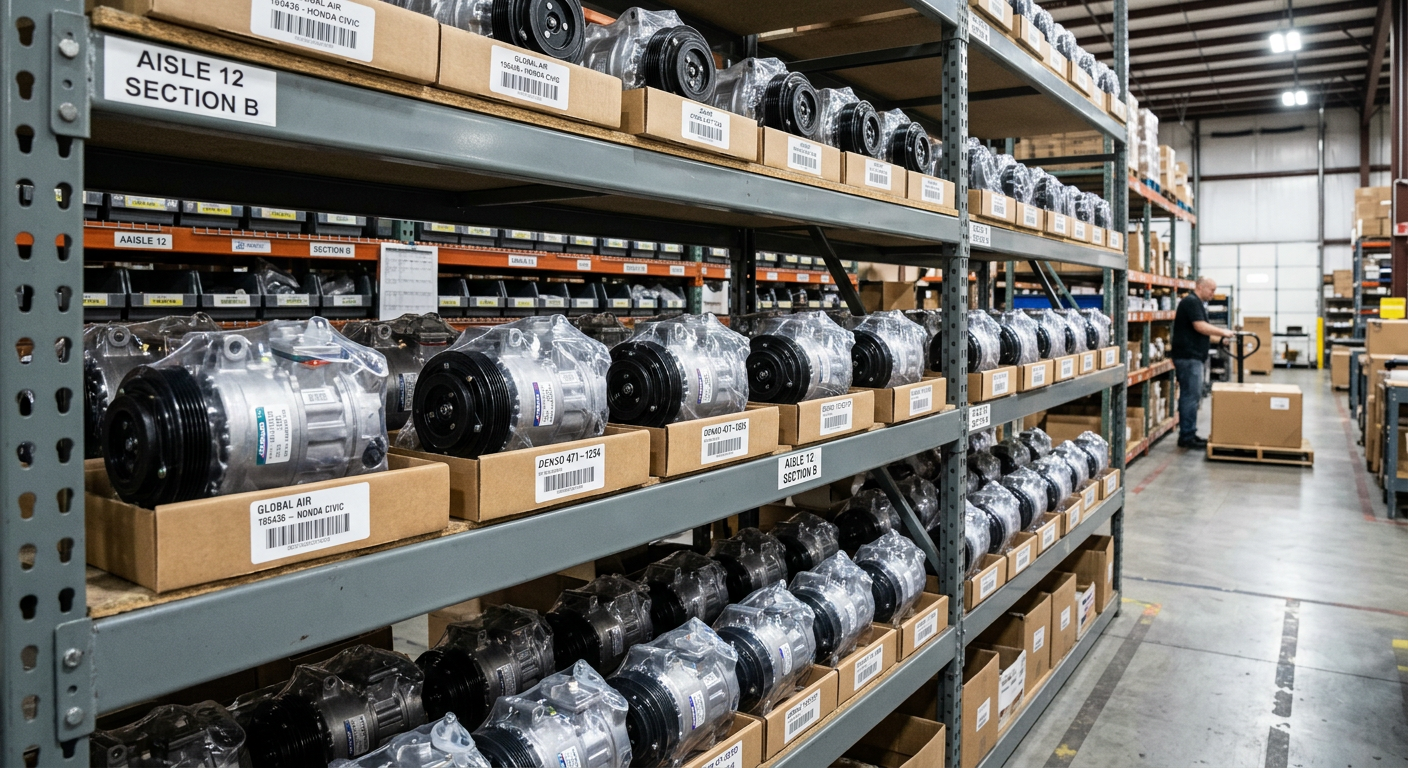
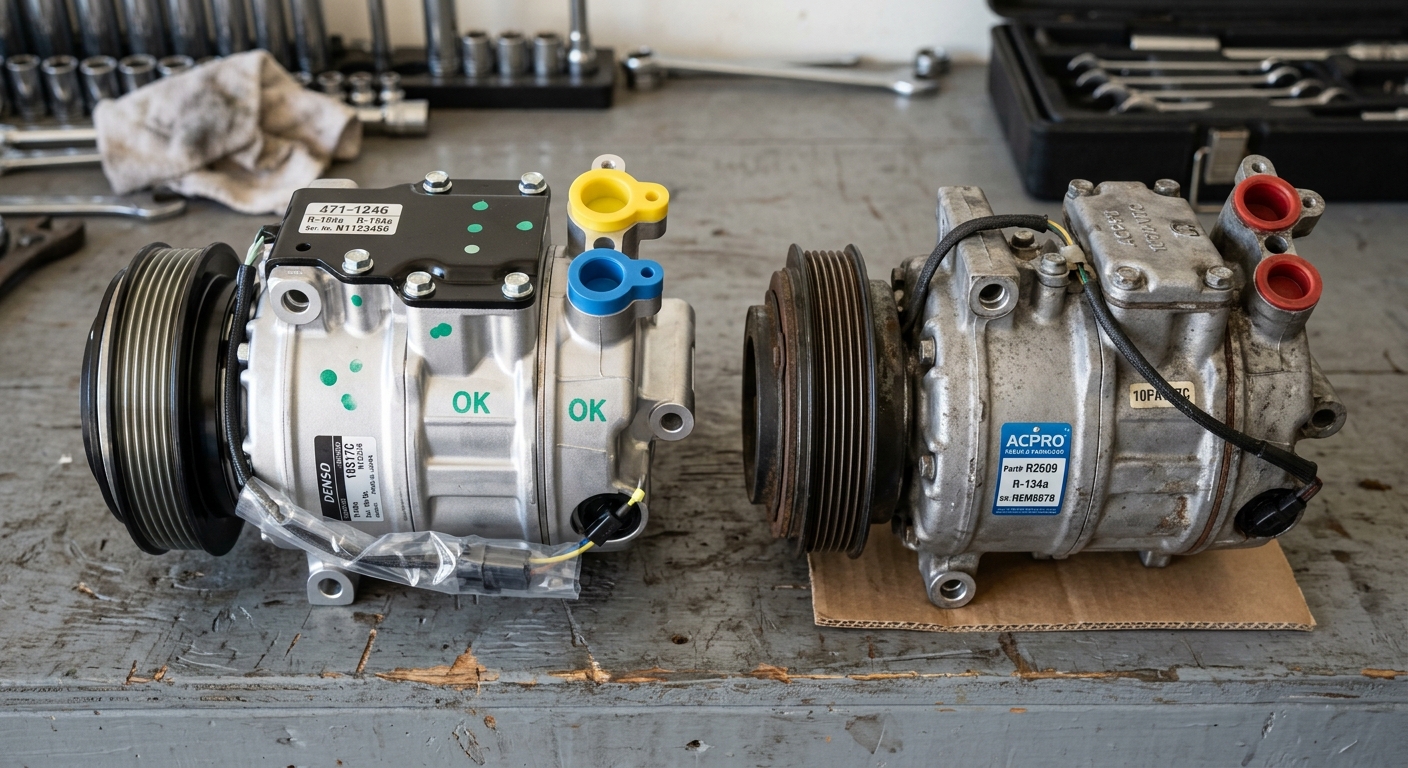
Here’s the honest answer most suppliers won’t give you: stocking 100% new compressors is a margin killer, and stocking 100% reman is a warranty nightmare. The sweet spot for most aftermarket distributors is roughly 40% new, 50% remanufactured, 10% premium OE.
Use vehicle age as the cutting line. Cars under 6 years old? Customers usually want new. Cars 7–15 years old? Remanufactured wins on price and is the volume mover. Cars over 15 years old? Often a budget aftermarket unit makes the sale because the customer won’t invest more than the car is worth.
For example, a regional distributor in Eastern Europe we work with shifted from 80% new to a 45/45/10 split in 2024 and saw gross margin climb from 18% to 27% within two quarters — without changing suppliers, just by matching the SKU to the buyer profile.
For a deeper breakdown of when reman pays off, see our analysis on whether a remanufactured car AC compressor is worth it.
OEM Cross-References: The Detail That Kills Returns
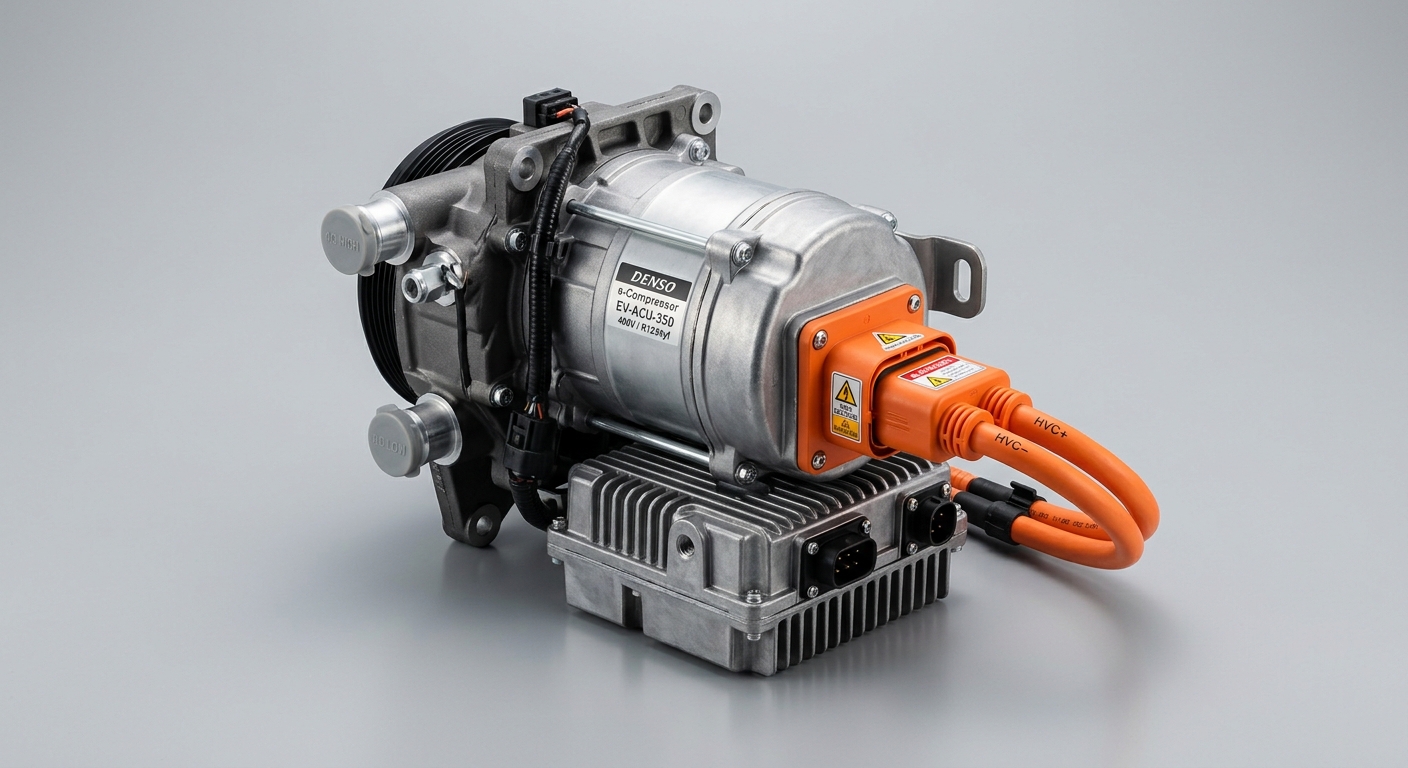
Roughly 60% of compressor returns we see in the wholesale channel are not defects — they’re wrong-fit shipments. The fix is boring but effective: never order by vehicle model alone. Always confirm the OEM part number, the compressor body code (Denso 6SEU14C, Sanden PXE16, Valeo DKS17D, etc.), pulley diameter, clutch voltage, and refrigerant port type.
A 2018 Toyota Camry, for instance, can ship from the factory with either a 6SEU14C or a 7SEU17C depending on trim and market. Same VIN range, different compressor. If your supplier’s catalog only lists “Camry 2018,” that’s a red flag.
Minimum data you should require on every quote
- OEM part number (and at least 2 cross-references)
- Compressor model code stamped on the body
- Pulley groove count (4PK, 6PK, 7PK)
- Clutch coil voltage (12V or 24V)
- Refrigerant type (R134a vs R1234yf — critical for post-2017 vehicles)
Quality Control: What “Tested” Should Actually Mean
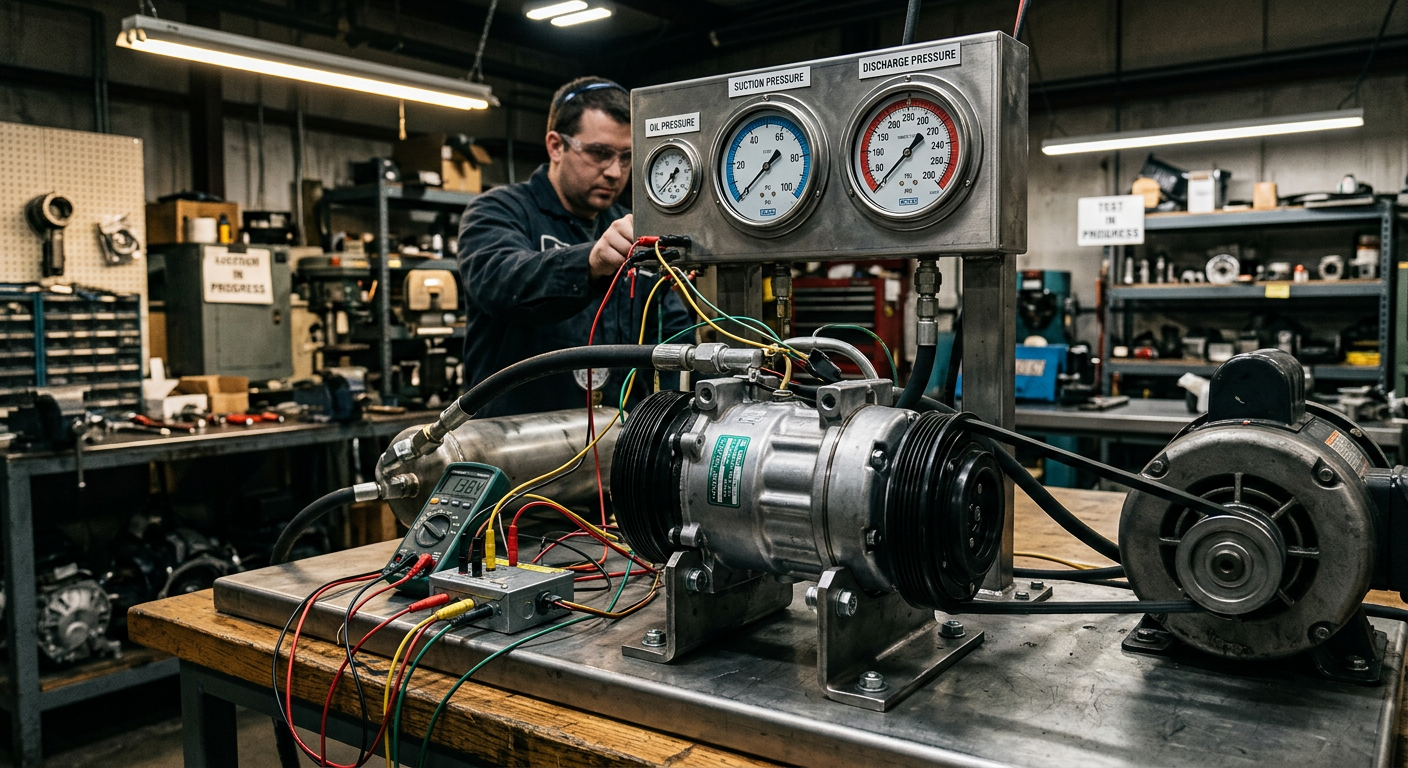
If a supplier says “100% tested” without specifying what they test, assume they’re testing nothing more than clutch engagement. That’s the cheap test. Real QC for AC compressors includes four stages, and you should ask for documentation on each.
- Pressure leak test — nitrogen-charged to 25–30 bar, held for at least 5 minutes
- Vacuum hold test — pulled to 29 inHg, held without rising more than 1 inHg in 10 minutes
- Clutch engagement cycle — minimum 200 on/off cycles at rated voltage
- Performance test — actual cooling output measured at specified RPM, ideally on a dynamometer
For remanufactured units, also ask whether the supplier replaces the shaft seal, reed valves, and bearings as standard — or only when visibly damaged. The difference between a “cleaned and repainted” reman and a properly rebuilt unit shows up exactly 90 days into the warranty period.
Field tip: if a batch shows up with shiny new paint but original 5-year-old date codes on the clutch coil, you’re looking at a refurb, not a true reman. Reject it.
MOQ, Lead Times, and How to Negotiate Without Burning the Relationship
Standard MOQs in 2026 for established Chinese AC compressor manufacturers are typically 50 units per SKU for popular references and 100–200 for full-container pricing. First-time orders usually accept 20–30 units per SKU at a 6–10% price premium, which is fair.
Lead times: 25–35 days for in-stock SKUs, 45–60 days for production runs. Anyone quoting you 10 days is either drop-shipping from another wholesaler (margin stacked) or shipping stock they couldn’t move.
Three negotiation moves that actually work
- Bundle SKUs, not units. Asking for a price break on 500 mixed units across 15 SKUs is more effective than 500 of one part.
- Request tiered warranty. 12 months standard, 18 months on a 3% claim-rate guarantee. Real suppliers will negotiate.
- Sample, then audit. Order 5–10 sample units, run them on a test bench, then place the bulk order. The $300 in samples saves $30,000 in claims.
Vehicle Coverage Strategy: Which Applications to Stock First
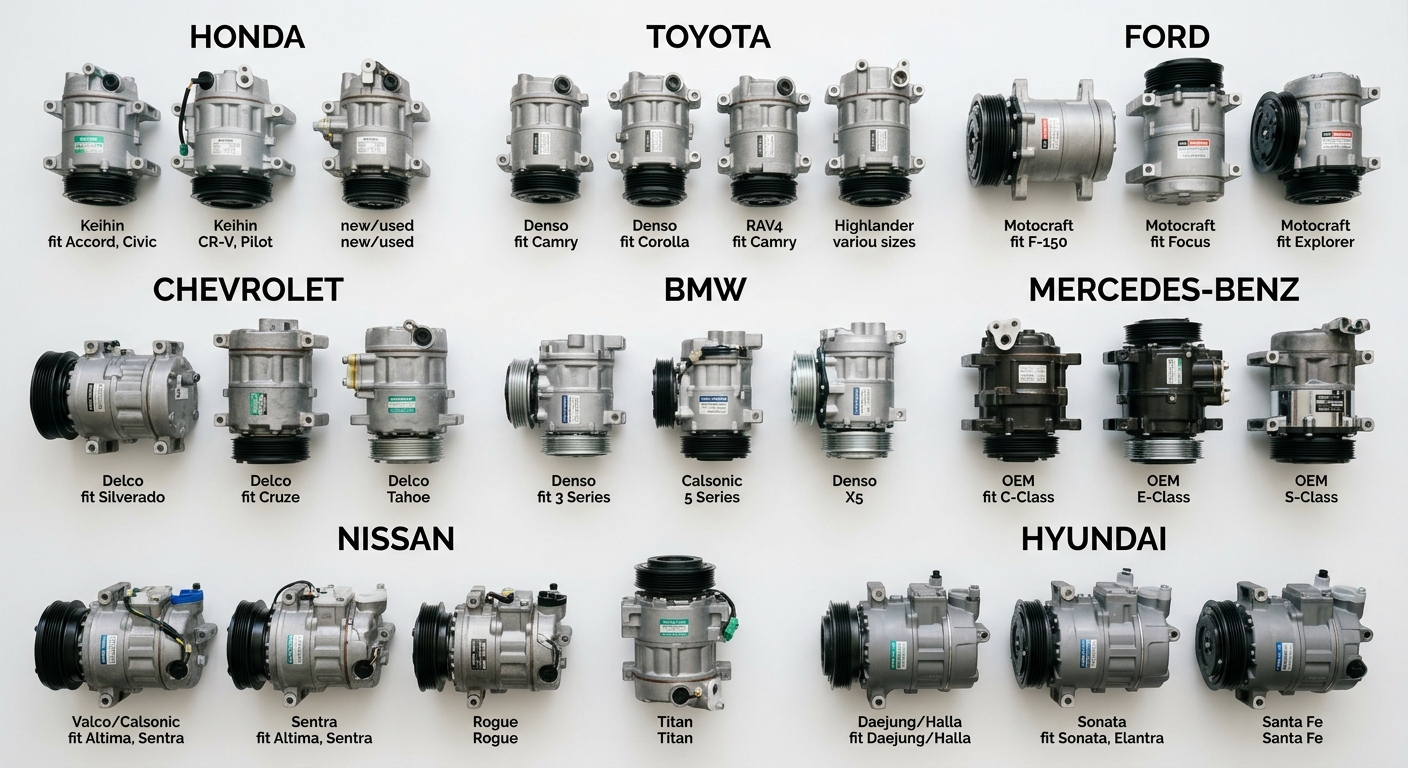
You don’t need 800 SKUs to run a profitable AC compressor channel. You need the right 80. Based on global aftermarket volume data, roughly 70% of wholesale AC compressor demand still comes from about 60 vehicle platforms.
Top coverage priorities for 2026
- Japanese: Toyota Corolla/Camry/Hilux, Honda Civic/CR-V/Accord, Nissan Sentra/X-Trail, Mazda 3/CX-5
- Korean: Hyundai Elantra/Tucson/Santa Fe, Kia Rio/Sportage/Sorento
- American: Ford F-150/Focus/Escape, Chevrolet Silverado/Cruze/Equinox, Jeep Wrangler/Cherokee
- European: VW Jetta/Passat/Tiguan, BMW 3-Series, Mercedes C-Class
- Chinese export brands (growing fast): Chery, Geely, Great Wall, Changan, BYD
The Chinese-brand segment is the one most Western distributors are underestimating. Export volumes of Chery and BYD vehicles into Latin America, Russia, and Southeast Asia jumped sharply over the past two years, and aftermarket AC compressor demand is now showing up. If you can stock a Changan or Chery line early, you’ll own that segment in your region. Our team has written separately about Changan electrical components for context on this trend.
Supplier Red Flags You Should Walk Away From
After enough container loads, patterns emerge. These are the warning signs that consistently predict trouble:
- No physical address or vague factory photos. Ask for a live video tour. Real factories say yes within a day.
- Identical pricing across all SKUs. Real manufacturing cost varies by compressor model. Flat pricing means trading, not making.
- No core return program for reman units. Legitimate remanufacturers need cores back. If they don’t want yours, they’re not actually rebuilding.
- Vague warranty terms. “Quality guaranteed” is not a warranty. Get specific months, specific claim procedures, and specific replacement vs refund terms in writing.
- Pressure to pay 100% upfront. 30/70 (deposit/balance against B/L copy) is standard for trusted relationships. 100% T/T upfront on a first order is a hard no.
Pair this with a basic check of common AC compressor failure symptoms your end customers report — if your supplier’s units consistently fail in ways that match shortcut manufacturing (premature clutch failure, oil leakage), the data tells you to switch.
Logistics, Refrigerant Compliance, and the R1234yf Question
One regulatory shift that’s now hitting wholesale buyers hard: R1234yf compatibility. Every new vehicle sold in the EU, US, and increasingly China since 2017 uses R1234yf refrigerant, which requires compressors with compatible PAG oil and seal materials. Shipping an R134a-spec compressor into an R1234yf application leads to seal degradation within months.
By 2026, roughly 45% of vehicles entering the aftermarket repair window use R1234yf. If your supplier can’t clearly tell you which oil charge and seal compound is in each unit, that’s a problem.
On logistics: AC compressors ship as non-hazmat when shipped dry (no refrigerant, oil charge only). Most suppliers ship them pre-charged with PAG oil — confirm the oil volume (usually 80–150ml depending on model) is correct, because shops often skip the oil-balancing step on installation, and undercharged or overcharged units fail fast.
Building a Long-Term Sourcing Relationship
The buyers who do well in this category for five-plus years all share one habit: they treat their primary supplier as a partner, not a vendor. That means sharing warranty claim data, agreeing on QC standards collaboratively, and giving honest feedback when batches slip.
For example, a UK-based fleet maintenance supplier we ship to sends quarterly claim reports broken down by SKU and failure mode. We use that data to adjust QC focus — and their claim rate has stayed under 2.5% for three years running. That’s the kind of feedback loop that compounds.
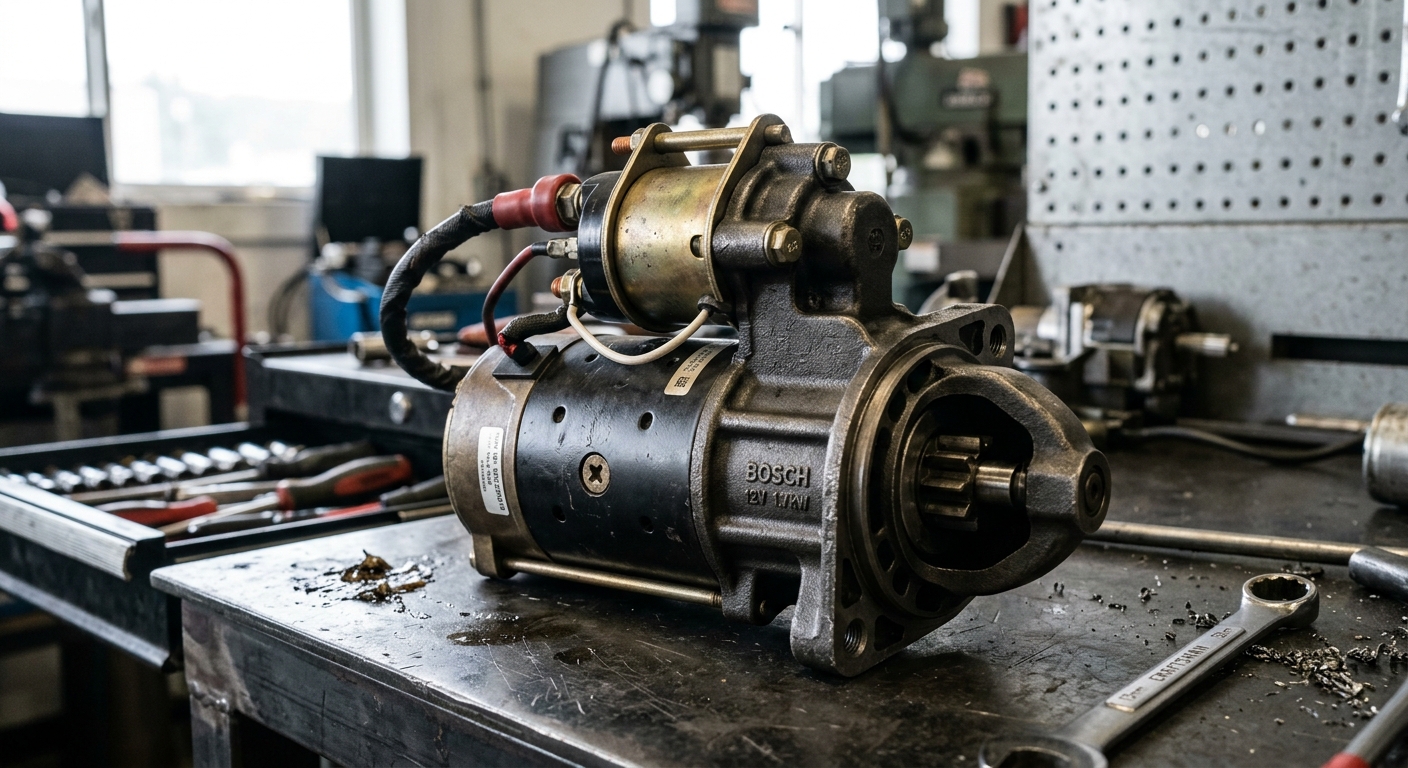
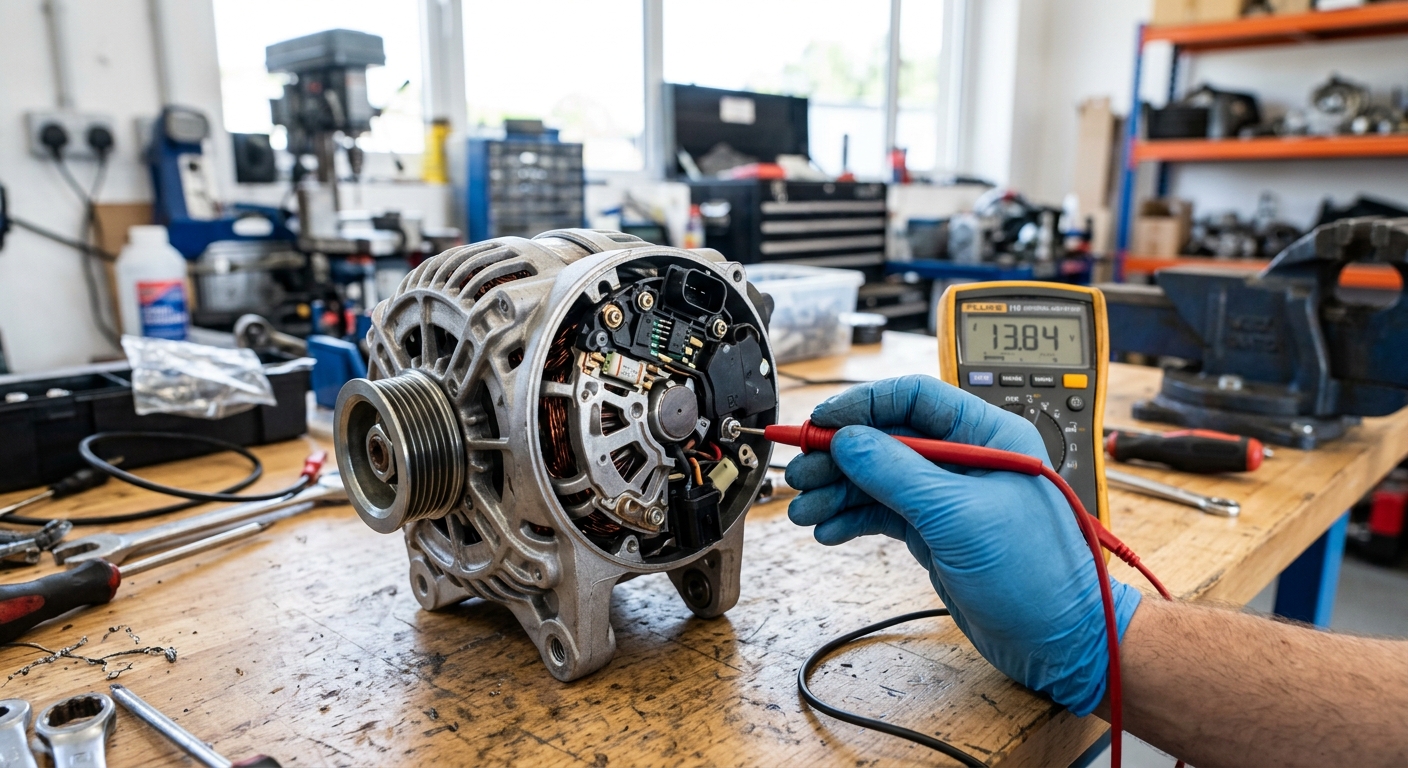
If you’re building out your auto electrical category beyond AC compressors, the same principles apply to alternators and starters. Our guides on buying rebuilt alternators and choosing new vs remanufactured starters walk through the same sourcing logic applied to those product lines.
Putting It All Together
Successful wholesale AC compressor sourcing in 2026 isn’t about finding the cheapest factory — it’s about finding the right blend of OEM accuracy, documented testing, balanced new/reman SKU mix, and honest warranty terms. Start with 60–80 high-volume SKUs across the major Japanese, Korean, American, European, and emerging Chinese platforms. Demand pressure-test documentation. Lock in tiered pricing. Audit your first batch on a test bench before scaling.
Do that, and your claim rate stays low, your inventory turns faster, and your repeat-customer rate climbs — which is the only metric that actually matters in this business.
If you’re evaluating suppliers for your next order, our team at aohuiautoparts works with importers, distributors, and repair-shop chains across more than 40 countries on AC compressors, alternators, and starters — both new and remanufactured. Get in touch with your target SKU list and we’ll send back a real quote with cross-references, test data, and lead times. No catalog spam.