Most repair shops should stock both — but lean roughly 60/40 toward remanufactured AC compressors for high-volume domestic and Asian platforms, and reserve new units for late-model vehicles, hybrids, EVs, and luxury repairs where warranty risk is highest. The right ratio depends on your customer base, climate, and how aggressively you compete on labor versus parts margin. This guide breaks down the real cost math, failure rates, and stocking logic so you can build an inventory that turns fast and protects your reputation.
The Short Answer: It’s Not Either/Or
Shops that stock only new compressors price themselves out of older-vehicle repairs. Shops that stock only reman units lose the luxury and late-model work to dealers. The smart play is a tiered inventory.
Here’s a framework that works for most independent shops doing 8–20 AC jobs per month:
- Remanufactured (60–70% of stock): Common domestic trucks, Toyota, Honda, GM, Ford pickups 2005–2018
- New aftermarket (20–30%): Late-model 2019+ vehicles, European brands, work trucks under heavy duty cycle
- New OEM (special order only): Hybrids, EVs, luxury vehicles still under extended warranty considerations
A shop in Phoenix running 15 AC jobs a week will have very different numbers than a shop in Seattle doing six a month. Climate drives volume, and volume drives whether stocking reman pays off.
The Real Cost Difference (And Where It Hides)
A new aftermarket AC compressor for a 2014 Silverado wholesales around $180–$240. The remanufactured equivalent runs $95–$140 with a $40–$60 core charge that comes back to you. Net cost difference: roughly $70–$110 per unit.
Multiply that across 50 jobs a year and you’re looking at $3,500–$5,500 in parts spread alone. That’s real money, but here’s where shops get tripped up:
Hidden costs nobody mentions
- Core returns: Damaged or seized cores get rejected. Budget 5–8% core loss.
- Comeback labor: A failed compressor under warranty means you eat 2–4 hours of labor on the re-do. One bad reman wipes out the savings from five good ones.
- Refrigerant waste: Recharging twice means double the R-1234yf — that’s $80–$150 in refrigerant alone on newer vehicles.
The math only works if your supplier’s failure rate stays under 5%. That’s why supplier vetting matters more than the unit price.
What Actually Happens Inside a Quality Reman Process
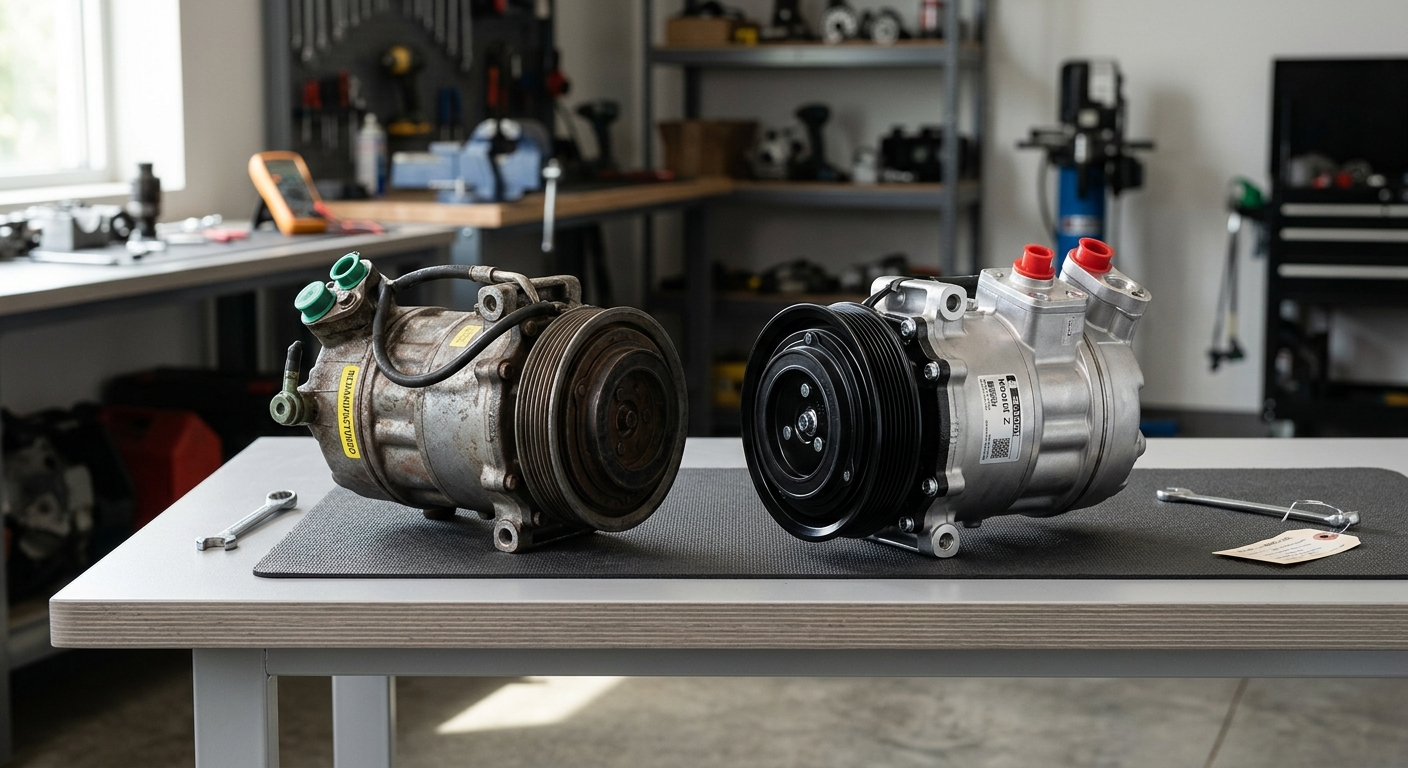
Not all “remanufactured” compressors are remanufactured. Some are just cleaned, repainted, and resold. That’s rebuilding, not remanufacturing — and the failure rates show it.
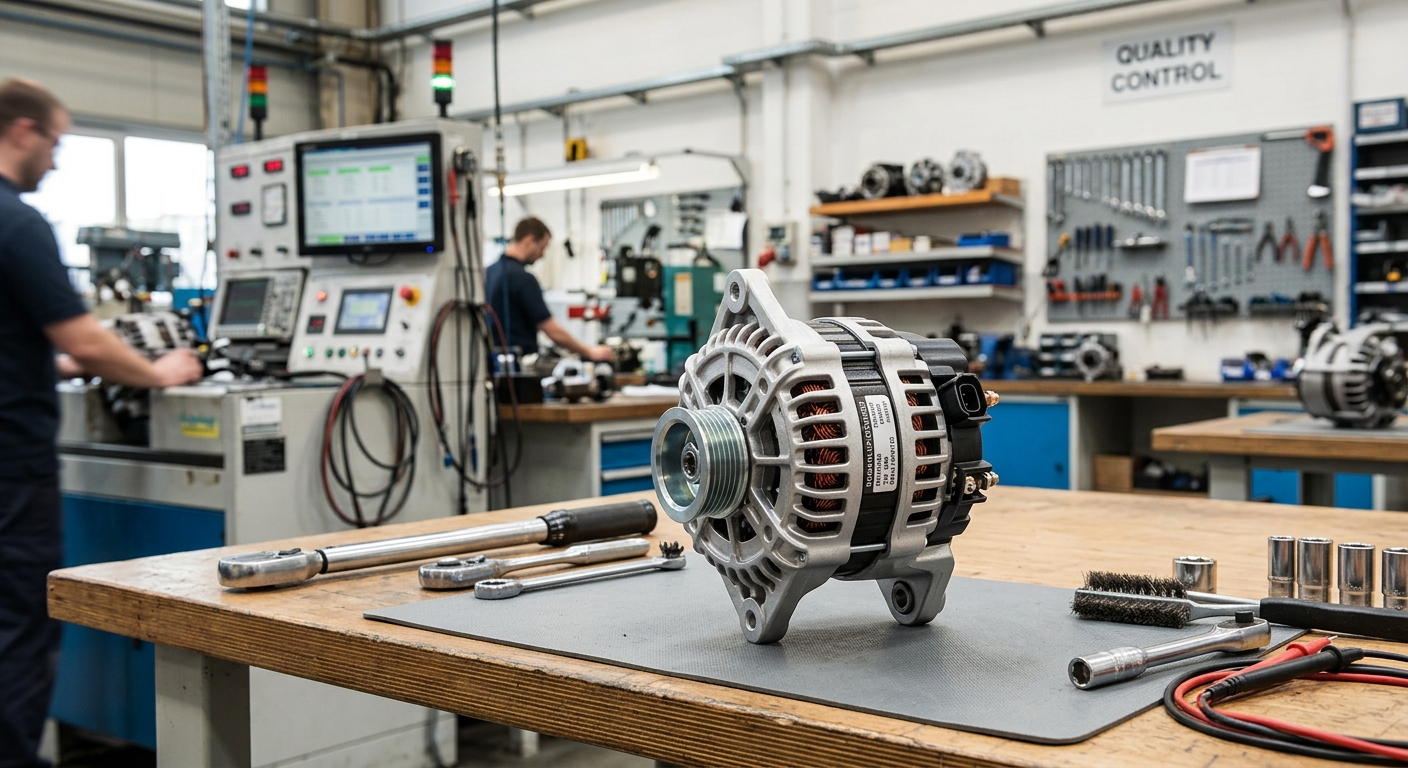
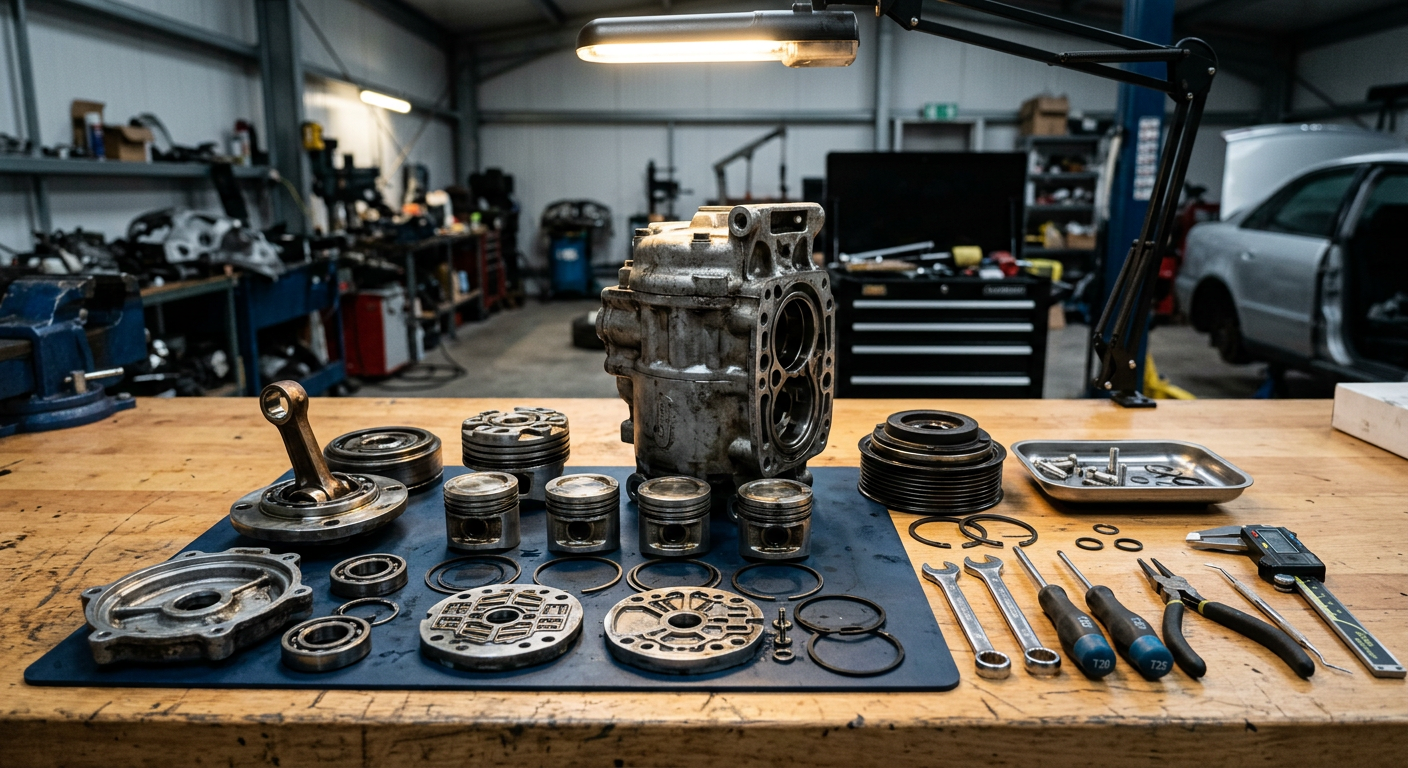
A proper reman process replaces every wear part: pistons, seals, bearings, valve plates, clutch coil, pulley bearing. The housing and main casting get cleaned, inspected for cracks, and re-machined to spec. Every unit gets pressure-tested and performance-tested on a bench that simulates real cycling conditions.
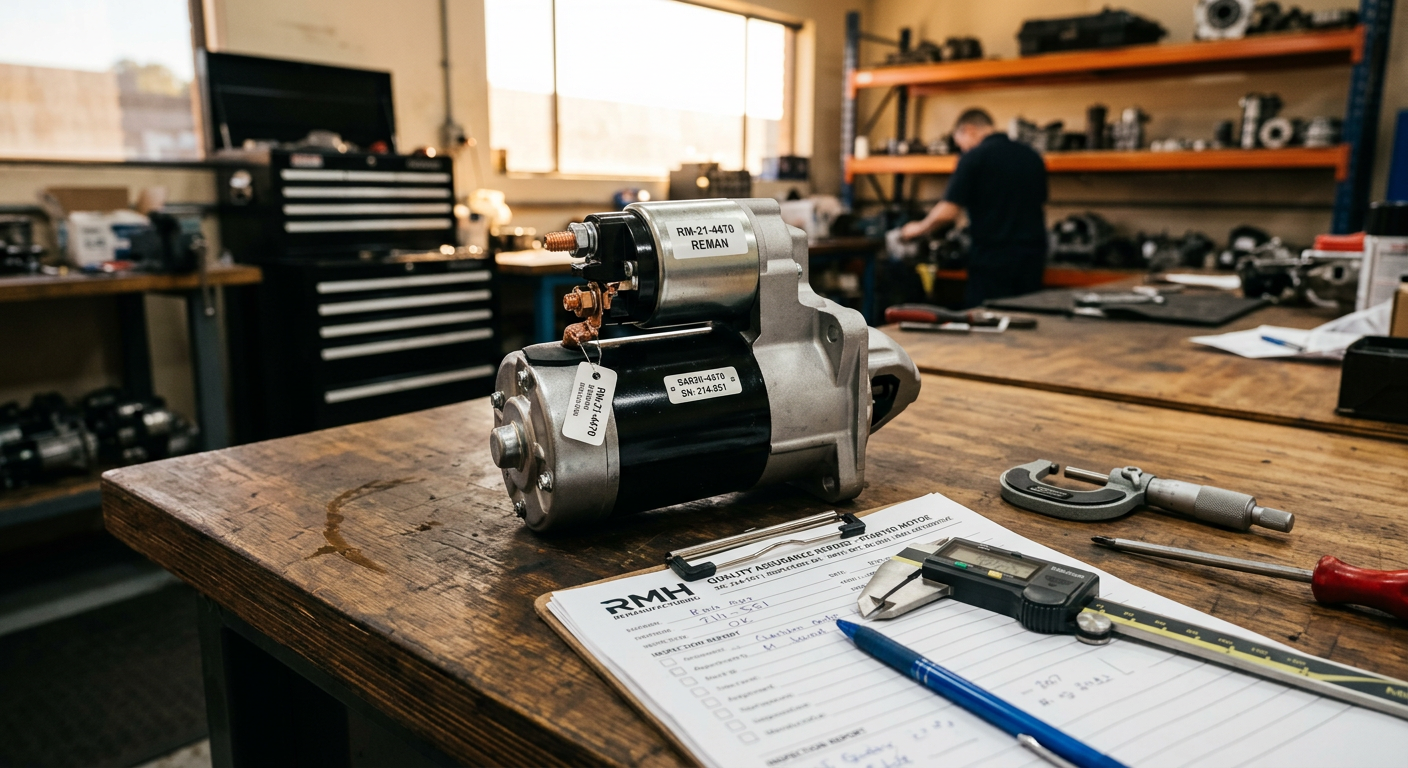
Compare that to a “rebuilt” unit where someone swapped the seals and called it done. Same price tag, very different reliability. We’ve covered this distinction in more detail in our piece on whether remanufactured car AC compressors are worth it, and the same logic applies to rebuilt alternators — process matters more than the label.
Questions to ask your supplier
- Do you replace all wear components or only failed ones?
- Is every unit bench-tested, or is testing sample-based?
- What’s your documented field failure rate?
- Are clutch assemblies new or reconditioned?
If the supplier can’t answer these specifically, move on.
Side-by-Side: Remanufactured vs New at a Glance
Use this as a quick reference when you’re sizing up an order or quoting a customer.
| Criteria | Remanufactured | New Aftermarket |
|---|---|---|
| Wholesale cost | 40–60% of new | Full price |
| Warranty | 12 months typical | 12–24 months |
| Core charge | Yes ($40–$80) | No |
| Best fit | Older domestic / Asian volume models | Late-model, EU brands, hybrid/EV |
| Lead time (bulk) | 2–4 weeks | 1–3 weeks |
| Quality-supplier failure rate | 3–6% | 1–3% |
| Shop margin potential | Higher absolute dollars | Higher % markup |
Notice the failure rate gap is smaller than most shops assume — if you’re buying from a vetted source. Buying reman from an unknown supplier? The gap widens fast, and so does your warranty exposure.
When Remanufactured Is the Smarter Choice
Reman makes sense when the vehicle’s resale value, age, and customer budget all point the same direction. Specifically:
- Vehicles 7+ years old where customers won’t approve $800 in parts
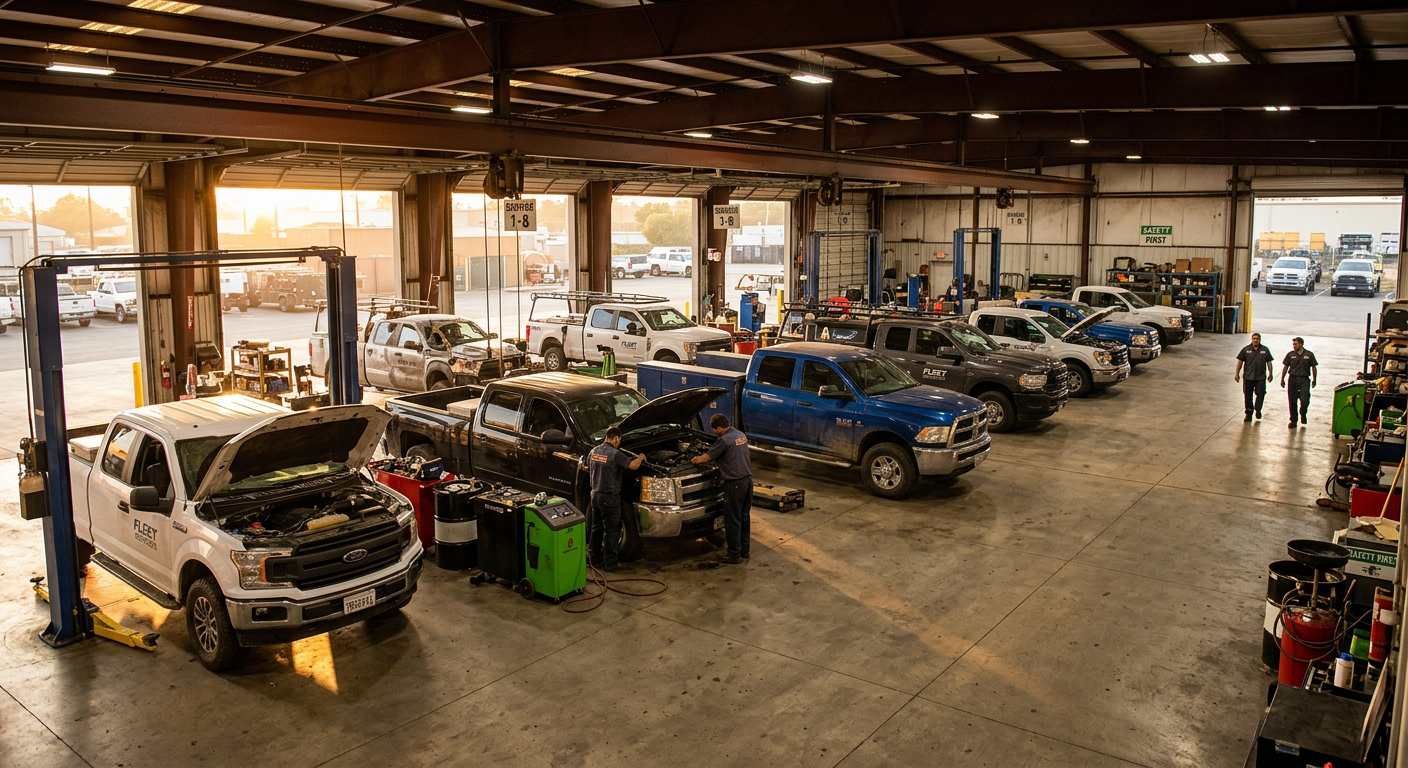
- Fleet accounts running pickups and vans on tight maintenance budgets
- High-volume platforms where you know the application inside and out
- Secondary vehicles — the customer’s commuter, work truck, or teen driver car
For example, a regional landscaping company running 14 Ford F-150s came to a partner shop wanting AC fixed across the fleet before summer. New compressors would’ve totaled around $11,000 in parts. Remanufactured units brought that to about $5,200 — and the fleet manager approved on the spot. Three years later, only one unit had failed. That’s the reman value proposition working as intended.
Reman is also the right call when customers explicitly ask about repair-vs-replace economics. If the AC compressor cost approaches 30% of the vehicle’s market value, you’ve already lost the new-unit argument.
When You Should Stock New — No Exceptions
Some jobs aren’t worth the warranty risk. Stock new for:
Hybrid and EV electric compressors
These are high-voltage units (200V+) with integrated inverters. The reman supply chain for these is still maturing and quality varies wildly. A failed EV compressor on a Prius or Model 3 means towing, customer frustration, and refrigerant complications. Pay for new.
European luxury platforms
BMW, Mercedes, Audi, Volvo — reman availability is thin, OE-matching is tricky, and customers expect dealer-level performance. Stock new aftermarket from a tier-1 source or special-order OEM.
Heavy-duty commercial
Trucks running rooftop AC, ambulances, and refrigerated transport — duty cycles are brutal. New units are worth the premium because comeback labor on commercial vehicles is far more expensive than passenger cars.
Recent-model vehicles still in factory warranty conversations
If the customer might still have a goodwill claim with the dealer, a reman install can void that path. Recommend new and document the conversation.
Reading the Failure Signs Before You Quote
Knowing what failed and why changes what you should recommend. A compressor that seized because of contaminated refrigerant is different from one that failed from clutch wear. If you don’t flush the system properly after a catastrophic failure, even a new compressor will die fast.
Before quoting any replacement — reman or new — diagnose properly. Watch for:
- Metal debris in the receiver-drier (mandatory system flush)
- Clutch slip versus internal noise (different failure modes)
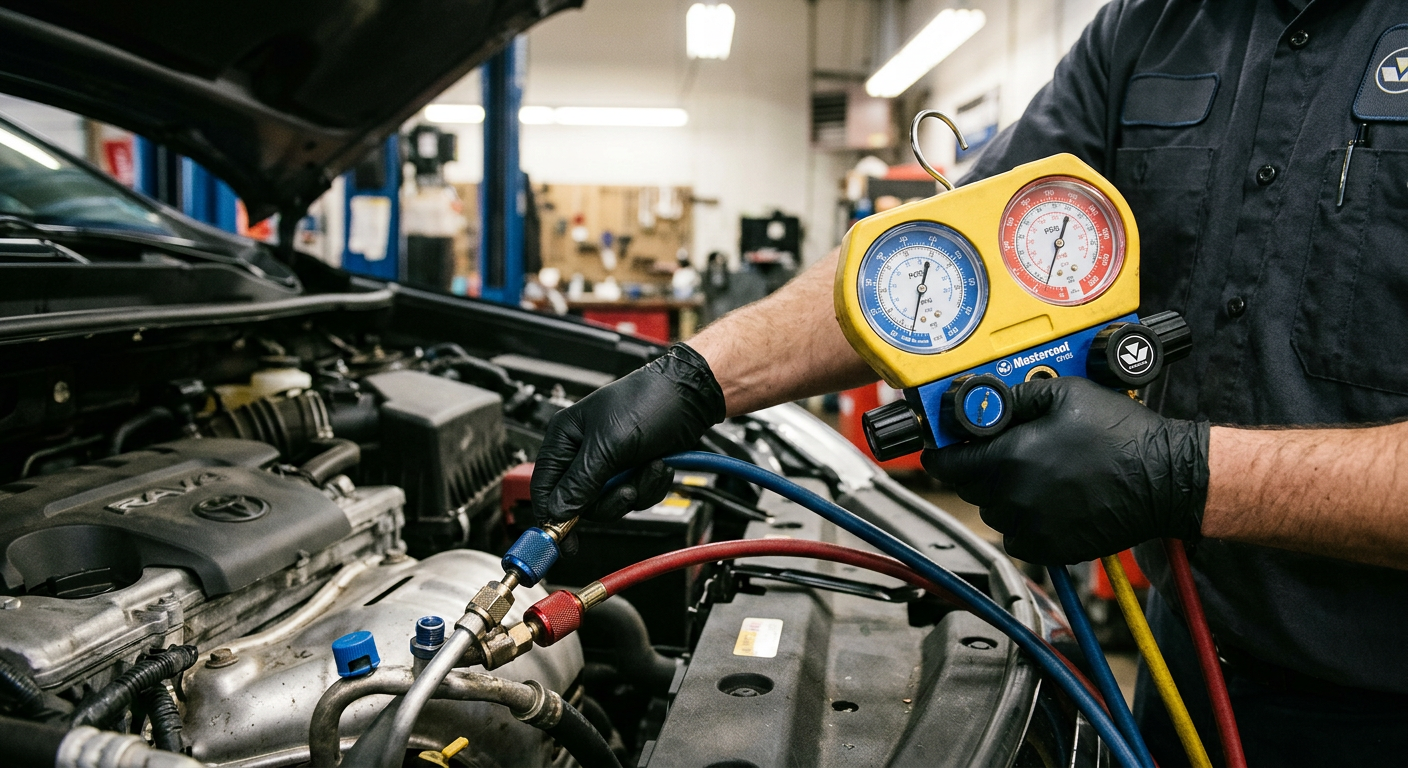
- Refrigerant pressure readings indicating valve failure vs leak
- Electrical fault on the clutch coil (sometimes only the clutch needs replacing)
Our breakdown of bad auto AC compressor symptoms walks through the warning signs in detail. Quoting a reman without proper diagnosis is how shops end up doing the same job twice.
Building a Stocking Strategy That Actually Turns
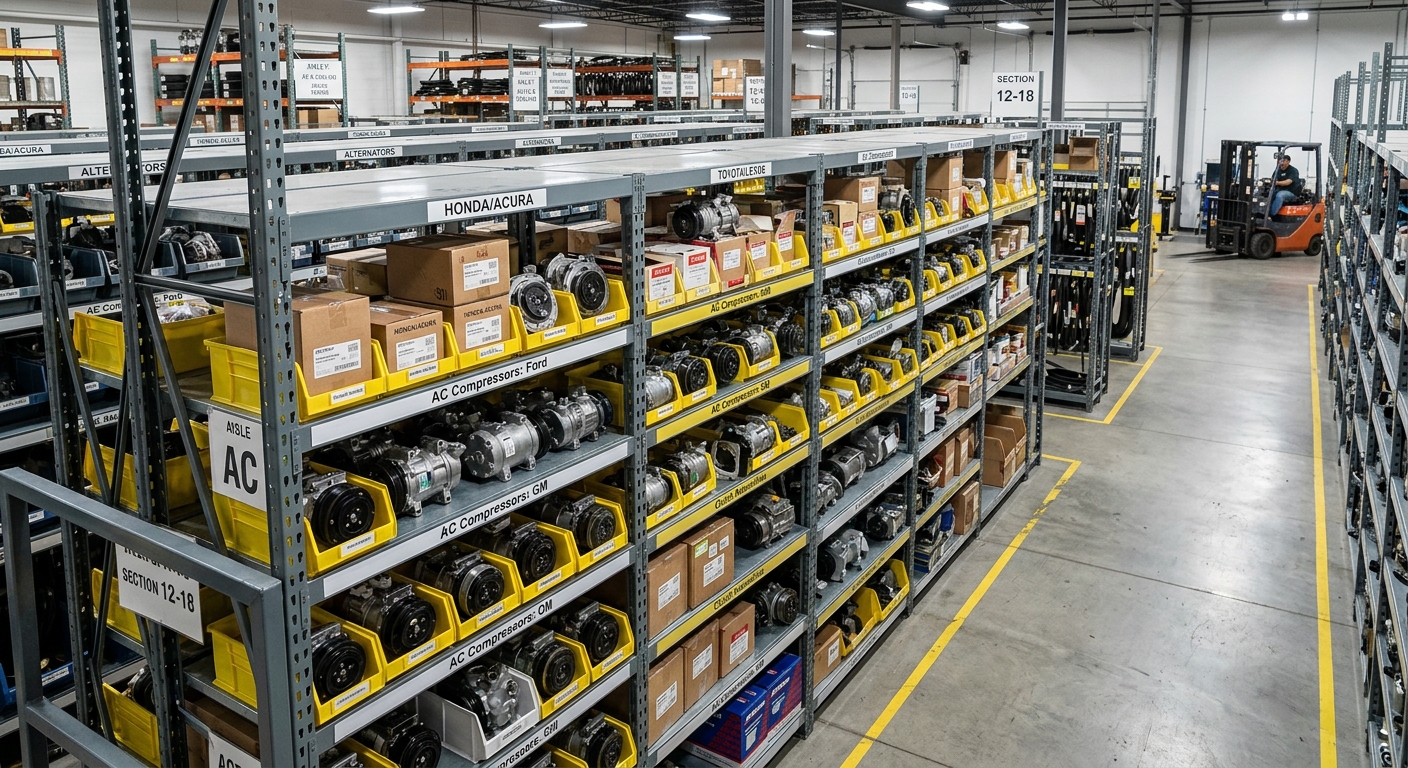
Dead inventory kills shops faster than slow weeks. The goal isn’t to stock everything — it’s to stock what turns in 60–90 days.
Start with your data
Pull your last 12 months of AC jobs. List the top 10 vehicle/year combinations. That’s your stocking baseline. Two units each of the top 5, one of the next 5. Everything else goes to next-day order.
Match stock type to vehicle age
- Vehicles 2018 and older: Reman default
- Vehicles 2019–2022: Split stock — one new, one reman per common app
- Vehicles 2023+: New only, mostly special order
Negotiate core terms upfront
Cores tie up cash. Get 60-day return windows minimum and clear written rejection criteria. A good supplier won’t hide behind vague core policies.
Track failure rates yourself
Don’t trust supplier claims — log every comeback. If a particular reman line shows 8%+ failure over 30 units, switch suppliers. The math doesn’t lie.
For shops also stocking rebuilt alternators and starters, the same stocking logic applies — high-turn applications get reman, low-volume and late-model gets new.
The Supplier Question: Where Quality Actually Comes From
Stocking decisions are downstream of supplier choice. The best inventory plan in the world falls apart if your reman compressors come back to you at a 12% rate.
What separates a reliable wholesale source from a risky one:
- Documented testing protocols — bench test reports available on request
- OEM cross-reference accuracy — part number matching that actually works in your VIN lookup
- Consistent core acceptance policy — not arbitrary rejections
- Honest failure-rate reporting — suppliers that hide data are hiding problems
- Stable pricing — wild monthly swings indicate inventory chaos
If you’re sourcing internationally for better margins, factor in 2–4 weeks of lead time and order in batches sized to 90-day demand. A small importer running 4–6 AC jobs a month can usually batch quarterly. Larger operations need monthly cycles.
Putting It All Together
The remanufactured-vs-new question isn’t really about which is better in the abstract — it’s about which fits each job. Stock reman heavy for your bread-and-butter platforms. Stock new for late-model, luxury, hybrid, and commercial. Vet your supplier ruthlessly. Track failure rates. Adjust quarterly.
Get those four things right and AC work becomes one of the most profitable categories on your service menu — without the warranty headaches that sink shops trying to cut corners on the supply side.
If you’re sourcing AC compressors, alternators, or starters in bulk and want a supplier that’s transparent about testing, core terms, and OEM cross-references, browse our product range or get in touch for wholesale pricing tailored to your monthly volume.